Learn what every symbol on the card means.Full credits and sources at beakbrain.com/symbols
 ShrublandCup nestSmall · 21 g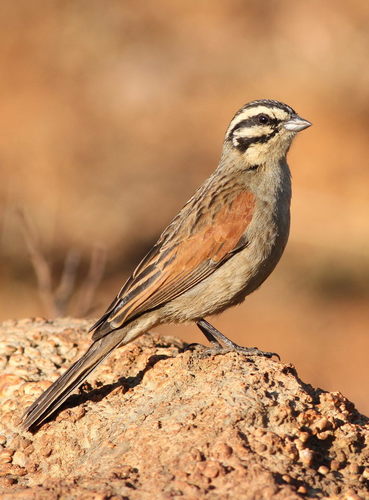
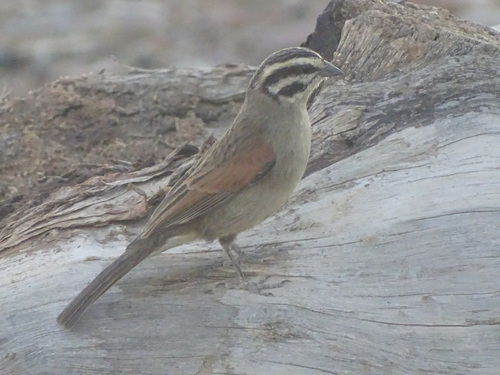
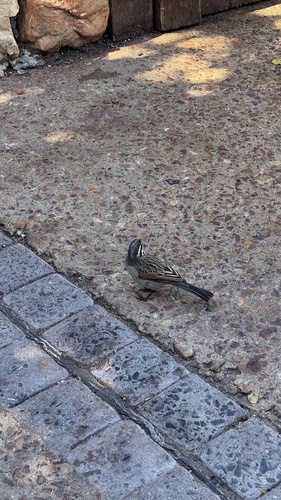
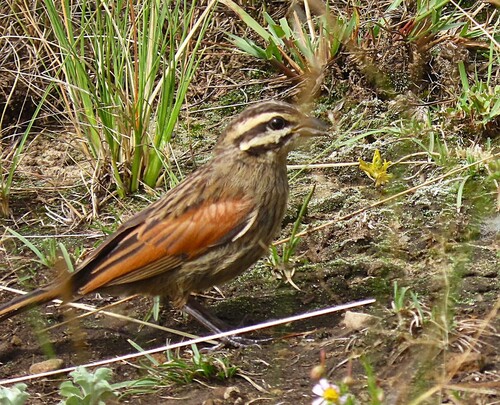
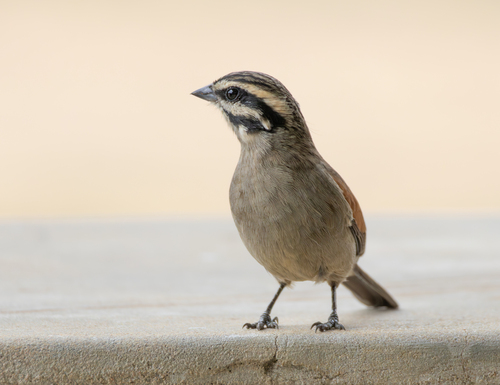
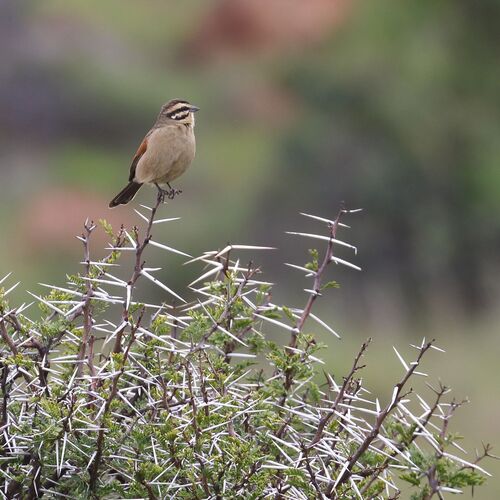
ID tip
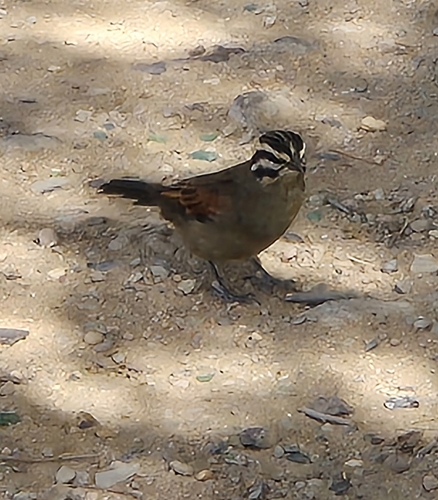
The Cape bunting is 16 cm long. The adult has a black crown, white supercilium and black-bordered white ear coverts. The upperparts are grey brown with some dark streaks, and the wing coverts are chestnut. The tail is darker chestnut, and the underparts are grey with a pale throat. The sexes are very similar, but females may have a buff tone to the white head markings. Young birds have duller chestnut wings, a less distinct head pattern, and heavier streaking extending on to the breast and flanks. The call is an ascending zzoo-zeh-zee-zee.
Text from Wikipedia, licensed CC BY-SA 4.0.
When to see the Cape Bunting
One bar for each month, and every month is filled: this bird is recorded here in all twelve. The wide bar is September, the month with the most records.
Where to see the Cape Bunting
The map shades 9 countries with regular records. Everything unshaded has no records. Countries are listed below the map.
About the Cape Bunting
The Cape bunting is a passerine bird in the bunting family Emberizidae.
Text adapted from Wikipedia, licensed CC BY-SA 4.0.
Easily confused with
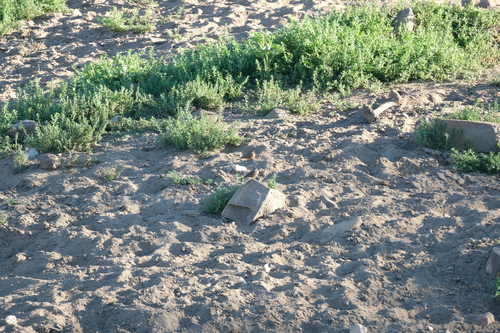 Cinnamon-breasted BuntingEmberiza tahapisiThey weigh between 11.6 and 21 grams with a length of 13–15 centimeters.
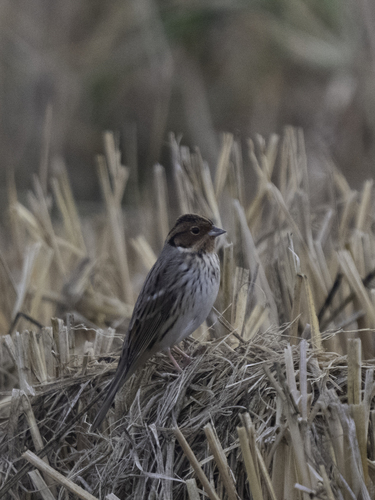 Little BuntingEmberiza pusillaThis is a small bunting, measuring only 12–14 cm (4.7–5.5 in) in length.
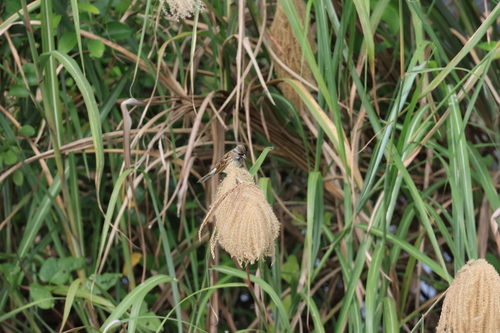 Black-faced BuntingEmberiza spodocephalaThe black-faced bunting is a passerine bird in the bunting family Emberizidae, a group now separated by most modern authors from the finches, Fringillidae.
Side by side: Cape Bunting vs Golden-breasted Bunting · Cape Bunting vs Cinnamon-breasted Bunting · Cape Bunting vs Little Bunting
Learn the Cape Bunting in the BeakBrain App
Photo and call practice. Coming soon to iPhone and Android.
Play today's Daily BirdEvery photo and recording on this page is credited to its author under the licence shown. Spotted a problem with this page, or have a better photo? Contribute.