Learn what every symbol on the card means.Full credits and sources at beakbrain.com/symbols
 WetlandPlatform nestHuge · 6.2 kg


ID tip
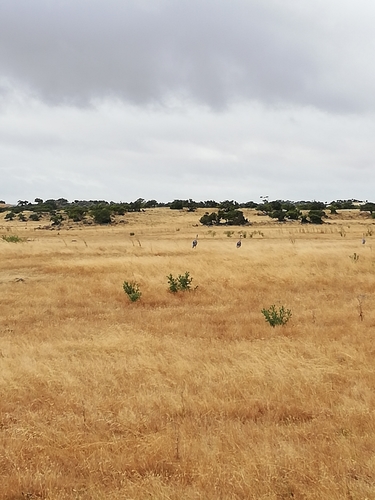
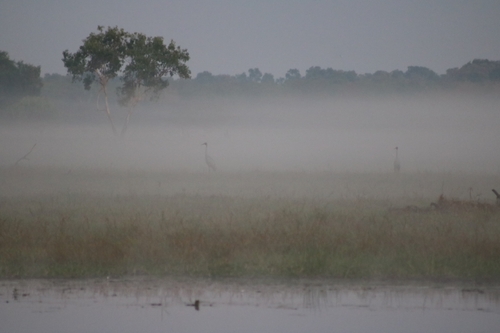
The brolga is a tall bird with a large beak, a long and slender neck, and stilt-like legs. The sexes are indistinguishable in appearance, though females are usually a little smaller. The adult has a grey-green, skin-covered crown, and the face, cheeks, and throat pouch are also featherless and are coral red. Other parts of the head are olive green and clothed in dark bristles. The gular pouch, which is particularly pendulous in adult males, is covered with such dense bristles as to make it appear black.
Text from Wikipedia, licensed CC BY-SA 4.0.
When to see the Brolga
One bar for each month, and every month is filled: this bird is recorded here in all twelve. The wide bar is October, the month with the most records.
Where to see the Brolga
The map shades 3 countries with regular records, and 1 more in a lighter tone where the bird turns up only as a stray. Everything unshaded has no records. Countries are listed below the map.
Recorded as a rare visitor in United States.
About the Brolga
The brolga, formerly known as the native companion, is a bird in the crane family. It has also been given the name Australian crane, a term coined in 1865 by well-known ornithologist John Gould in his Birds of Australia.
Text adapted from Wikipedia, licensed CC BY-SA 4.0.
Easily confused with
 Sarus CraneAntigone antigoneThe adult sarus crane is very large, with grey wings and body, a bare red head, collar and nape, a greyish crown, and a long, greenish-grey, pointed bill.
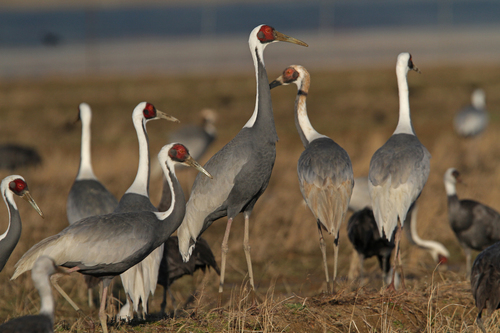 White-naped CraneAntigone vipioThe white-naped crane can be identified by its grey body, reddish face patch, white throat, and the white strip going from the back of its crown down its neck, or nape.
 Sandhill CraneAntigone canadensisAdults are gray overall; during breeding, their plumage is usually much worn and stained, particularly in the migratory populations, and looks nearly ochre.
Side by side: Brolga vs Sandhill Crane · Brolga vs Sarus Crane · Brolga vs White-naped Crane
Learn the Brolga in the BeakBrain App
Photo and call practice. Coming soon to iPhone and Android.
Play today's Daily BirdEvery photo and recording on this page is credited to its author under the licence shown. Spotted a problem with this page, or have a better photo? Contribute.