Learn what every symbol on the card means.Full credits and sources at beakbrain.com/symbols
 ShrublandCavity nestMedium · 73 g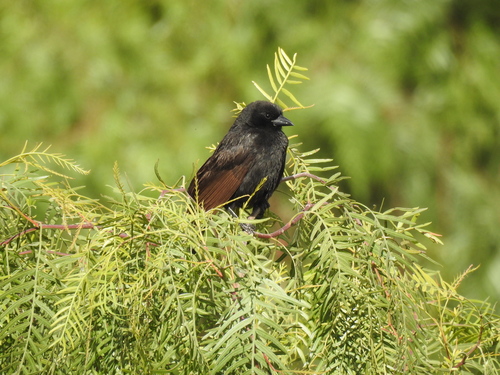

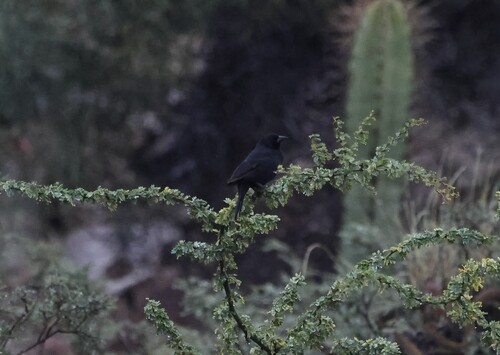
ID tip
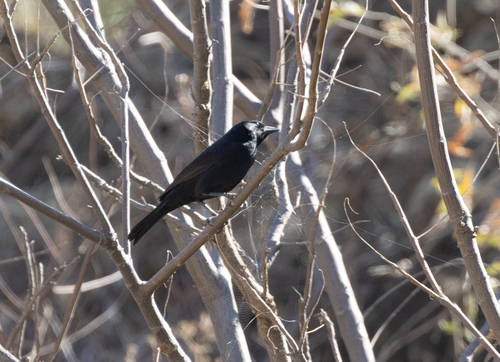
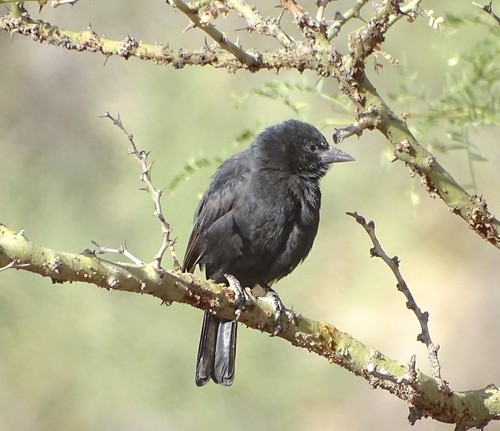
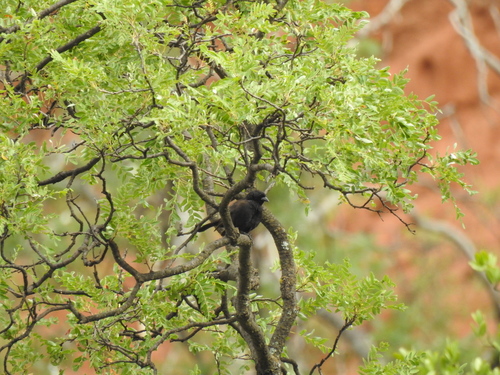
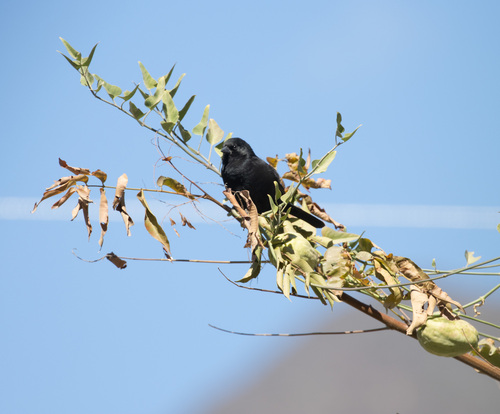
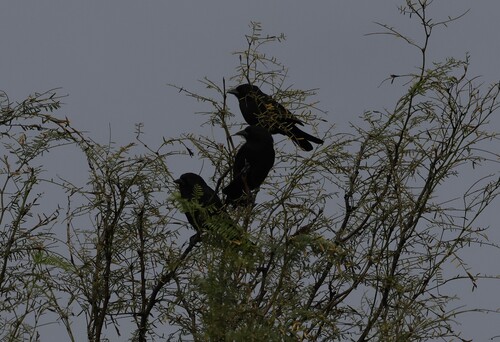
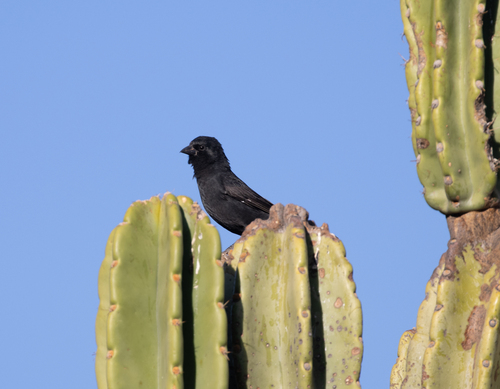
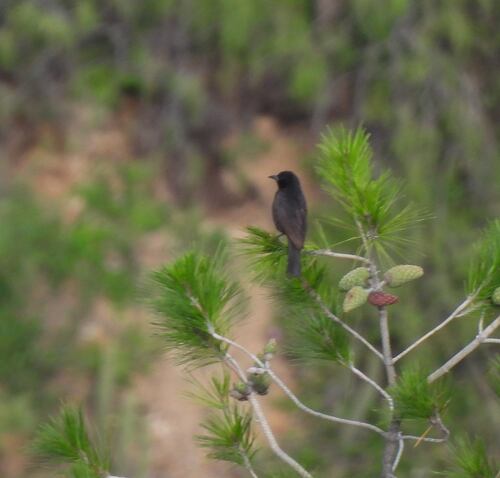
The Bolivian blackbird is about 23 cm (9 in) long. Males weigh an average of 73.5 g (2.6 oz) and females 66.2 g (2.3 oz). The species' bill has a decurved culmen. Adults of both sexes have the same almost entirely black plumage with little iridescence. Their flight feathers are sepia-brown which readily shows in flight. They have a brown iris, a gray bill, and dusky gray legs and feet. Juveniles are similar to adults but have a brownish tinge on their upperwing coverts and their underparts. Voice: The Bolivian blackbird's song is "a simple sequence of short chip notes interspersed with chip-it notes". Its contact call is chu-pee and its flight call is pee.
Text from Wikipedia, licensed CC BY-SA 4.0.
When to see the Bolivian Blackbird
One bar for each month. Filled bars are the 10 months with records; pale bars are months with none. The wide bar is September, the month with the most records.
Where to see the Bolivian Blackbird
The map shades 1 country with regular records. Everything unshaded has no records. Countries are listed below the map.
About the Bolivian Blackbird
The Bolivian blackbird is a species of bird in the family Icteridae, the oropendolas, New World orioles, and New World blackbirds. It is endemic to Bolivia.
Text adapted from Wikipedia, licensed CC BY-SA 4.0.
Easily confused with
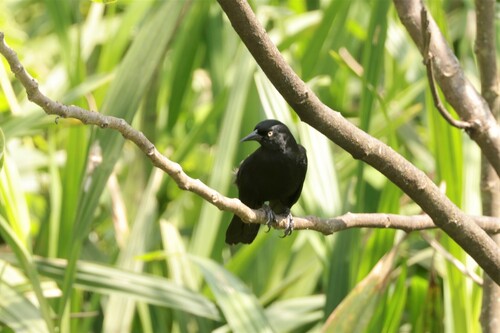 Pale-eyed BlackbirdAgelasticus xanthophthalmusThe adult pale-eyed blackbird is entirely black in both sexes.
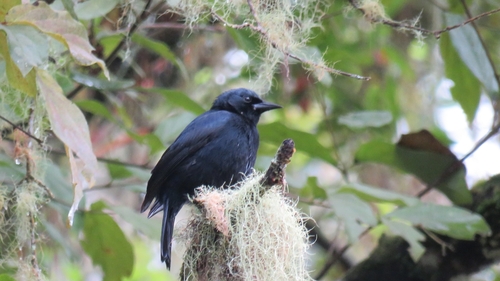 Jamaican BlackbirdNesopsar nigerrimusThe Jamaican blackbird is a small icterid with all black plumage.
 Baudo OropendolaPsarocolius cassiniMale Baudo oropendolas are about 46 cm (18 in) long and females about 39.5 cm (16 in).
Learn the Bolivian Blackbird in the BeakBrain App
Photo and call practice. Coming soon to iPhone and Android.
Play today's Daily BirdEvery photo and recording on this page is credited to its author under the licence shown. Spotted a problem with this page, or have a better photo? Contribute.