Learn what every symbol on the card means.Full credits and sources at beakbrain.com/symbols
 ForestCup nestSmall · 39 g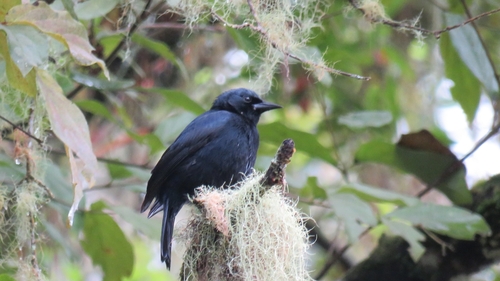
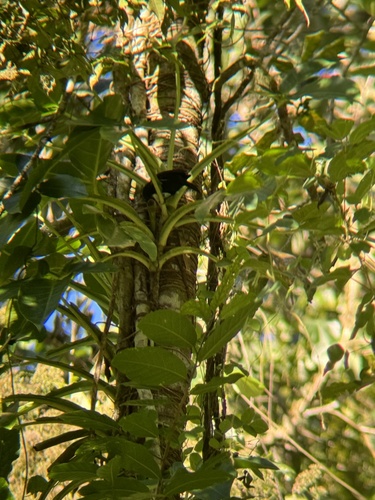
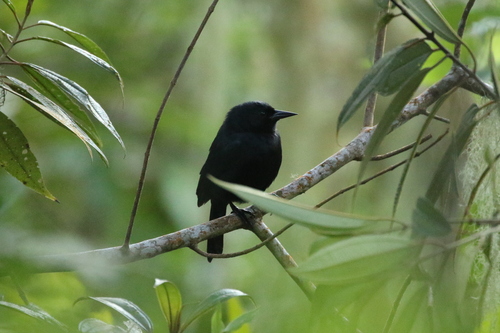
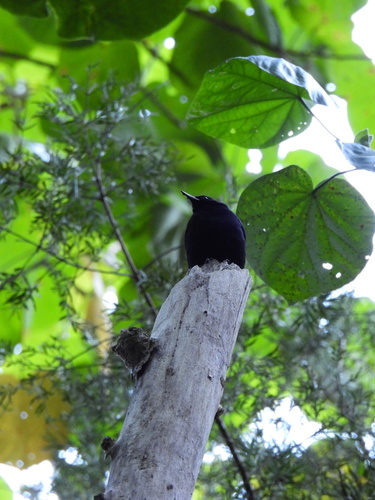

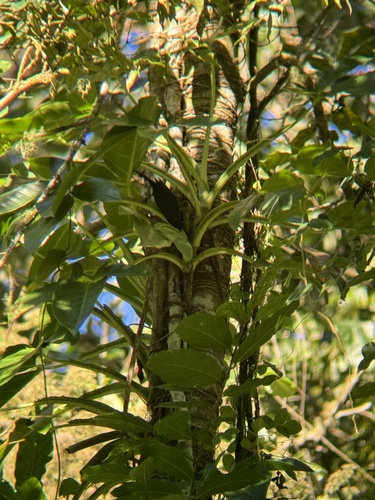

ID tip
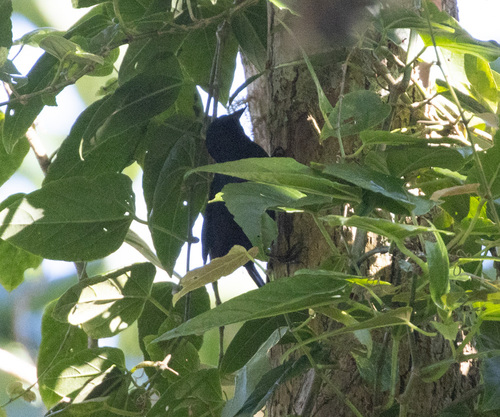
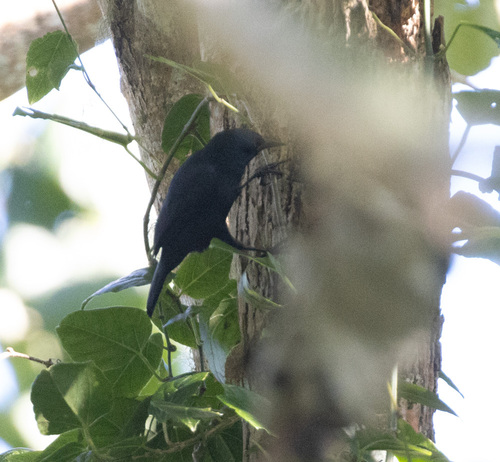
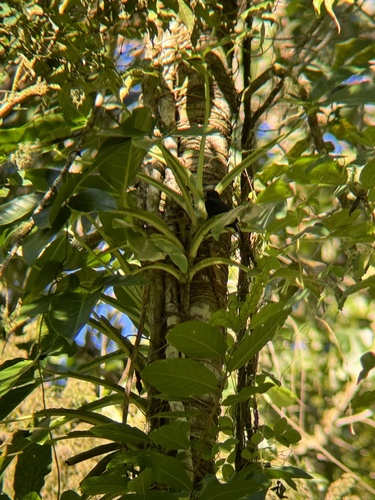
The Jamaican blackbird is a small icterid with all black plumage. It has a short tail that is often flayed.
Text from Wikipedia, licensed CC BY-SA 4.0.
When to see the Jamaican Blackbird
One bar for each month. Filled bars are the 6 months with records; pale bars are months with none. The wide bar is March, the month with the most records.
Where to see the Jamaican Blackbird
The map shades 1 country with regular records. Everything unshaded has no records. Countries are listed below the map.
About the Jamaican Blackbird
The Jamaican blackbird is a species of bird in the New World blackbird and oriole family Icteridae. It is the only species (monotypic) in the genus Nesopsar. The species has sometimes been included in the genus Agelaius, but molecular systematics have shown it not be closely related to any living New World blackbird or grackle. The species is endemic to Jamaica, where it is restricted to Cockpit Country, some central areas and the Blue and John Crow Mountains.
Text adapted from Wikipedia, licensed CC BY-SA 4.0.
Easily confused with
 Baudo OropendolaPsarocolius cassiniMale Baudo oropendolas are about 46 cm (18 in) long and females about 39.5 cm (16 in).
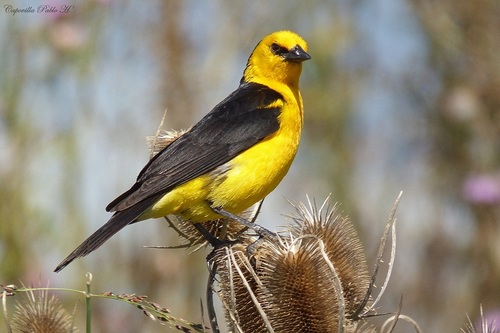 Saffron-cowled BlackbirdXanthopsar flavusThe saffron-cowled blackbird averages 20 cm (7.9 in) long.
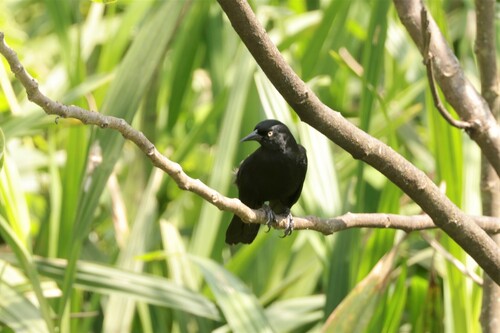 Pale-eyed BlackbirdAgelasticus xanthophthalmusThe adult pale-eyed blackbird is entirely black in both sexes.
Learn the Jamaican Blackbird in the BeakBrain App
Photo and call practice. Coming soon to iPhone and Android.
Play today's Daily BirdEvery photo and recording on this page is credited to its author under the licence shown. Spotted a problem with this page, or have a better photo? Contribute.