Learn what every symbol on the card means.Full credits and sources at beakbrain.com/symbols
 WetlandCup nestSmall · 45 g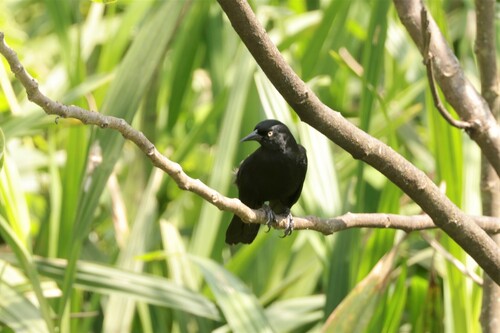


ID tip
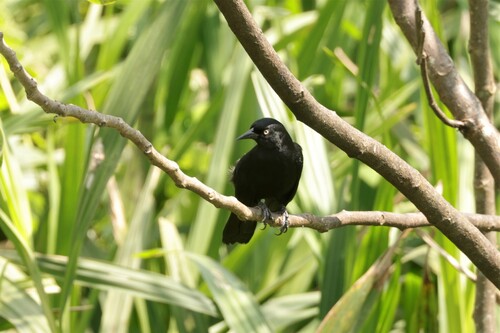
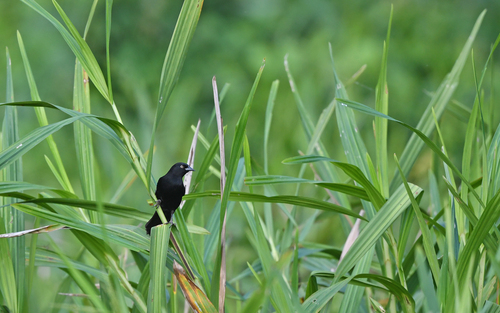
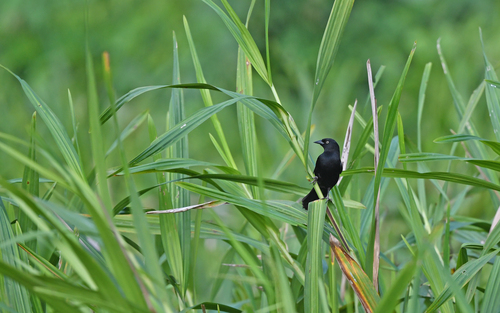
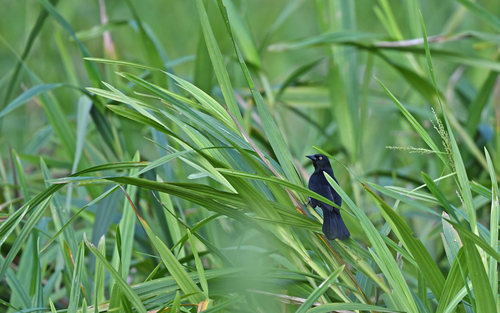
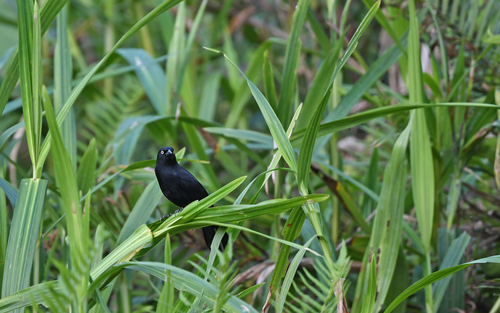
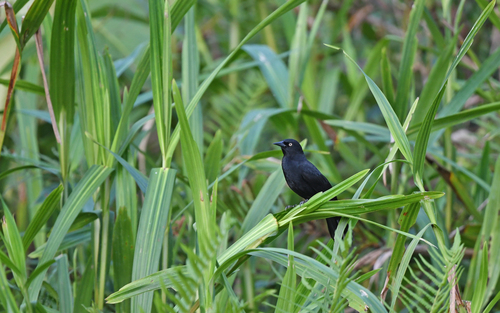
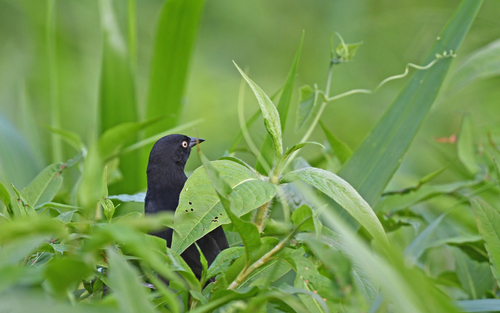
The adult pale-eyed blackbird is entirely black in both sexes. It has white or pale buff coloured irises to its eyes which are very distinctive and distinguish it from other black birds found in the area such as the velvet-fronted grackle and the shiny cowbird which have dark eyes. Juveniles and immature birds are brownish-black with underparts streaked with yellow or buff. The call is a loud metallic "tew-tew-tew-tew" similar to that of a black-capped donacobius. It is usually sung from the top of a shrub.
Text from Wikipedia, licensed CC BY-SA 4.0.
When to see the Pale-eyed Blackbird
One bar for each month. Filled bars are the 8 months with records; pale bars are months with none. The wide bar is October, the month with the most records.
Where to see the Pale-eyed Blackbird
The map shades 2 countries with regular records. Everything unshaded has no records. Countries are listed below the map.
About the Pale-eyed Blackbird
The pale-eyed blackbird is a species of bird in the family Icteridae. It is found in Ecuador and Peru where its natural habitat is swamps. An inconspicuous bird of very local occurrence, it was first described in 1969 by American ornithologist Lester L. Short.
Text adapted from Wikipedia, licensed CC BY-SA 4.0.
Easily confused with


Learn the Pale-eyed Blackbird in the BeakBrain App
Photo and call practice. Coming soon to iPhone and Android.
Play today's Daily BirdEvery photo and recording on this page is credited to its author under the licence shown. Spotted a problem with this page, or have a better photo? Contribute.