Learn what every symbol on the card means.Full credits and sources at beakbrain.com/symbols
 CoastalMedium · 283 g


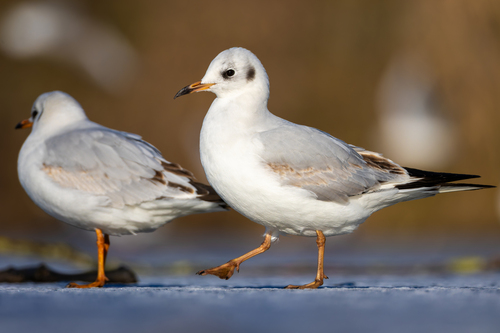
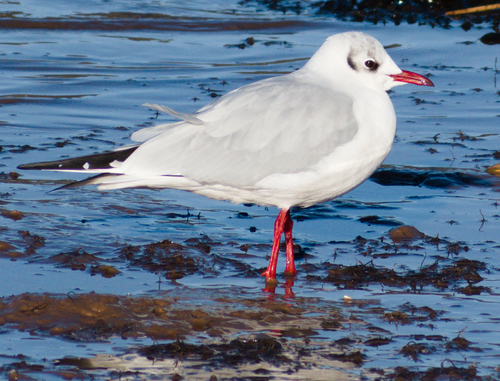
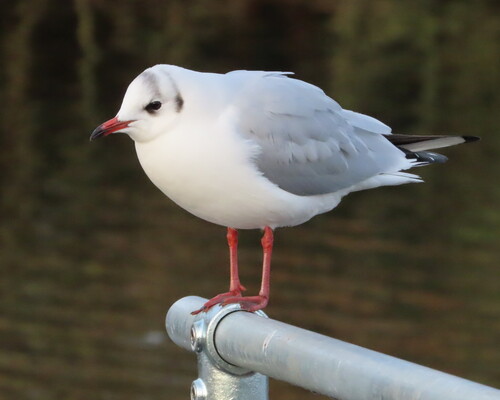
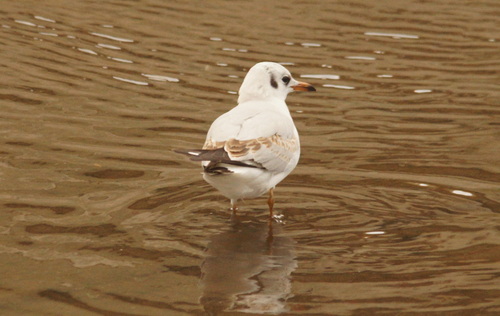
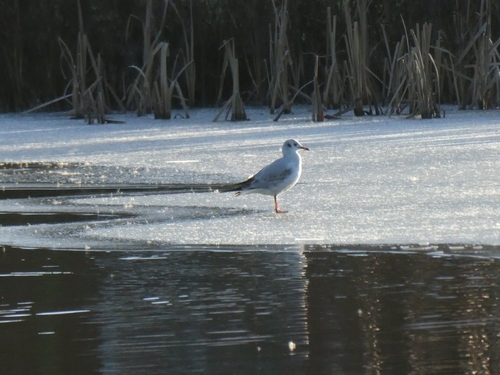
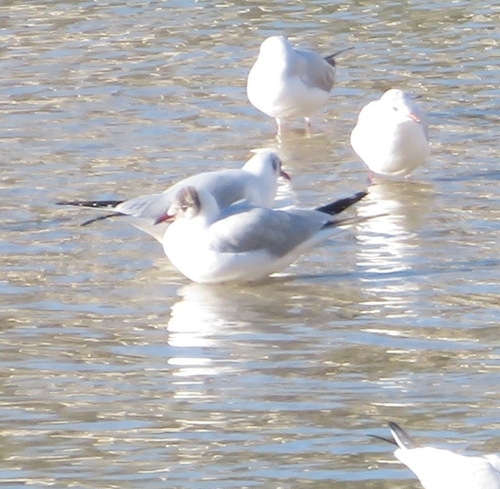
What the Black-headed Gull sounds like


ID tip
This gull is 34–39 cm (13+1⁄2–15+1⁄2 in) long with a 100–110 cm (39+1⁄2–43+1⁄2 in) wingspan and weighs 166–400 g (5+7⁄8–14+1⁄8 oz); males (186–400 g) average heavier than females (166–350 g), but with considerable overlap. In flight, the white leading edge of the outer wing (the outer primaries) is a good field mark, particularly combined with the dark underside of the inner primaries, which distinguishes it from the white underside of those feathers in its close relative the Bonaparte's gull.
Text from Wikipedia, licensed CC BY-SA 4.0.
When to see the Black-headed Gull
One bar for each month, and every month is filled: this bird is recorded here in all twelve. The wide bar is June, the month with the most records.
Where to see the Black-headed Gull
The map shades 141 countries with regular records, and 6 more in a lighter tone where the bird turns up only as a stray. Everything unshaded has no records. Countries are listed below the map.
Recorded as a rare visitor in Australia, South Africa, Nigeria, Guinea, Somalia, Colombia.
About the Black-headed Gull
The black-headed gull is a small gull that breeds in much of the Palearctic in Europe and Asia, and also locally in smaller numbers in coastal eastern Canada. Most of the population is migratory and winters further south, but many also remain in the milder areas of northwestern Europe. It was formerly sometimes cited as "common black-headed gull" to distinguish it from "great black-headed gull".
Text adapted from Wikipedia, licensed CC BY-SA 4.0.
Easily confused with
 Bonaparte's GullChroicocephalus philadelphiaBonaparte's gull is among the smallest of the gull species; only little gull and Saunders's gull are smaller.
 Silver GullChroicocephalus novaehollandiaeThe silver gull is a gull in Oceania.
 Brown-hooded GullChroicocephalus maculipennisAdults in the breeding season have a dark brown head and throat with a white semicircle around the posterior of the eye, while the neck, chest and abdomen are white.
Side by side: Black-headed Gull vs Bonaparte's Gull · Black-headed Gull vs Brown-hooded Gull
Learn the Black-headed Gull in the BeakBrain App
Photo and call practice. Coming soon to iPhone and Android.
Play today's Daily BirdEvery photo and recording on this page is credited to its author under the licence shown. Spotted a problem with this page, or have a better photo? Contribute.