Learn what every symbol on the card means.Full credits and sources at beakbrain.com/symbols
 Coastal269 g

What the Silver Gull sounds like


When to see the Silver Gull
One bar for each month, and every month is filled: this bird is recorded here in all twelve. The wide bar is November, the month with the most records.
Where to see the Silver Gull
The map shades 5 countries with regular records, and 3 more in a lighter tone where the bird turns up only as a stray. Everything unshaded has no records. Countries are listed below the map.
Recorded as a rare visitor in United States, China, Papua New Guinea.
About the Silver Gull
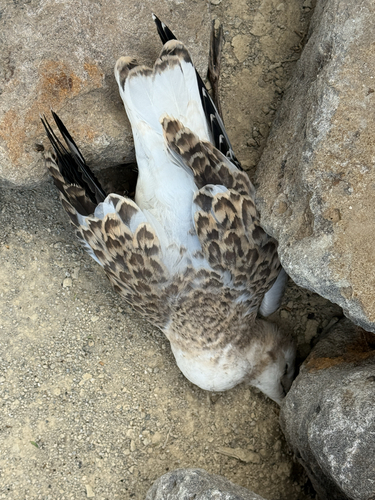
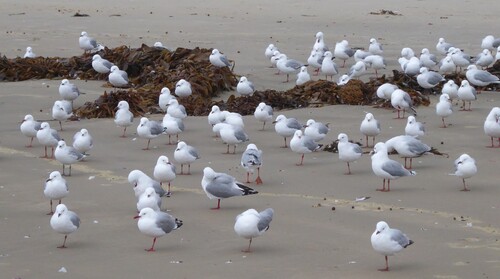
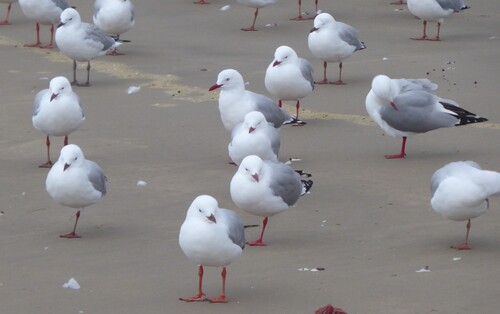
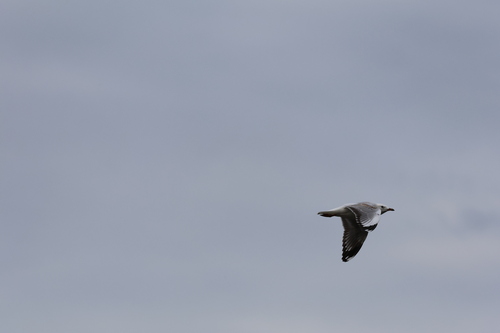
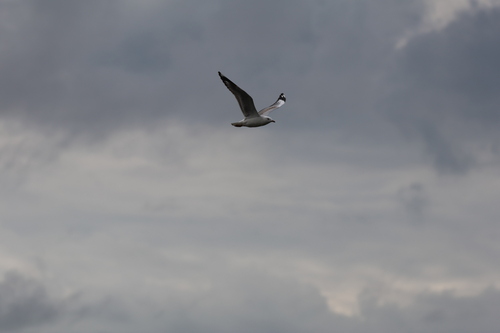
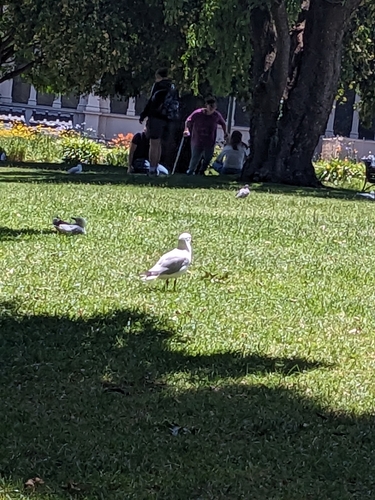
The silver gull is a gull in Oceania. It is the most common gull of Australia. It has been found throughout the continent, but particularly at or near coastal areas. It is smaller than the Pacific gull, which also lives in Australia.
Text adapted from Wikipedia, licensed CC BY-SA 4.0.
Easily confused with
 Bonaparte's GullChroicocephalus philadelphiaBonaparte's gull is among the smallest of the gull species; only little gull and Saunders's gull are smaller.
 Brown-hooded GullChroicocephalus maculipennisAdults in the breeding season have a dark brown head and throat with a white semicircle around the posterior of the eye, while the neck, chest and abdomen are white.
 Slender-billed GullChroicocephalus geneiThis species is 37 to 40 cm (14.6 to 15.7 in) long with a 90 to 102 cm (35.4 to 40.2 in) wingspan.
Learn the Silver Gull in the BeakBrain App
Photo and call practice. Coming soon to iPhone and Android.
Play today's Daily BirdEvery photo and recording on this page is credited to its author under the licence shown. Spotted a problem with this page, or have a better photo? Contribute.