Learn what every symbol on the card means.Full credits and sources at beakbrain.com/symbols
 WoodlandCavity nestSmall · 42 g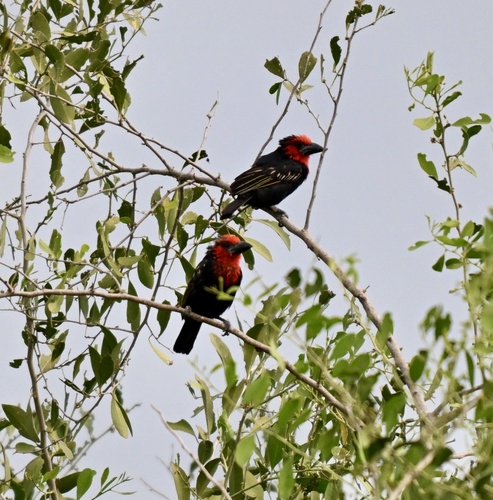
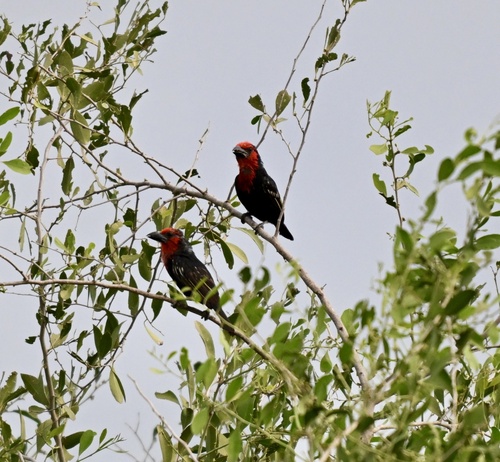
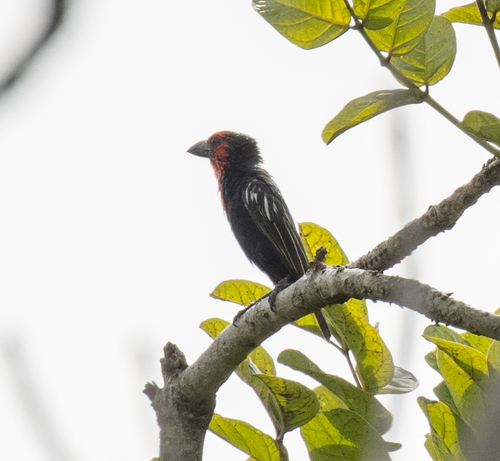
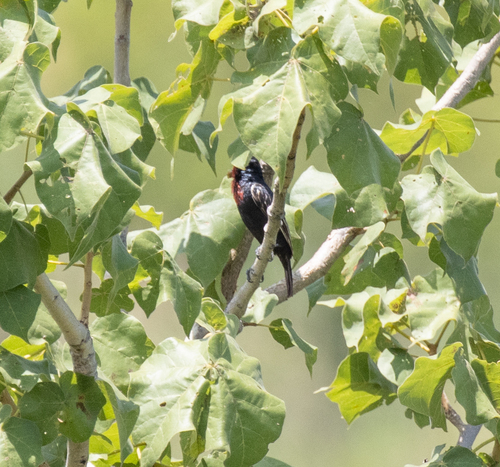

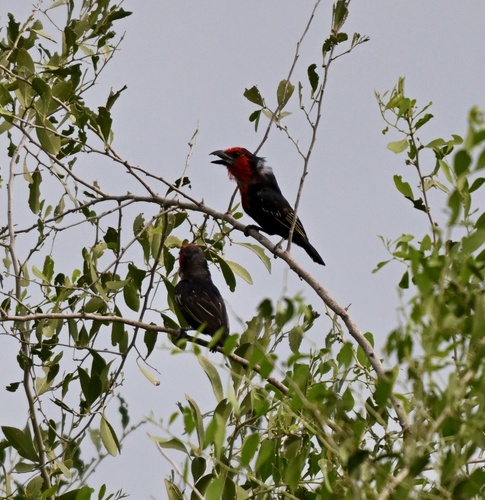
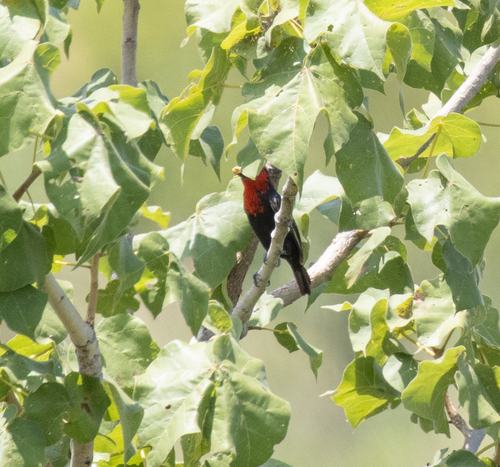
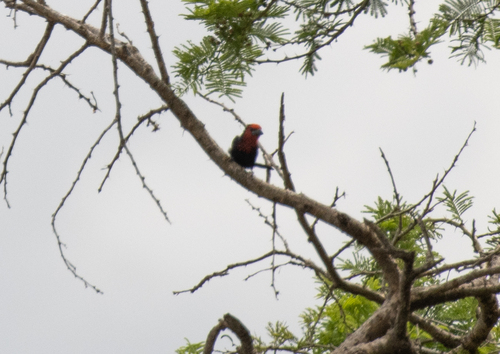
ID tip
Lybius guifsobalito can reach a wingspan of 7.9–9.4 cm (3.1–3.7 in) in males. The tail length is between 4.5 and 5.4 centimeters. The beak reaches a length between 1.9 and 2.2 centimeters. Females have similar body measurements, without noticeable sexual dimorphism. Males and femalesof these medium-sized barbets are glossy blue-black, the wings and the belly are a little more brown. They also have a bright red or red-orange face, throat and upper chest. The upperwing are narrowly lined with yellow to white.
Text from Wikipedia, licensed CC BY-SA 4.0.
When to see the Black-billed Barbet
One bar for each month, and every month is filled: this bird is recorded here in all twelve. The wide bar is March, the month with the most records.
Where to see the Black-billed Barbet
The map shades 7 countries with regular records. Everything unshaded has no records. Countries are listed below the map.
About the Black-billed Barbet
The black-billed barbet is a species of bird in the Lybiidae family.
Text adapted from Wikipedia, licensed CC BY-SA 4.0.
Easily confused with
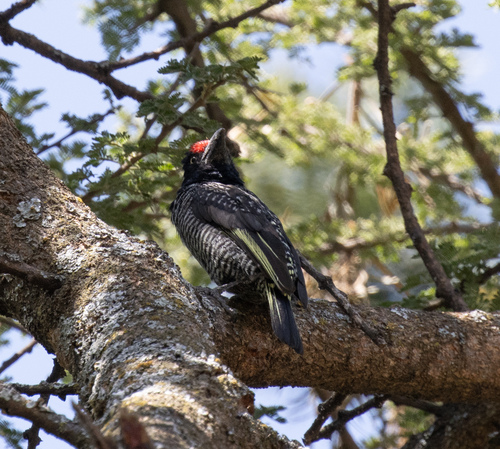 Banded BarbetLybius undatusThis barbet is approximately 20–25 cm long, stocky-looking, with a large head and a heavy bill with the bristles that the Lybius species is known for.
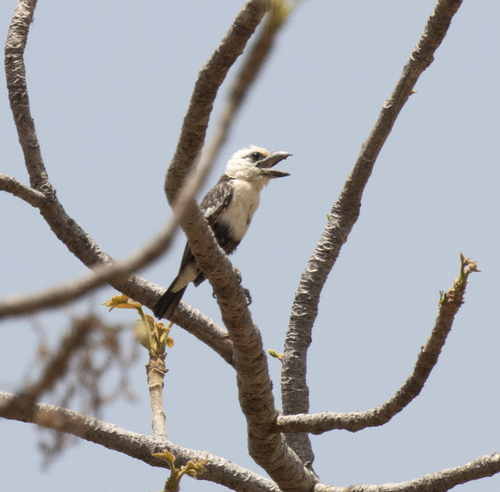 White-headed BarbetLybius leucocephalusThis species is one of the largest in this genus at 18–19.5 cm (7.1–7.7 in) in length.
 Red-faced BarbetLybius rubrifaciesThis barbet is one of the smaller of the Lybius species at only 17 cm (6.7 in) in length.
Side by side: Black-billed Barbet vs Black-collared Barbet · Black-billed Barbet vs Vieillot's Barbet · Black-billed Barbet vs White-headed Barbet
Learn the Black-billed Barbet in the BeakBrain App
Photo and call practice. Coming soon to iPhone and Android.
Play today's Daily BirdEvery photo and recording on this page is credited to its author under the licence shown. Spotted a problem with this page, or have a better photo? Contribute.