Learn what every symbol on the card means.Full credits and sources at beakbrain.com/symbols
 ForestCup nestSmall · 17 g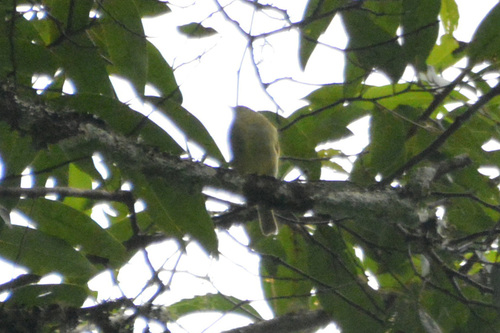
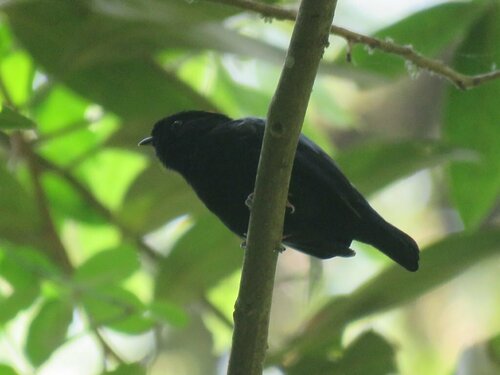
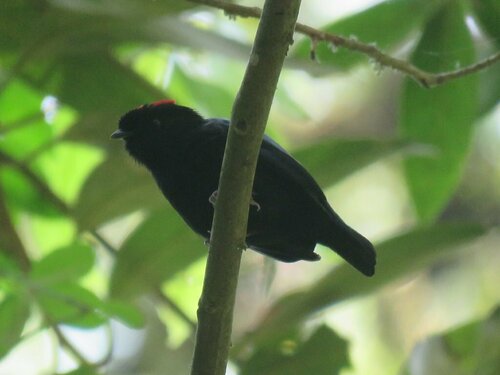
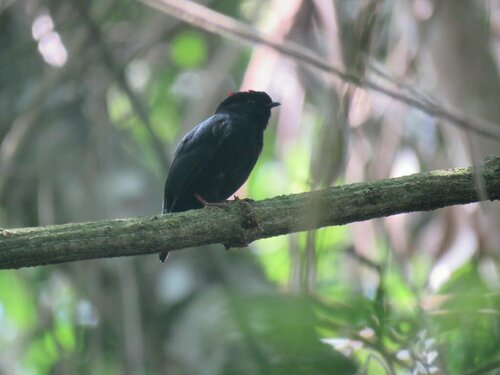
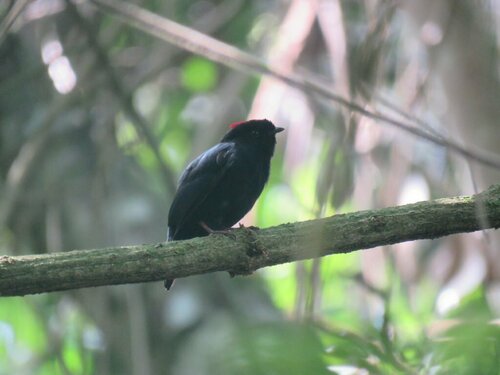
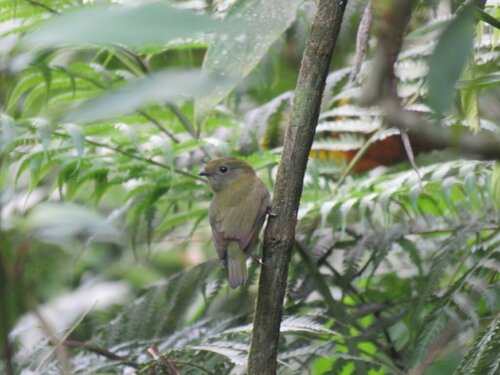
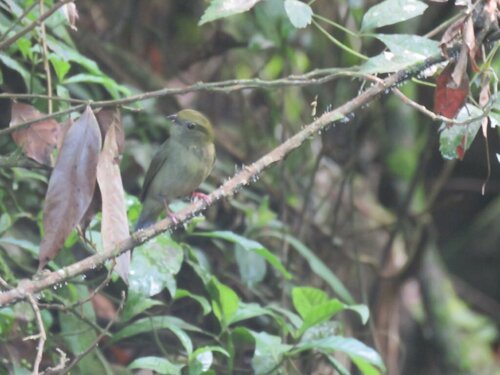
ID tip
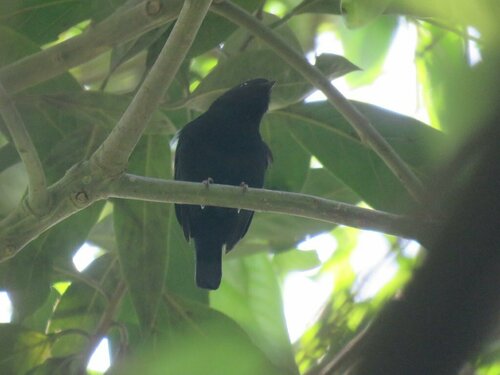
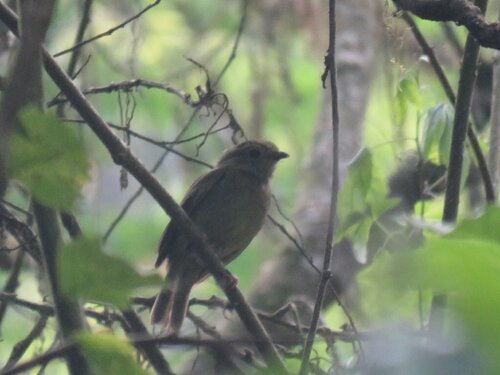
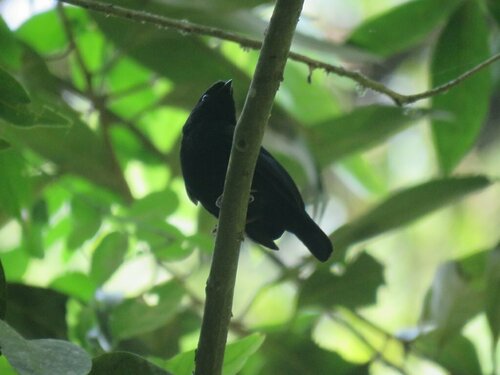
The Yungas manakin is 12 to 13 cm (4.7 to 5.1 in) long and weighs about 14 to 22 g (0.49 to 0.78 oz). The species is sexually dimorphic, though both sexes have a short tuft of feathers on the forecrown. Adult males have a small dark red patch in the center of their crown and a pale blue back. The rest of their plumage is black. Adult females have olive-green upperparts with browner wing coverts and flight feathers. Their underparts are a paler green that becomes paler still on the lower belly and undertail coverts. Voice: The Yungas manakin's song is "a loud "CHEW'LEW!", "CHEW!", "TCHAW", or "WHEW!" and is often sung in chorus. The male's display call is "a quiet, nasal, buzzy errwahh repeated several times". Another call is "a rising, ani-like huLEE?".
Text from Wikipedia, licensed CC BY-SA 4.0.
When to see the Yungas Manakin
One bar for each month. Filled bars are the 8 months with records; pale bars are months with none. The wide bar is October, the month with the most records.
Where to see the Yungas Manakin
The map shades 3 countries with regular records. Everything unshaded has no records. Countries are listed below the map.
About the Yungas Manakin
The Yungas manakin is a species of bird in the family Pipridae. It is found in Argentina, Bolivia, and Peru.
Text adapted from Wikipedia, licensed CC BY-SA 4.0.
Easily confused with
 Araripe ManakinChiroxiphia bokermanniAs typical of most manakins, males and females have a strong sexual dimorphism in the colours of the plumage.
 Helmeted ManakinChiroxiphia galeataThe helmeted manakin has sexually dimorphic plumage.
 Blue-backed ManakinChiroxiphia pareolaLike other manakins, the blue-backed manakin is a compact, brightly coloured forest bird, typically 13 cm long and weighing 19 g.
Side by side: Lance-tailed Manakin vs Yungas Manakin · Blue-backed Manakin vs Yungas Manakin
Learn the Yungas Manakin in the BeakBrain App
Photo and call practice. Coming soon to iPhone and Android.
Play today's Daily BirdEvery photo and recording on this page is credited to its author under the licence shown. Spotted a problem with this page, or have a better photo? Contribute.