Learn what every symbol on the card means.Full credits and sources at beakbrain.com/symbols
 ForestCup nestSmall · 29 g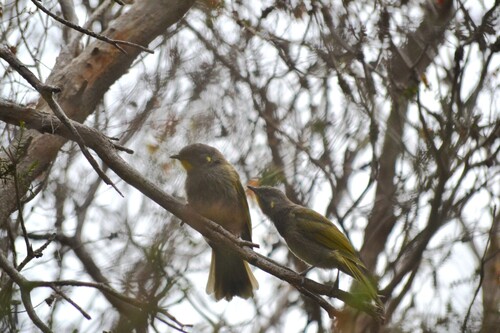


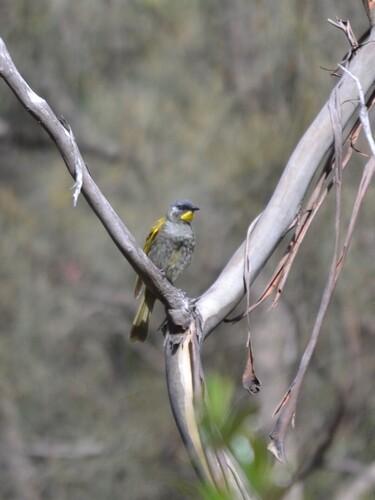
ID tip
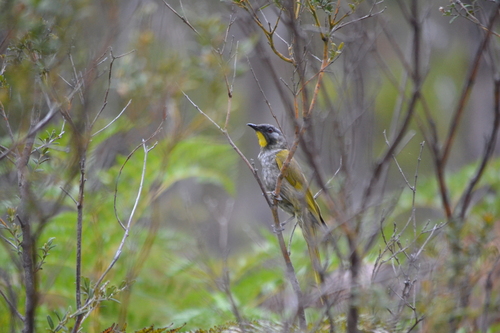
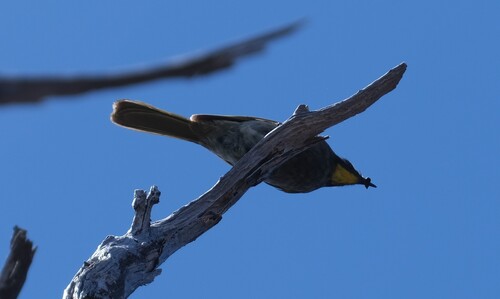
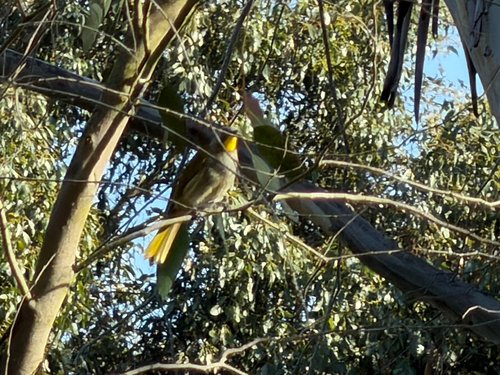
The yellow-throated honeyeater is a medium-sized honeyeater with a relatively long tail. Typical weight is 31 g (1.1 oz) and the average length is 21 cm (8.3 in). The plumage is bright olive-green above, with a silver-grey crown, face, and underbelly, contrasting with a distinctive bright yellow chin and throat. There is a small yellow ear-patch and the wing feathers are outlined with yellow. The bill is black and the eye is a deep ruby red. Females are smaller than males. Juvenile birds are very similar to adults, but duller. Voice: The yellow-throated honeyeater makes a variety of calls. These include a breeding call, used for attracting mates, and to advertise ownership of a territory. That call varies geographically, but essentially consists of a whirring chur-uk, chur-uk or a loud de-wit, and is used during breeding season. Another common call is a repeated tonk, tonk, tonk or tchook, tchook.
Text from Wikipedia, licensed CC BY-SA 4.0.
When to see the Yellow-throated Honeyeater
One bar for each month, and every month is filled: this bird is recorded here in all twelve. The wide bar is November, the month with the most records.
Where to see the Yellow-throated Honeyeater
The map shades 1 country with regular records. Everything unshaded has no records. Countries are listed below the map.
About the Yellow-throated Honeyeater
The yellow-throated honeyeater is a species of passerine bird in the honeyeater family Meliphagidae. It is similar in behaviour and appearance to the white-eared honeyeater and is endemic to Australia's island state of Tasmania. It was formerly considered a pest of orchards.
Text adapted from Wikipedia, licensed CC BY-SA 4.0.
Easily confused with

Side by side: White-eared Honeyeater vs Yellow-throated Honeyeater
Learn the Yellow-throated Honeyeater in the BeakBrain App
Photo and call practice. Coming soon to iPhone and Android.
Play today's Daily BirdEvery photo and recording on this page is credited to its author under the licence shown. Spotted a problem with this page, or have a better photo? Contribute.