Learn what every symbol on the card means.Full credits and sources at beakbrain.com/symbols
 ShrublandDomed nestTiny · 6 g


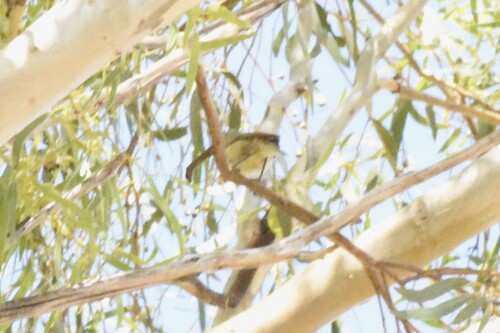
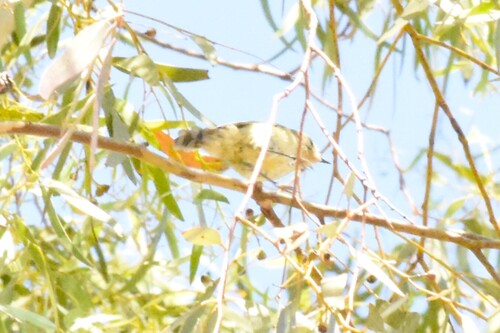
ID tip
Although similar to the striated thornbill and brown thornbill in both size and shape, the yellow colour of the yellow thornbill is more prominent. There is no sexual dimorphism, so that males and females look alike. They are around 9 cm (3.5 in) in length, with an average wing span of 14 cm (5.5 in), and weighing between 6–7 g (0.21–0.25 oz). Voice: The yellow thornbill has a loud, two-note tzid-id call, notably different from calls of the closely related striated thornbill by its harsher, less insect-like sound. The call is repeated at various intervals throughout the day and is associated with contact between birds while foraging, as defence, or as a territorial advertisement.
Text from Wikipedia, licensed CC BY-SA 4.0.
When to see the Yellow Thornbill
One bar for each month, and every month is filled: this bird is recorded here in all twelve. The wide bar is October, the month with the most records.
Where to see the Yellow Thornbill
The map shades 1 country with regular records. Everything unshaded has no records. Countries are listed below the map.
About the Yellow Thornbill
The yellow thornbill, formerly known as the little thornbill, is a tiny passerine bird endemic to the eastern coast of Australia. While currently listed as Least Concern by the IUCN, the general consensus is that the population is decreasing.
Text adapted from Wikipedia, licensed CC BY-SA 4.0.
Easily confused with
 Striated ThornbillAcanthiza lineataThe adult striated thornbill is 9–10 centimetres (3.5–3.9 in) long and weighs around 7 grams (0.25 oz).
 Buff-rumped ThornbillAcanthiza reguloidesThe buff-rumped thornbill is a small passerine bird species belonging to the genus
Acanthiza, most of which are endemic to Australia.
Buff-rumped ThornbillAcanthiza reguloidesThe buff-rumped thornbill is a small passerine bird species belonging to the genus
Acanthiza, most of which are endemic to Australia.
 Inland ThornbillAcanthiza apicalisThe inland thornbill is very similar to the brown thornbill (A. pusilla) in appearance, and these two species are sometimes considered conspecific.
Side by side: Brown Thornbill vs Yellow Thornbill · Yellow-rumped Thornbill vs Yellow Thornbill · Striated Thornbill vs Yellow Thornbill · Inland Thornbill vs Yellow Thornbill
Learn the Yellow Thornbill in the BeakBrain App
Photo and call practice. Coming soon to iPhone and Android.
Play today's Daily BirdEvery photo and recording on this page is credited to its author under the licence shown. Spotted a problem with this page, or have a better photo? Contribute.