Learn what every symbol on the card means.Full credits and sources at beakbrain.com/symbols
 GrasslandDomed nestSmall · 22 g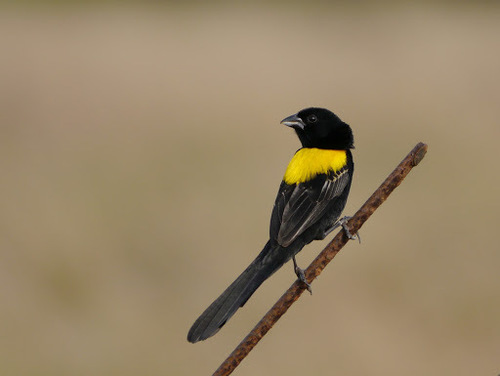
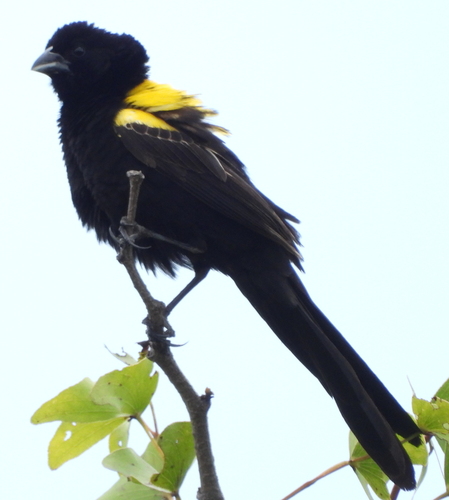
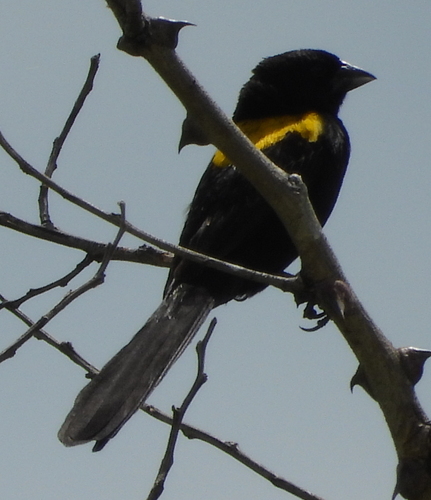
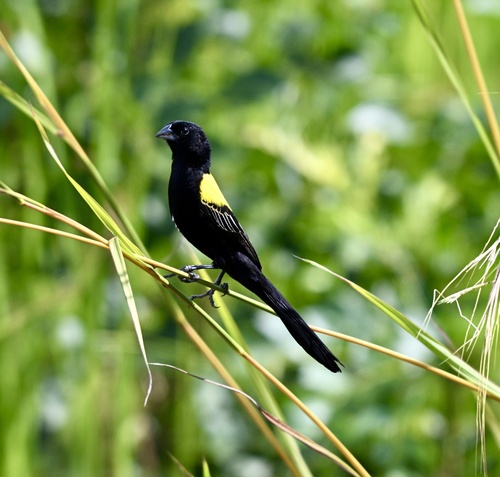
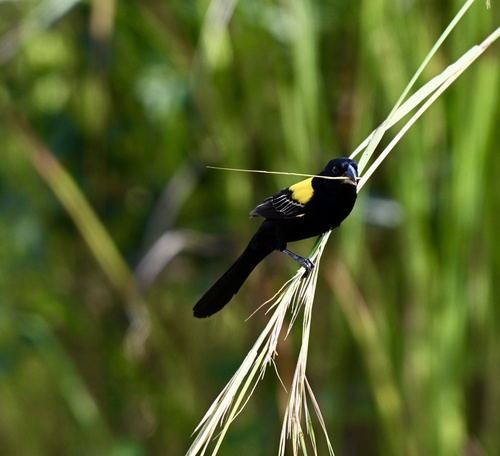
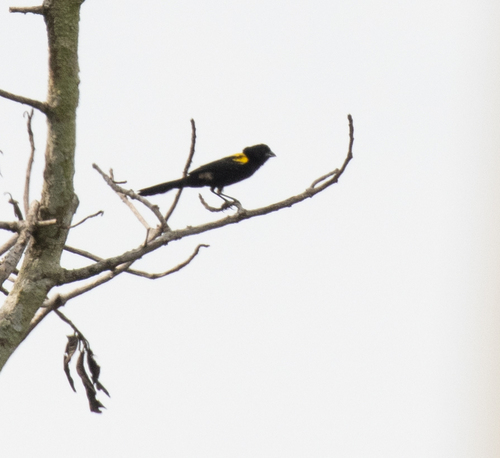
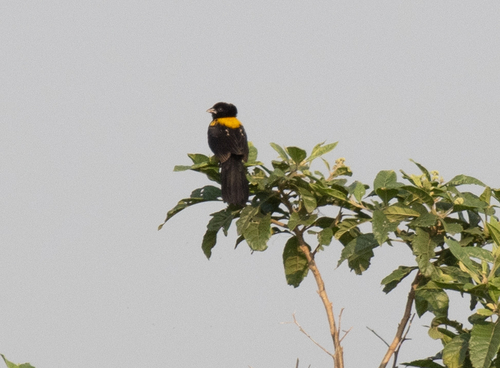


ID tip
Males are larger than females and acquire longer tails and striking black and golden yellow plumages in the breeding season. The mantle colour is either golden yellow, or in the case of the northeastern race, E. m. macrocercus, black. The yellow shoulders persist in all male plumages, whether breeding or non-breeding.
Text from Wikipedia, licensed CC BY-SA 4.0.
When to see the Yellow-mantled Widowbird
One bar for each month, and every month is filled: this bird is recorded here in all twelve. The wide bar is July, the month with the most records.
Where to see the Yellow-mantled Widowbird
The map shades 25 countries with regular records, and 2 more in a lighter tone where the bird turns up only as a stray. Everything unshaded has no records. Countries are listed below the map.
Recorded as a rare visitor in Burkina Faso, South Africa.
About the Yellow-mantled Widowbird
The yellow-mantled widowbird, also known as the yellow-backed widow, is a species of bird in the family Ploceidae.
Text adapted from Wikipedia, licensed CC BY-SA 4.0.
Easily confused with
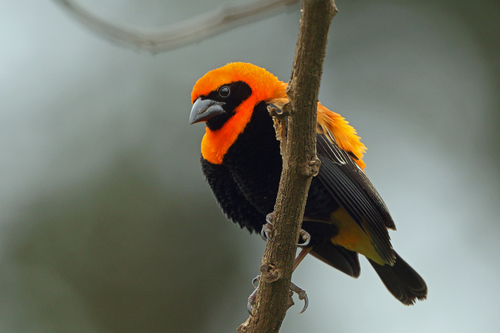 Black-winged Red BishopEuplectes hordeaceusThe black-winged red bishop is a stocky 13–15 cm (5.1–5.9 in) bird.
 Black BishopEuplectes gierowiiAt 14 to 16 cm (5.5–6.3 in), the black bishop is large for its genus.
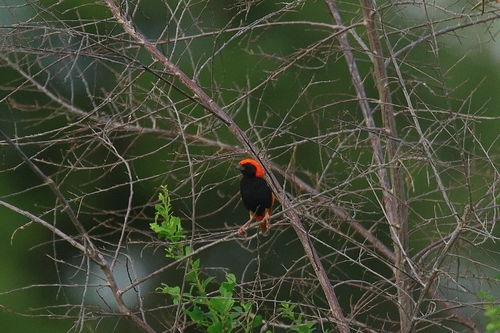 Zanzibar Red BishopEuplectes nigroventrisThe Zanzibar red bishop is a species of bird in the family Ploceidae.
Side by side: Northern Red Bishop vs Yellow-mantled Widowbird · Black-winged Red Bishop vs Yellow-mantled Widowbird · Black Bishop vs Yellow-mantled Widowbird
Learn the Yellow-mantled Widowbird in the BeakBrain App
Photo and call practice. Coming soon to iPhone and Android.
Play today's Daily BirdEvery photo and recording on this page is credited to its author under the licence shown. Spotted a problem with this page, or have a better photo? Contribute.