Learn what every symbol on the card means.Full credits and sources at beakbrain.com/symbols
 GrasslandDomed nestSmall · 28 g

ID tip
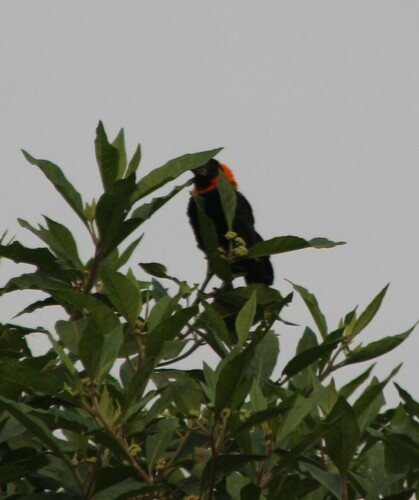
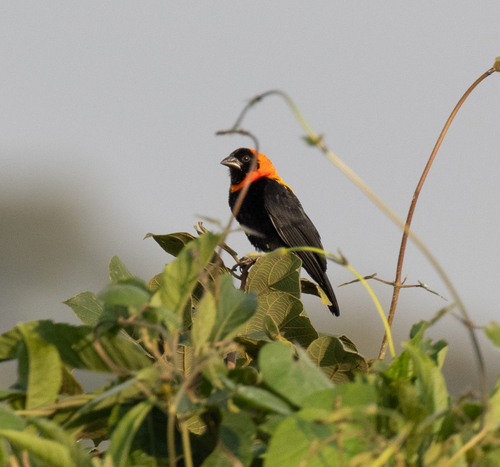
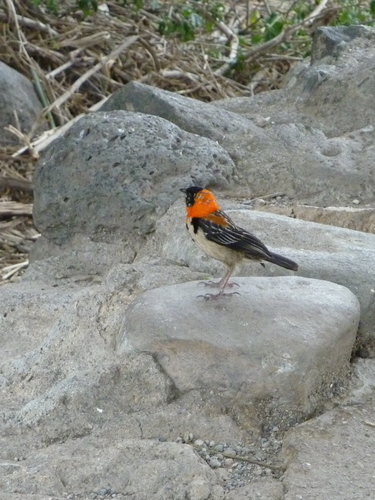
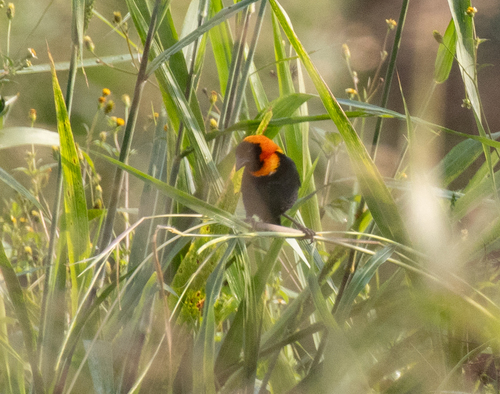
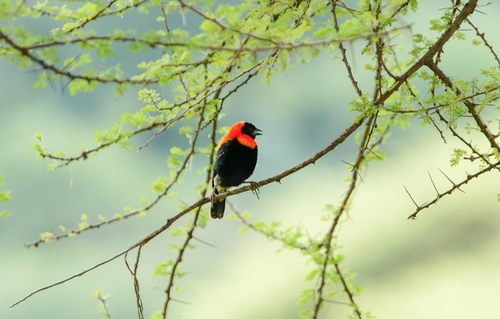
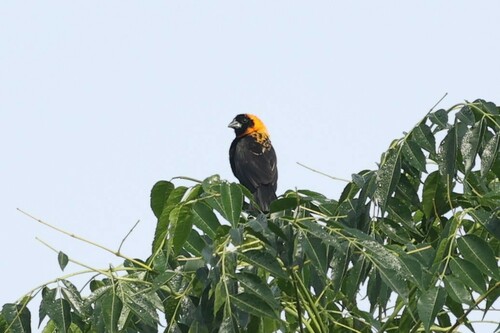
At 14 to 16 cm (5.5–6.3 in), the black bishop is large for its genus. The breeding male is black on the wings, tail, chest, cheeks and forehead. The neck, back of the head and breast band) are orange or orange-red. The under tail-coverts are pale buff with black streaks, and the upper back is yellow or orange-yellow in subspecies ansorgei, and orange in friederichseni. The throat is scarlet in the nominate subspecies and black in ansorgei. The subspecies friederichseni has the undertail coverts isabelline. The upper back is golden yellow and the rump is brown.
Text from Wikipedia, licensed CC BY-SA 4.0.
When to see the Black Bishop
One bar for each month, and every month is filled: this bird is recorded here in all twelve. The wide bar is July, the month with the most records.
Where to see the Black Bishop
The map shades 6 countries with regular records, and 2 more in a lighter tone where the bird turns up only as a stray. Everything unshaded has no records. Countries are listed below the map.
Recorded as a rare visitor in Nigeria, South Sudan.
About the Black Bishop
The black bishop is a species of passerine bird in the family Ploceidae native to Africa south of the Sahara. Three subspecies are recognised.
Text adapted from Wikipedia, licensed CC BY-SA 4.0.
Easily confused with
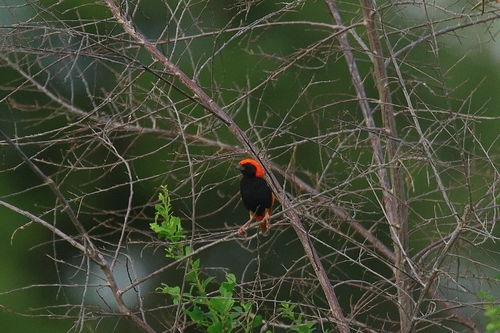 Zanzibar Red BishopEuplectes nigroventrisThe Zanzibar red bishop is a species of bird in the family Ploceidae.
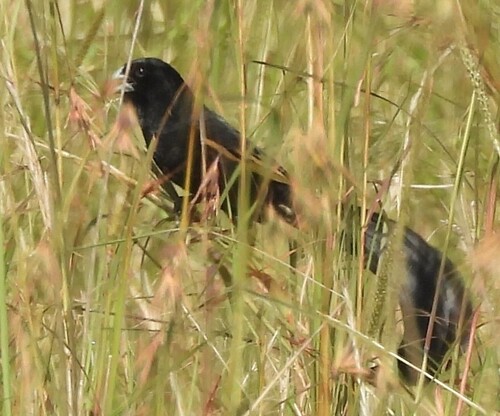 Jackson's WidowbirdEuplectes jacksoniJackson's widowbird is a species of bird in the family Ploceidae.
 Marsh WidowbirdEuplectes hartlaubiThe marsh widowbird or Hartlaub's widowbird is a bird in the family Ploceidae.
Side by side: Black Bishop vs Black-winged Red Bishop · Black Bishop vs Yellow-mantled Widowbird
Learn the Black Bishop in the BeakBrain App
Photo and call practice. Coming soon to iPhone and Android.
Play today's Daily BirdEvery photo and recording on this page is credited to its author under the licence shown. Spotted a problem with this page, or have a better photo? Contribute.