Learn what every symbol on the card means.Full credits and sources at beakbrain.com/symbols
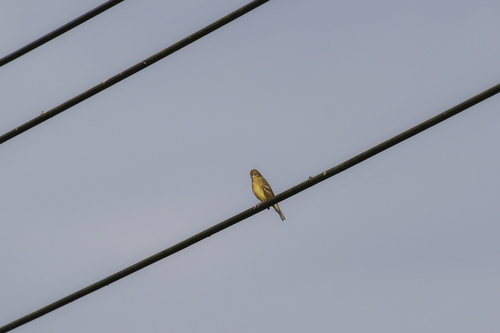
 ForestCup nestTiny · 15 g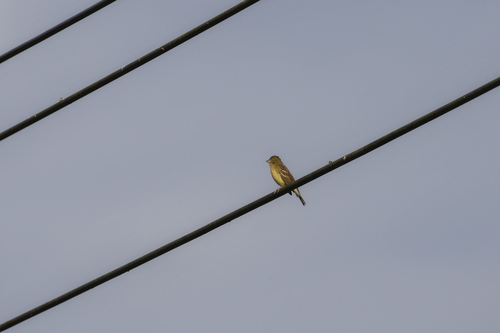

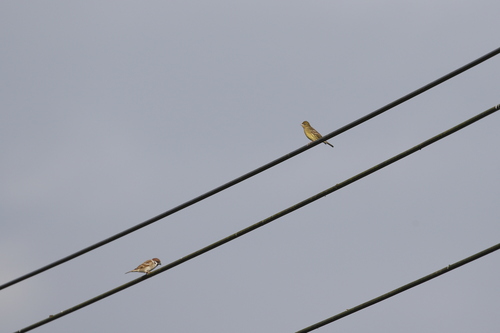
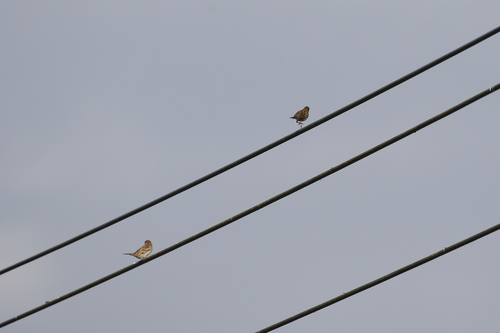
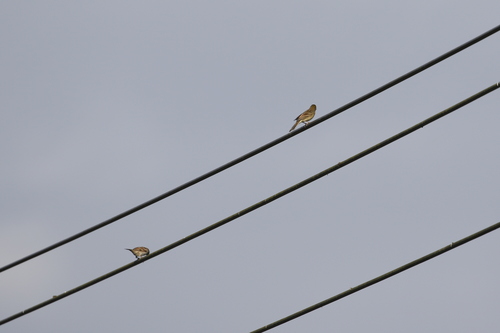
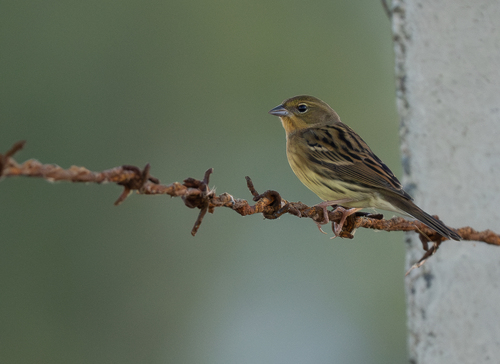
ID tip
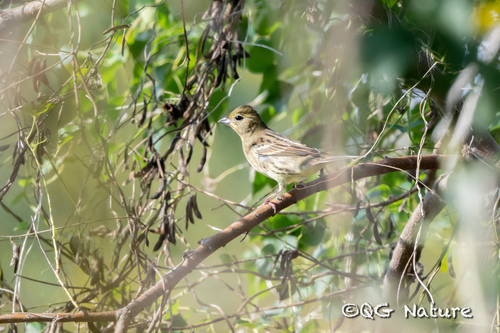
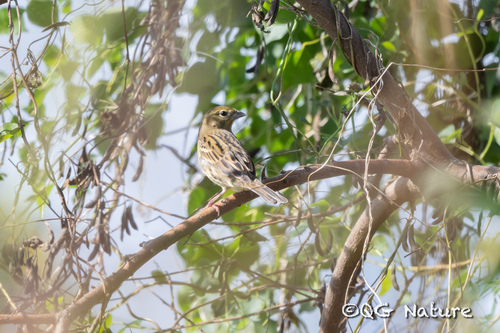
It is 14 cm long and has a conical, grey bill, pinkish-brown feet and brown eyes. The male is grey-green above with black streaks on the back. The underparts are yellow-green (brightest on the throat and belly) with streaks on the flanks. It has black lores, a narrow black chin, a pale eye ring and white outer tail feathers. There are two bars on the wing, formed by pale tips to the median and greater wing coverts. The female is similar to the male but paler without the black on the lores and chin. The species has a twittering song and a soft tsip call.
Text from Wikipedia, licensed CC BY-SA 4.0.
When to see the Yellow Bunting
One bar for each month. Filled bars are the 4 months with records; pale bars are months with none. The wide bar is April, the month with the most records.
Where to see the Yellow Bunting
The map shades 7 countries with regular records. Everything unshaded has no records. Countries are listed below the map.
About the Yellow Bunting
The yellow bunting or Japanese yellow bunting is a passerine bird of eastern Asia in the bunting family Emberizidae. It is threatened by habitat loss, the use of pesticides and trapping for the cagebird industry.
Text adapted from Wikipedia, licensed CC BY-SA 4.0.
Easily confused with
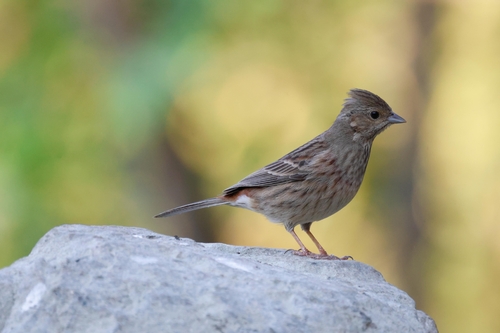 White-capped BuntingEmberiza stewartiThe white-capped bunting or chestnut-breasted bunting is a species of bird in the family Emberizidae.
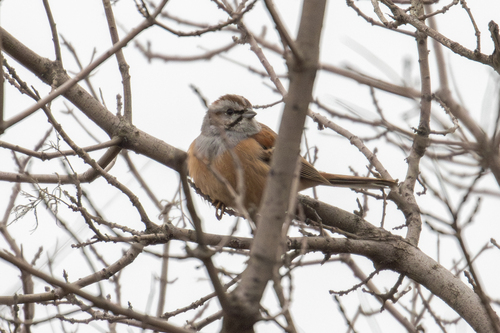 Godlewski's BuntingEmberiza godlewskiiThe adult's head, neck, and breast are grey over-all with a brown or black eye stripe, "mustache", and crown.
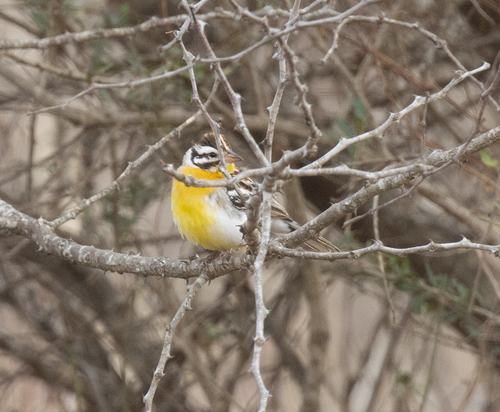 Somali BuntingEmberiza poliopleuraThe Somali Bunting is a medium-large bunting, 14–15 cm long, and weigh 14–18 g.
Side by side: Godlewski's Bunting vs Yellow Bunting
Learn the Yellow Bunting in the BeakBrain App
Photo and call practice. Coming soon to iPhone and Android.
Play today's Daily BirdEvery photo and recording on this page is credited to its author under the licence shown. Spotted a problem with this page, or have a better photo? Contribute.