Learn what every symbol on the card means.Full credits and sources at beakbrain.com/symbols
 GrasslandCup nestSmall · 45 g


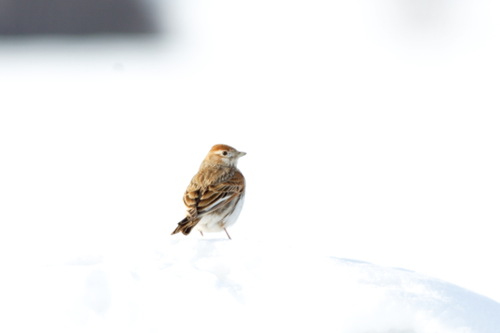
ID tip
This lark with flashing white wing patches is large and robust, usually 17–19 cm in length, with a wingspan of 35 cm. Both sexes weigh about 44 g. In flight, it is unmistakable due to its striking wing pattern, with black outer flight feathers, white inner flight feathers, and the rest of the wing chestnut. Its body is dark-streaked grey above and whitish below. The adult male has a chestnut crown, but the sexes are otherwise similar. Voice: Its song is a more melodious version of the Eurasian skylark song.
Text from Wikipedia, licensed CC BY-SA 4.0.
When to see the White-winged Lark
One bar for each month. Filled bars are the 6 months with records; pale bars are months with none. The wide bar is May, the month with the most records.
Where to see the White-winged Lark
The map shades 5 countries with regular records, and 3 more in a lighter tone where the bird turns up only as a stray. Everything unshaded has no records. Countries are listed below the map.
About the White-winged Lark
The white-winged lark is a species of lark breeding from southwestern Russia east through south-central Russia and Kazakhstan to the extreme west of China. It is partially migratory, with birds moving southwest in winter, west to southern Ukraine and south to northern Iran. The southernmost breeding birds are mainly resident. It is a very rare vagrant to western Europe.
Text adapted from Wikipedia, licensed CC BY-SA 4.0.
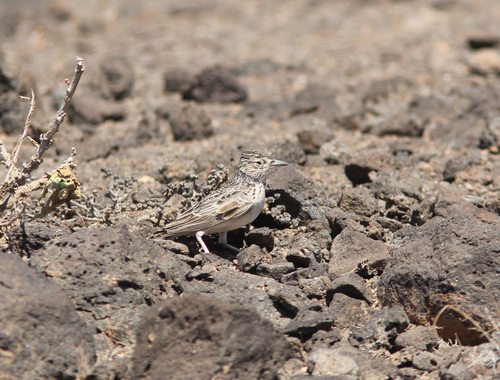
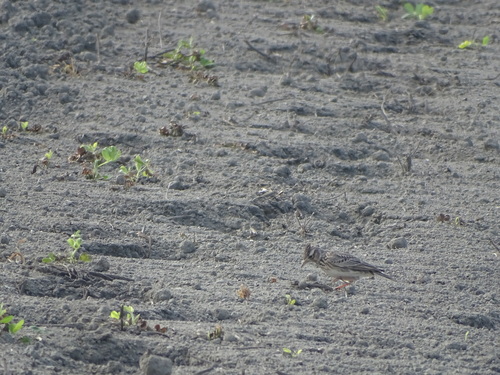
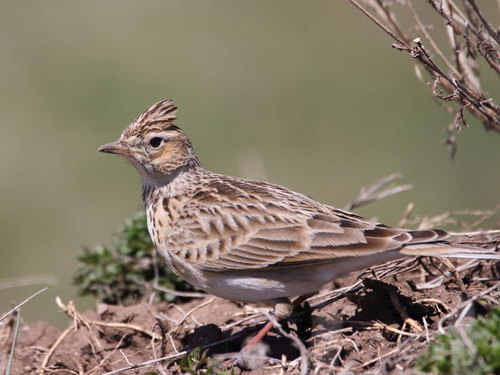
Easily confused with
Learn the White-winged Lark in the BeakBrain App
Photo and call practice. Coming soon to iPhone and Android.
Play today's Daily BirdEvery photo and recording on this page is credited to its author under the licence shown. Spotted a problem with this page, or have a better photo? Contribute.