Learn what every symbol on the card means.Full credits and sources at beakbrain.com/symbols
 ShrublandCup nestSmall · 22 g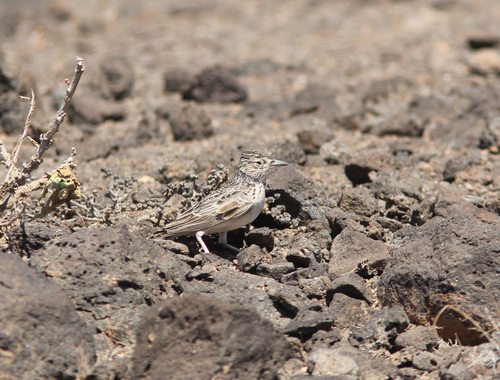
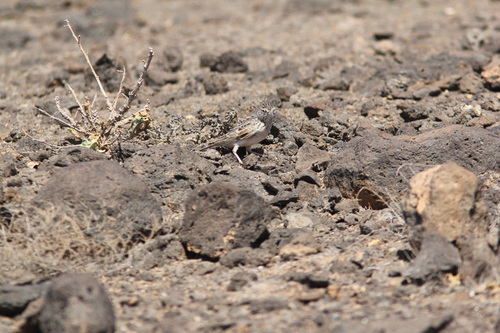

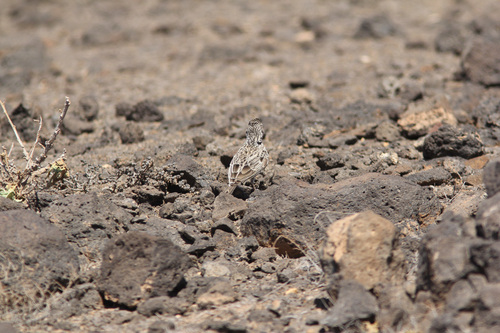
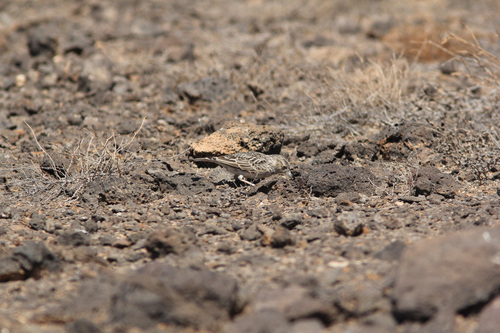
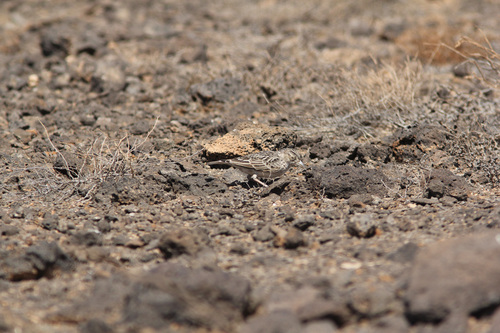
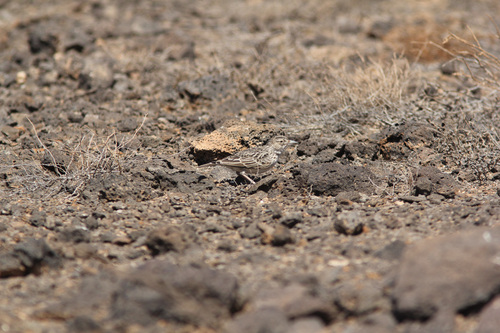
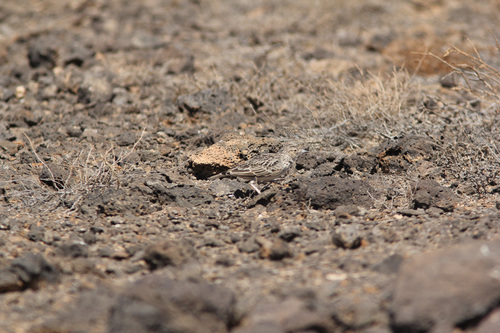
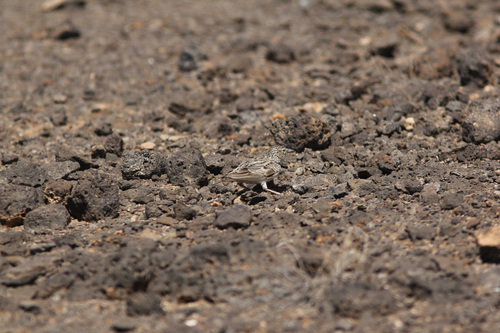
ID tip
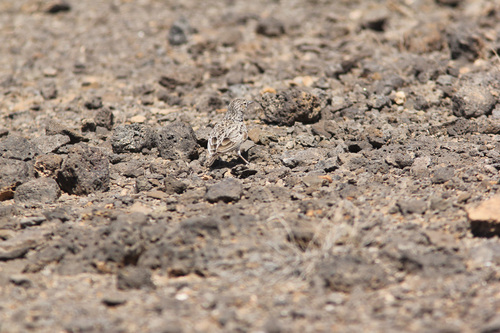
Raso larks are relatively small in size. The Raso larks can range from sizes between 14 and 18 cm. The adult population is mostly made up of males who are larger than the females. The body has black and brown short streaks and paler around the chest with an erectile crest. The bill is thick-based and robust, longer for the males. The Raso lark is considered an adult when it has developed a reddish-brown tone between the ears and tail, with a pattern on the crown and back. While in flight they display a short tail with short broad wings. The tail and edge of the wings are white.
Text from Wikipedia, licensed CC BY-SA 4.0.
When to see the Raso Lark
One bar for each month. Filled bars are the 9 months with records; pale bars are months with none. The wide bar is April, the month with the most records.
Where to see the Raso Lark
The map shades 1 country with regular records. Everything unshaded has no records. Countries are listed below the map.
About the Raso Lark
The Raso lark is a small passerine bird with a highly restricted range, being found only on Raso islet in the Cape Verde Islands. This critically endangered member of the family Alaudidae lives in very arid terrain, and is considered one of the least known birds in the Western Palaearctic region, due to its remoteness and the lack of much ornithological study on the archipelago as a whole.
Text adapted from Wikipedia, licensed CC BY-SA 4.0.
Easily confused with
 White-winged LarkAlauda leucopteraThis lark with flashing white wing patches is large and robust, usually 17–19 cm in length, with a wingspan of 35 cm.
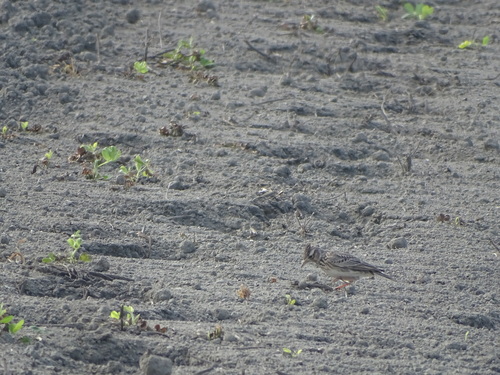 Oriental SkylarkAlauda gulgulaOriental skylarks range from 15.5–18 cm (6.1–7.1 in) long and 24–30 g (0.85–1.06 oz) weight.
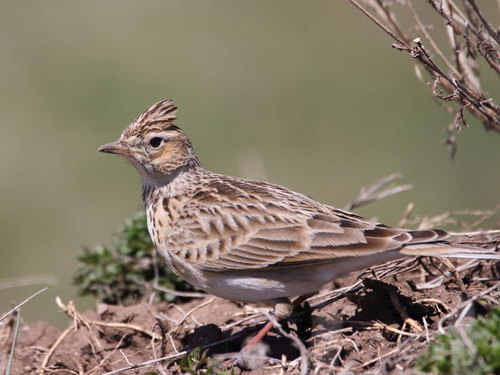 Eurasian SkylarkAlauda arvensisThe Eurasian skylark is 18–19 cm (7.1–7.5 in) in length.
Learn the Raso Lark in the BeakBrain App
Photo and call practice. Coming soon to iPhone and Android.
Play today's Daily BirdEvery photo and recording on this page is credited to its author under the licence shown. Spotted a problem with this page, or have a better photo? Contribute.