Learn what every symbol on the card means.Full credits and sources at beakbrain.com/symbols
 ForestCavity nestSmall · 26 g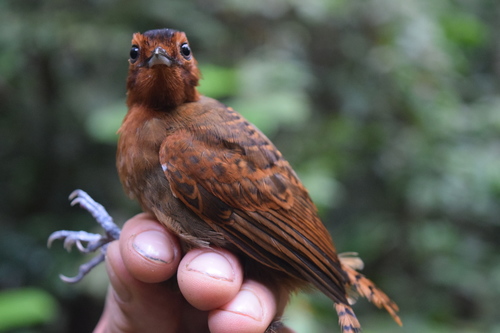
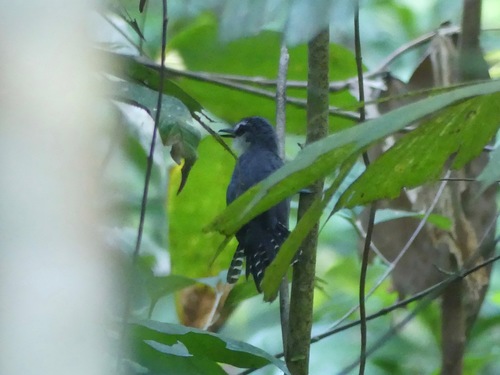
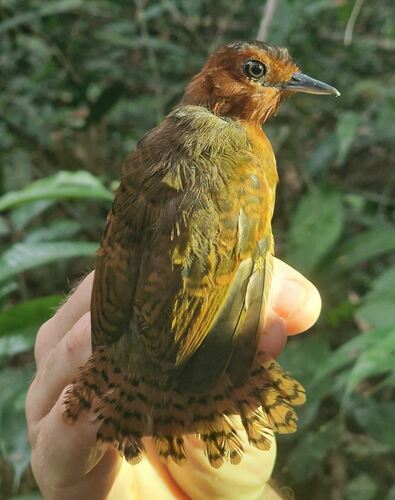
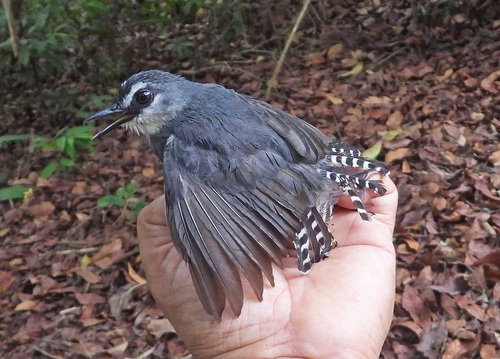
ID tip
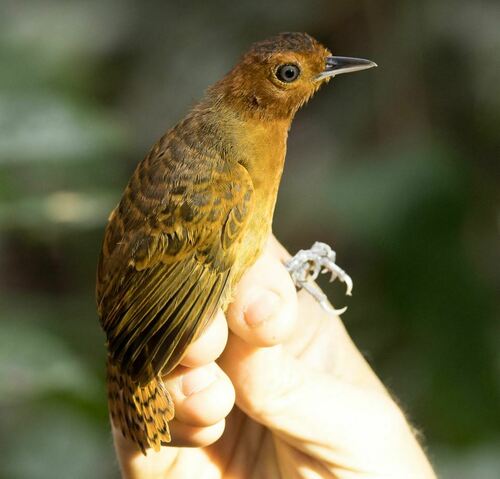
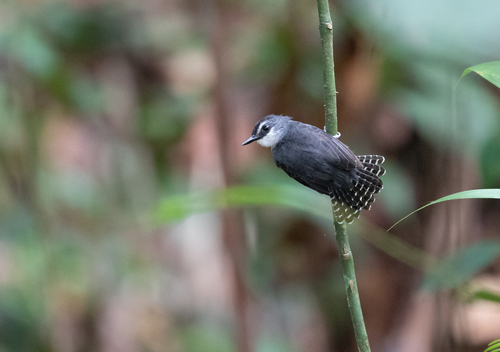
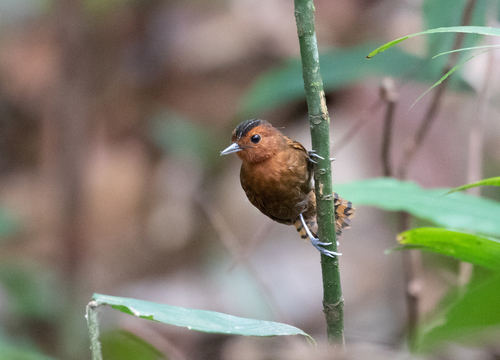
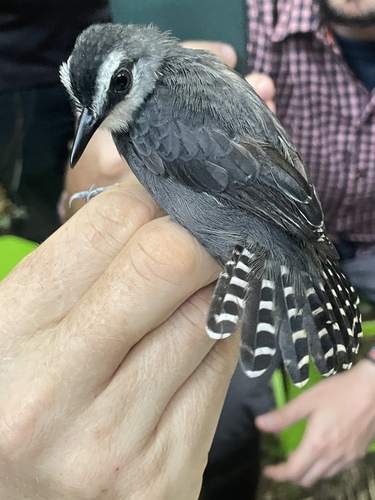
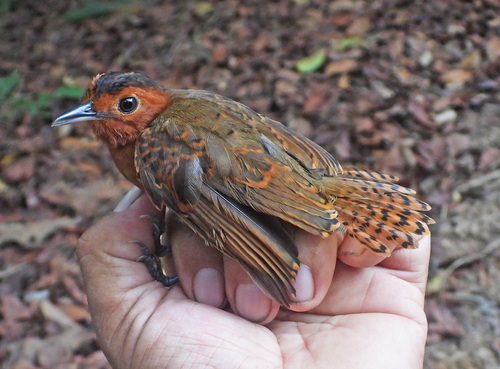
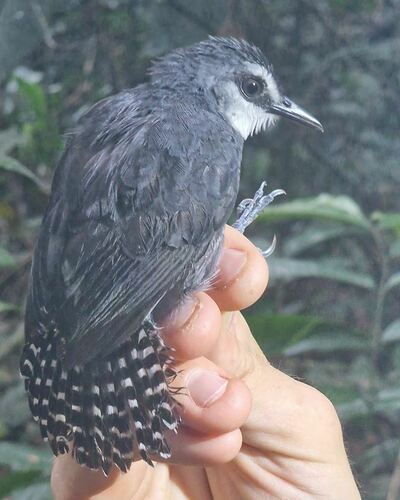
The white-throated antbird is 13 to 14.5 cm (5.1 to 5.7 in) long and weighs 22 to 28 g (0.78 to 0.99 oz). Adult males are mostly gray. They have a white supercilium, ear coverts, chin, and throat. Their wings are a darker gray than their back and their tail is barred with blackish gray and white. Adult females have a dark olive-brown center of their crown. Their nape, sides of the head, throat, and upper breast are rufous. Their upper back is olive-brown, the rest of their back is barred with black and rufous, and their rump is reddish yellow-brown. Voice: One author described the white-throated antbird's song as a "slow, resounding series of 3-4 descending, long, upslurred 'weeih' notes". Another wrote it as "RHEEE?-rheee?-rheee?-rheee?-rhrrrr". Its calls include "a puttering, descending rattle and a rich tchup".
Text from Wikipedia, licensed CC BY-SA 4.0.
When to see the White-throated Antbird
One bar for each month. Filled bars are the 10 months with records; pale bars are months with none. The wide bar is July, the month with the most records.
Where to see the White-throated Antbird
The map shades 3 countries with regular records. Everything unshaded has no records. Countries are listed below the map.
About the White-throated Antbird
The white-throated antbird is a species of bird in subfamily Thamnophilinae of family Thamnophilidae, the "typical antbirds". It is found in Bolivia, Brazil and Peru.
Text adapted from Wikipedia, licensed CC BY-SA 4.0.
Easily confused with
Learn the White-throated Antbird in the BeakBrain App
Photo and call practice. Coming soon to iPhone and Android.
Play today's Daily BirdEvery photo and recording on this page is credited to its author under the licence shown. Spotted a problem with this page, or have a better photo? Contribute.