Learn what every symbol on the card means.Full credits and sources at beakbrain.com/symbols
 ForestSmall · 24 g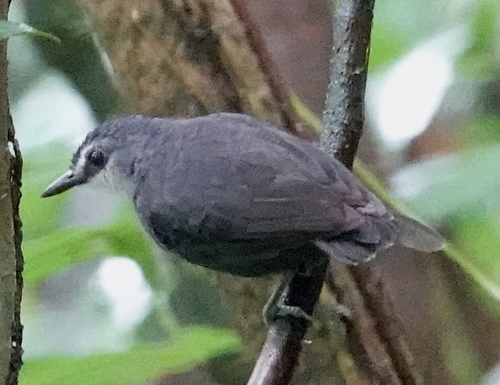

What the Lunulated Antbird sounds like

ID tip
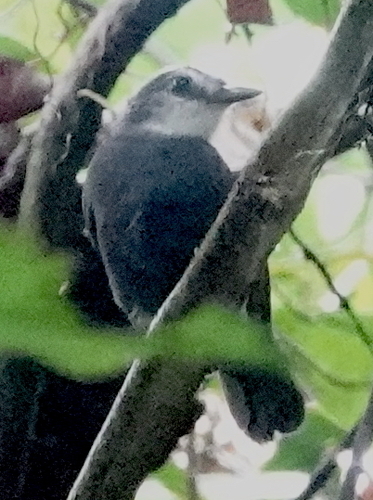
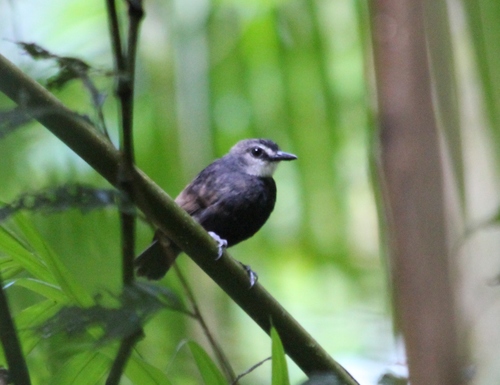
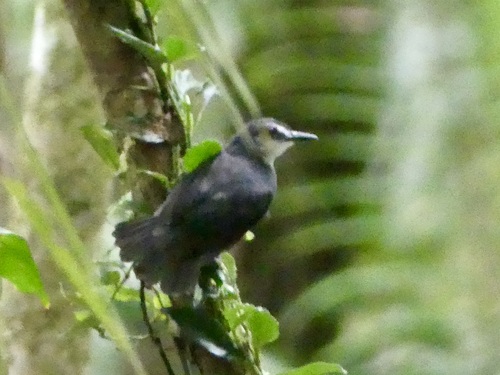
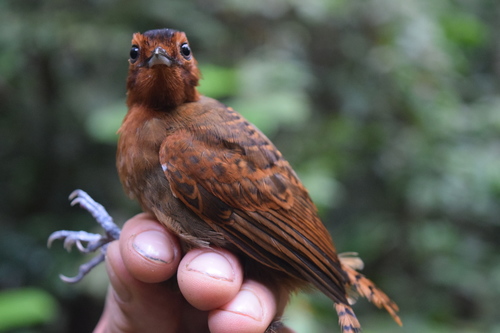
The lunulated antbird is 13 to 14.5 cm (5.1 to 5.7 in) long and weighs 22 to 26 g (0.78 to 0.92 oz). Adult males are mostly gray. They have a white supercilium, ear coverts, chin, and throat. Their tail is blackish gray. Adult females have a white supercilium, dark olive-brown lores, and a white chin and throat. Their crown and nape are yellowish olive-brown; their back and rump are yellowish olive-brown with blackish edges and light buff tips on the feathers. Their tail is dark grayish brown with some white barring. Voice: The lunulated antbird's song is "a distinct introductory note followed by a fairly rapid, decelerating, rising-falling series of popping notes becoming rising mellow whistles" PEW pipi'pi'pwee-pwee-pwee-peeerr." Its calls include a "long and usually interrupted 'chirr' and abrupt 'chup' ".
Text from Wikipedia, licensed CC BY-SA 4.0.
When to see the Lunulated Antbird
One bar for each month. Filled bars are the 11 months with records; pale bars are months with none. The wide bar is July, the month with the most records.
Where to see the Lunulated Antbird
The map shades 2 countries with regular records. Everything unshaded has no records. Countries are listed below the map.
About the Lunulated Antbird
The lunulated antbird is a species of insectivorous bird in the subfamily Thamnophilinae of the family Thamnophilidae, the "typical antbirds". It is found in Ecuador and Peru.
Text adapted from Wikipedia, licensed CC BY-SA 4.0.
Easily confused with
Learn the Lunulated Antbird in the BeakBrain App
Photo and call practice. Coming soon to iPhone and Android.
Play today's Daily BirdEvery photo and recording on this page is credited to its author under the licence shown. Spotted a problem with this page, or have a better photo? Contribute.