Learn what every symbol on the card means.Full credits and sources at beakbrain.com/symbols
 ForestCup nestTiny · 10 g


What the White-sided Flowerpiercer sounds like


ID tip
A fairly small flowerpiercer - slightly larger than a black-capped chickadee and slightly smaller than a great tit. Length is 12.2-13.2cm, mass is typically 9.84-10.2g. The male is a blackish-slate colour overall with the exception of white "sides" (pectoral tufts and underwing linings). On a perched bird these white markings are not always noticeable but when the bird flicks its wings as it frequently does the white flash is obvious. Females are olive-brown above and buffy-brown below, with the same white sides.
Text from Wikipedia, licensed CC BY-SA 4.0.
When to see the White-sided Flowerpiercer
One bar for each month, and every month is filled: this bird is recorded here in all twelve. The wide bar is February, the month with the most records.
Where to see the White-sided Flowerpiercer
The map shades 4 countries with regular records. Everything unshaded has no records. Countries are listed below the map.
About the White-sided Flowerpiercer
The white-sided flowerpiercer is a fairly common and widespread species of flowerpiercer. Flowerpiercers are a genus of birds within the tanager family Thraupidae, with specially adapted bills that enable them to pierce the sides of flower blossoms to access the nectar. The white-sided flowerpiercer is found in Colombia, Ecuador, Peru, and Venezuela. Its natural habitats are subtropical or tropical moist montane forests and heavily degraded former forest.
Text adapted from Wikipedia, licensed CC BY-SA 4.0.
Easily confused with
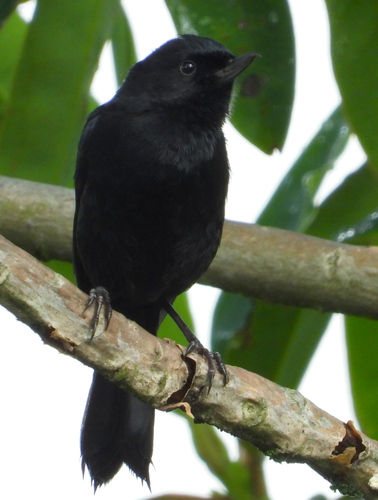 Black FlowerpiercerDiglossa humeralisAdult black flowerpiercers are 13–14 cm in length.
 Slaty FlowerpiercerDiglossa plumbeaThe slaty flowerpiercer is a passerine bird endemic to the Talamancan montane forests.
 Masked FlowerpiercerDiglossa cyaneaThe masked flowerpiercer grows to a length of about 15 cm (6 in).
Side by side: Masked Flowerpiercer vs White-sided Flowerpiercer · Black Flowerpiercer vs White-sided Flowerpiercer
Learn the White-sided Flowerpiercer in the BeakBrain App
Photo and call practice. Coming soon to iPhone and Android.
Play today's Daily BirdEvery photo and recording on this page is credited to its author under the licence shown. Spotted a problem with this page, or have a better photo? Contribute.