Learn what every symbol on the card means.Full credits and sources at beakbrain.com/symbols
 ShrublandDomed nestTiny · 9 g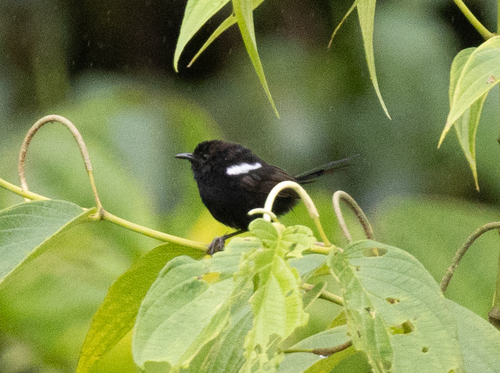
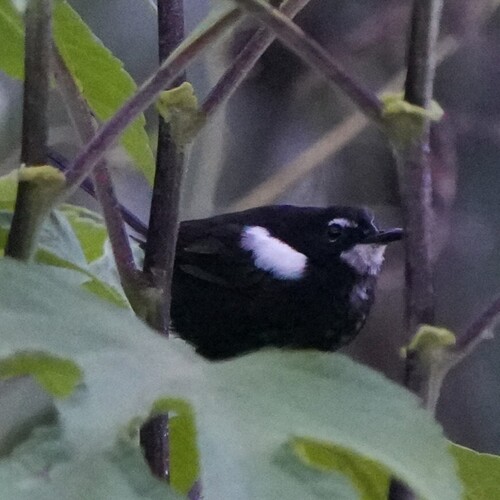

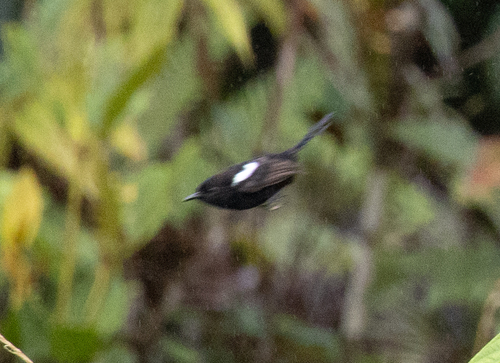
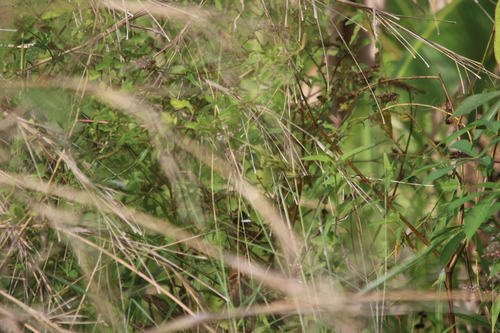
ID tip
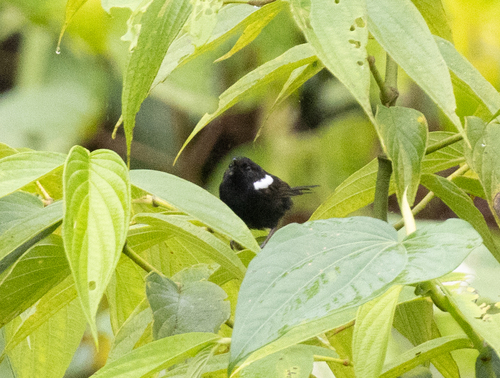
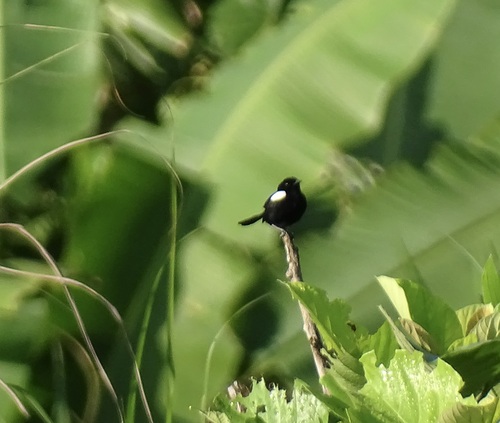
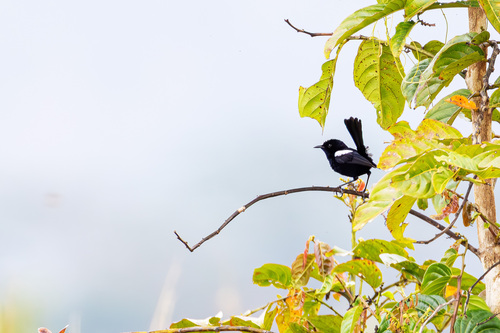
The adult male is all shiny black except for their white shoulders (scapulars), but unlike the better-known Australian fairywrens there is no eclipse male plumage. The tail is shorter than that of other fairywrens. The bill is black, and the feet and eyes are black or dark brown. The females of M. a. alboscapulatus and M. a. naimii bear a pied plumage, with black upperparts contrasting with white shoulders and underparts.
Text from Wikipedia, licensed CC BY-SA 4.0.
When to see the White-shouldered Fairywren
One bar for each month. Filled bars are the 6 months with records; pale bars are months with none. The wide bar is July, the month with the most records.
Where to see the White-shouldered Fairywren
The map shades 2 countries with regular records. Everything unshaded has no records. Countries are listed below the map.
About the White-shouldered Fairywren
The white-shouldered fairywren is a species of bird in the Australasian wren family, Maluridae. It is found in New Guinea.
Text adapted from Wikipedia, licensed CC BY-SA 4.0.
Easily confused with
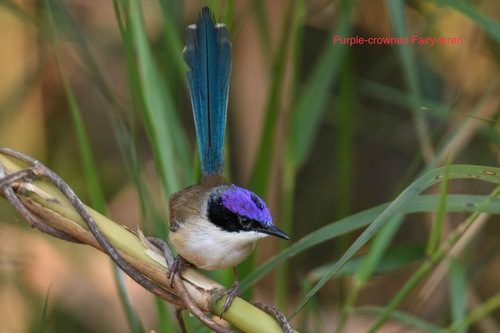 Purple-crowned FairywrenMalurus coronatusThe purple-crowned fairywren is a small, sexually dimorphic, bird measuring approximately 14 cm (5.5 in) in length, with a wing-span of approximately 16 cm (6.3 in) and weighing only 9–13 g (0.32–0.46 oz).
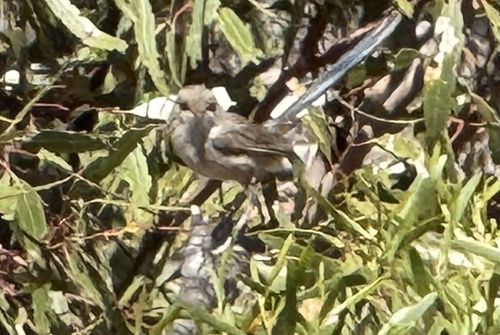 Blue-breasted FairywrenMalurus pulcherrimusThe contact call is a soft, short reed-like trill.
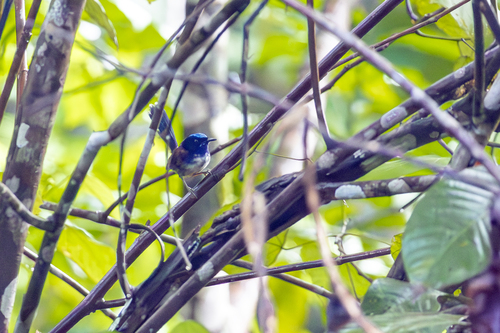 Emperor FairywrenMalurus cyanocephalusIt is the largest fairywren, being 13–16 cm (5.1–6.3 in) long and weighing 12–17 g (0.42–0.60 oz).
Learn the White-shouldered Fairywren in the BeakBrain App
Photo and call practice. Coming soon to iPhone and Android.
Play today's Daily BirdEvery photo and recording on this page is credited to its author under the licence shown. Spotted a problem with this page, or have a better photo? Contribute.