Learn what every symbol on the card means.Full credits and sources at beakbrain.com/symbols
 ForestPlatform nestLarge · 502 g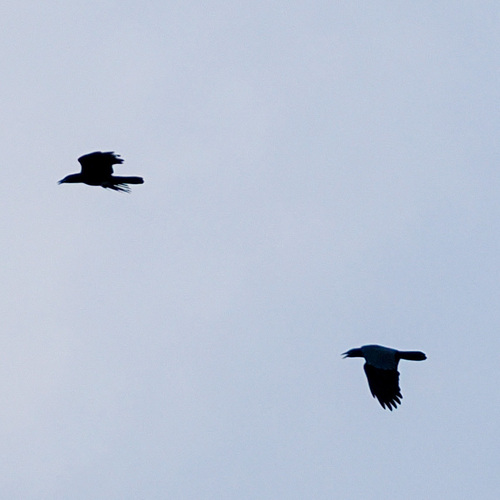


ID tip
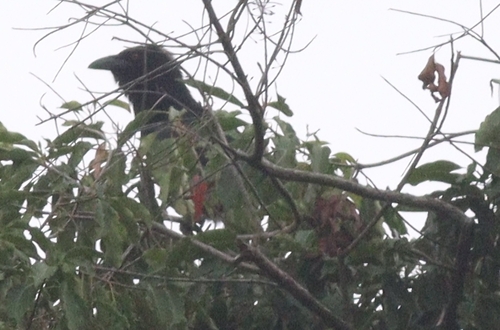
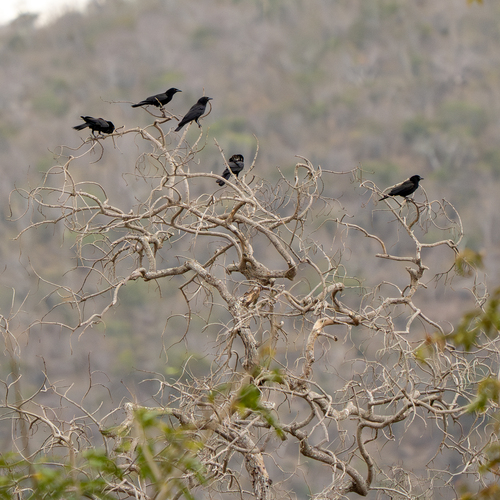
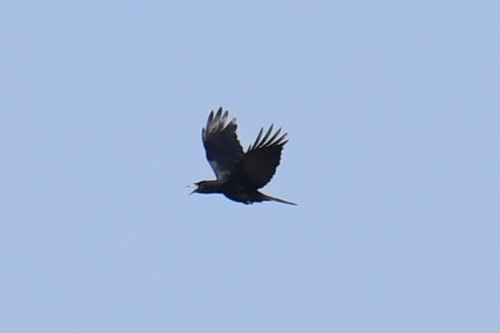
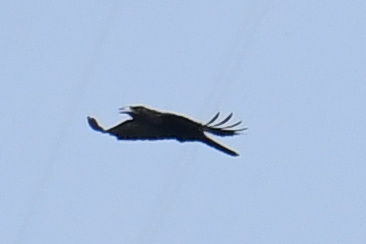
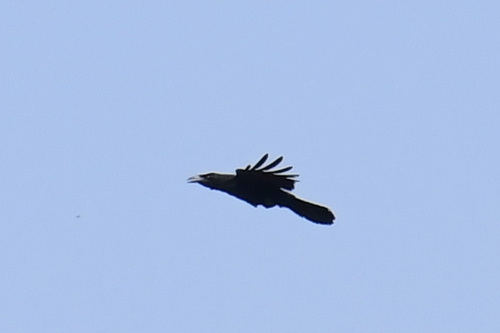
A stocky bird, it is the largest Caribbean corvid, measuring 42–46 centimetres or 17–18 inches in length. The overall appearance is black, with a bluish-purple gloss in good light; despite the name, the neck typically appears entirely black, as the namesake white is restricted to the bases of the neck feathers, rarely visible in the field. The black bill is long and deep, and curves gently downward to the tip, giving the bird a large headed appearance. The nasal bristles do not quite cover the nostrils, unlike the majority of species in this genus. Voice: Audio recordings of Corvus leucognaphalus on Xeno-canto. The voice of the white-necked crow is quite remarkable and unusual for a corvid, described as sounding more like a parrot, and consists of a series of liquid bubbling sounds, squawking, and babbling, mixed with sweet and harsh notes, including some that sound like the common raven (Corvus corax).
Text from Wikipedia, licensed CC BY-SA 4.0.
When to see the White-necked Crow
One bar for each month. Filled bars are the 10 months with records; pale bars are months with none. The wide bar is March, the month with the most records.
Where to see the White-necked Crow
The map shades 2 countries with regular records. Everything unshaded has no records. Countries are listed below the map.
About the White-necked Crow
The white-necked crow is the largest of the four Caribbean corvids. It is endemic to the island of Hispaniola ; it was formerly also extant on Puerto Rico and Saint Croix in the United States Virgin Islands, but has been extirpated from both islands due to considerable forest clearance and hunting for meat.
Text adapted from Wikipedia, licensed CC BY-SA 4.0.
Easily confused with
 Jamaican CrowCorvus jamaicensisThe overall appearance is sooty-grey, not at all glossy, like its relatives; though it does possess a similar dark grey patch of naked skin just behind the eye, and a smaller naked patch at the base of the bill.
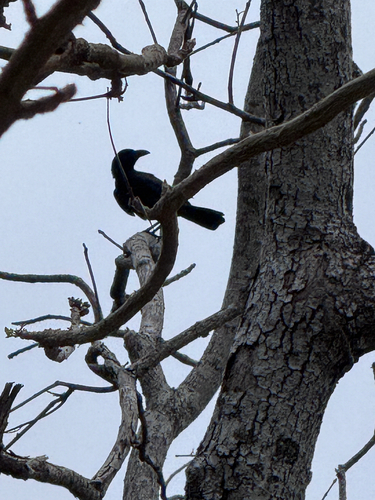 Palawan CrowCorvus pusillusThe Palawan crow is a passerine bird of the family Corvidae, in the genus Corvus.
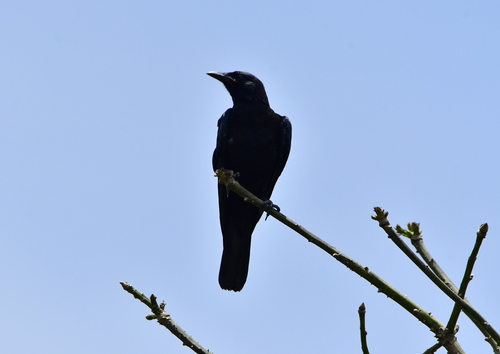 Tamaulipas CrowCorvus imparatusIt is a relatively small and sleek looking crow, 34–38 centimetres (13–15 in) in length.
Side by side: Cuban Crow vs White-necked Crow
Learn the White-necked Crow in the BeakBrain App
Photo and call practice. Coming soon to iPhone and Android.
Play today's Daily BirdEvery photo and recording on this page is credited to its author under the licence shown. Spotted a problem with this page, or have a better photo? Contribute.