Learn what every symbol on the card means.Full credits and sources at beakbrain.com/symbols
 ForestLarge · 510 g
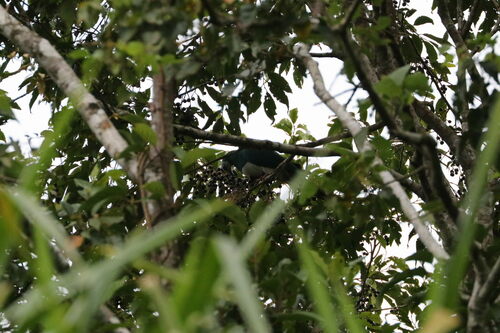
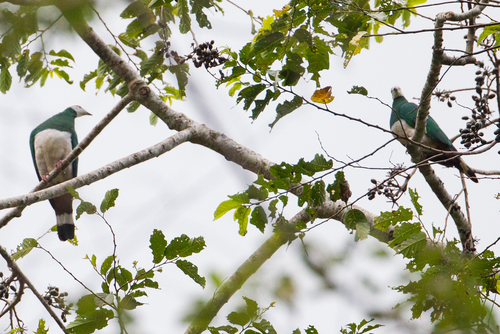
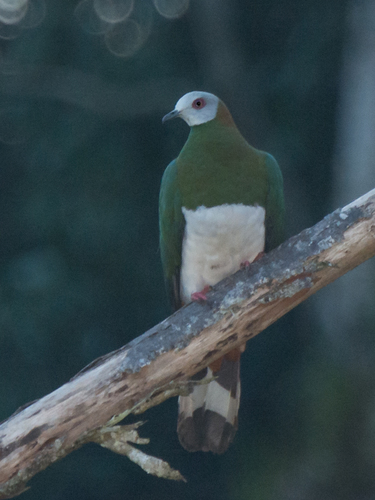
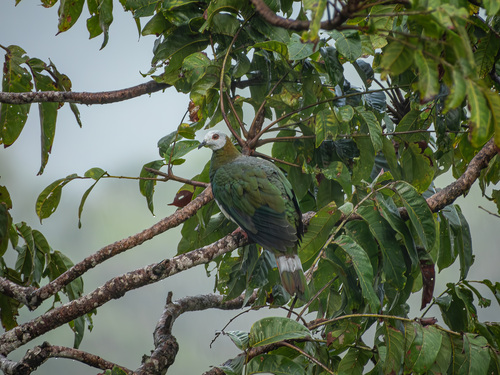
ID tip
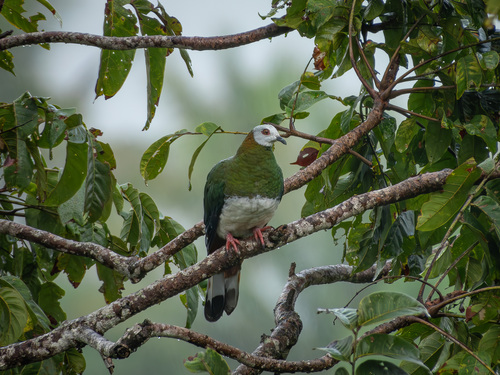
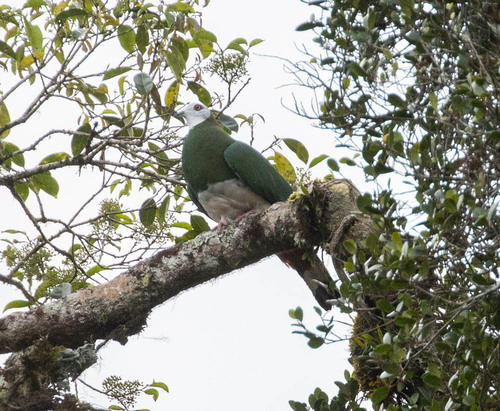
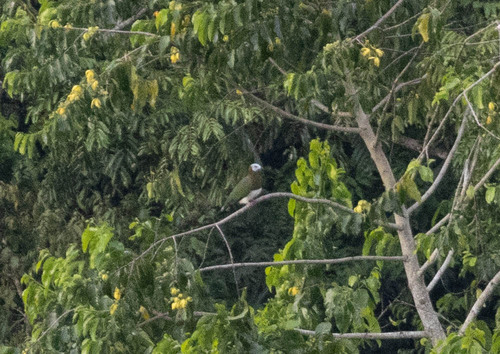
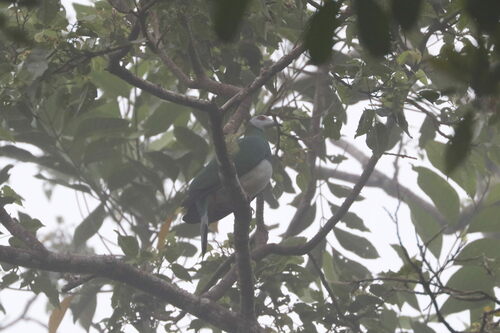
The white-bellied imperial pigeon is a very large, boldly marked pigeon with a long tail, measuring 42.5–51.5 cm (16.7–20.3 in) long and weighing 510 g (18 oz) on average. Its upperparts and breast are mainly dark green, with bronze-red glossing, especially on the mantle. The head is pale grey, becoming white on the forehead and throat, while the breast and belly are white with a pink or cream tinge. The undertail coverts are dark chestnut, while the outside of the tail has a pale grey band across the centre. The iris is yellow or orange with a darker red or orange orbital ring. Voice: The white-bellied imperial pigeon's advertising call is a short, low-pitched whuu-whooo....whuu-whooo. Both notes are 0.2–0.3 seconds long, and the second is lower-pitched and more emphasized than the first. A three-note variation has also been recorded, in which the third note is the same as the second note. It mainly vocalises before dawn and after mid-day.
Text from Wikipedia, licensed CC BY-SA 4.0.
When to see the White-bellied Imperial Pigeon
One bar for each month. Filled bars are the 7 months with records; pale bars are months with none. The wide bar is July, the month with the most records.
Where to see the White-bellied Imperial Pigeon
The map shades 1 country with regular records. Everything unshaded has no records. Countries are listed below the map.
About the White-bellied Imperial Pigeon
The white-bellied imperial pigeon is a species of bird in the pigeon family Columbidae. First described by the French ornithologist Charles Lucien Bonaparte in 1854, it is endemic to Indonesia, where it is found on Sulawesi, Buton, Taliabu, Togian, and Peleng. It inhabits primary forest, dense secondary forest, and isolated areas of hill forest. A large pigeon with a long tail, it measures 42.5–51.5 cm (16.7–20.3 in) long and weighs 510 g (18 oz) on average. Males are mainly green, with pale-grey heads and bellies, chestnut vents, and a pale grey tail band, along with a red orbital ring. Females are nearly identical, but have darker grey areas in their plumage.
Text adapted from Wikipedia, licensed CC BY-SA 4.0.
Easily confused with
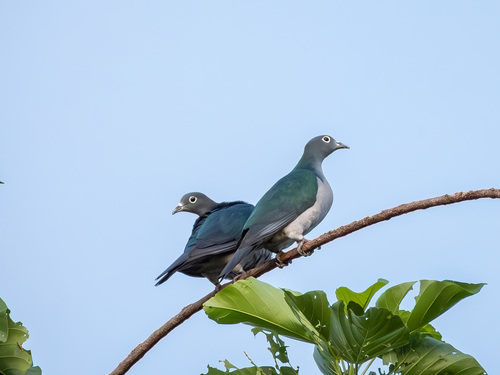 Spectacled Imperial PigeonDucula perspicillataThe spectacled imperial pigeon is a species of bird in the family Columbidae.
 Purple-tailed Imperial PigeonDucula rufigasterThe purple-tailed imperial pigeon is a species of bird in the family Columbidae.
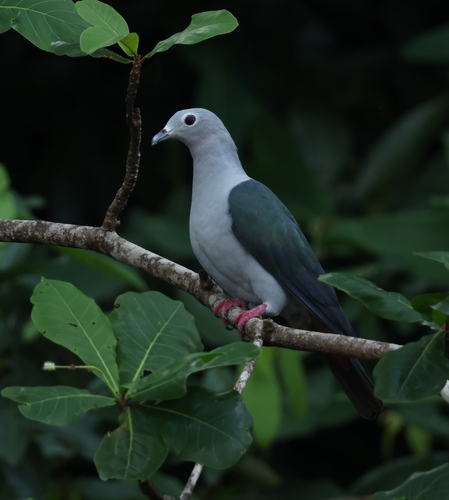 Island Imperial PigeonDucula pistrinariaThe island imperial pigeon is about 39–45 cm (15–18 in) long and weighs 470–500 g (17–18 oz).
Learn the White-bellied Imperial Pigeon in the BeakBrain App
Photo and call practice. Coming soon to iPhone and Android.
Play today's Daily BirdEvery photo and recording on this page is credited to its author under the licence shown. Spotted a problem with this page, or have a better photo? Contribute.