Learn what every symbol on the card means.Full credits and sources at beakbrain.com/symbols
 GrasslandMedium · 104 g
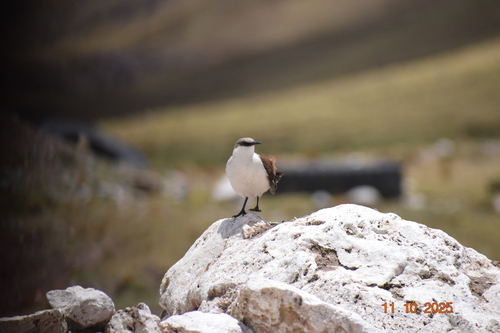
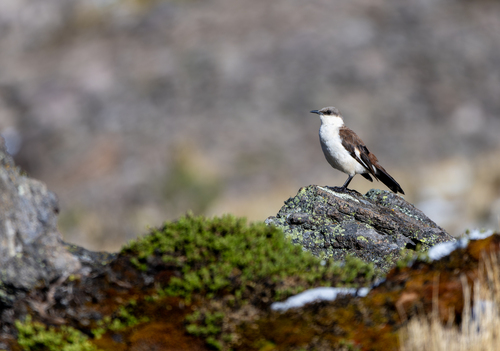
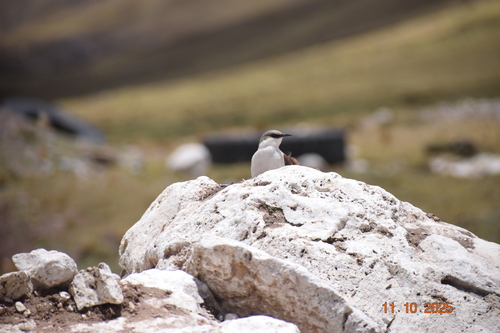
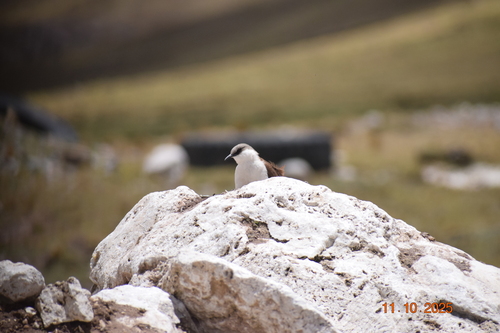
ID tip
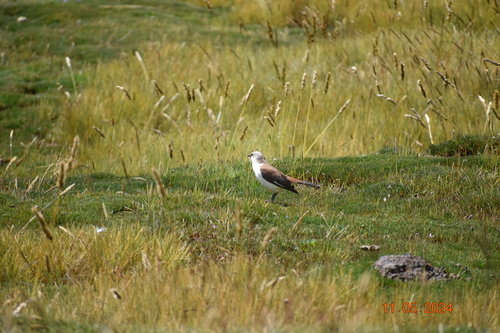
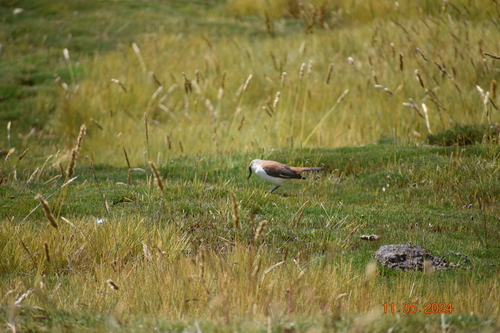
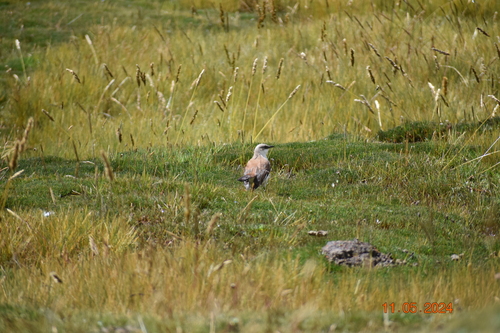
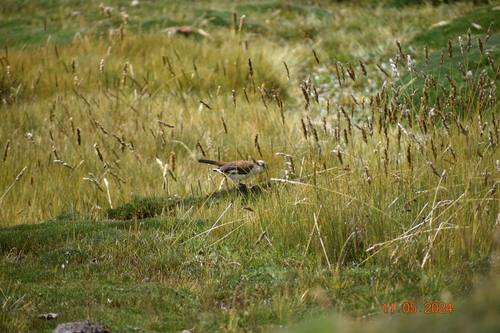
The white-bellied cinclodes is larger and has a longer tail than other members of its genus and more resembles a mockingbird than a typical Cinclodes. It grows to a length of about 24 cm (9 in). The crown is brownish-grey, the upper parts and wings rufous-brown with a broad white wing bar, and the underparts pure white. This bird's song is a rapid chattering "pipipipipi pi pi" that sometimes speeds up into a piping, higher-pitched "wee wee wee wee wee".
Text from Wikipedia, licensed CC BY-SA 4.0.
When to see the White-bellied Cinclodes
One bar for each month. Filled bars are the 11 months with records; pale bars are months with none. The wide bar is November, the month with the most records.
Where to see the White-bellied Cinclodes
The map shades 1 country with regular records. Everything unshaded has no records. Countries are listed below the map.
About the White-bellied Cinclodes
The white-bellied cinclodes is a species of bird in the ovenbird family, Furnariidae. It is endemic to Peru where it inhabits high level, marshy grassland in the Junín Region and possibly also in the Huancavelica Region. This is a very large furnariid with dark upper parts and gleaming white underparts. It is a rare bird with very specific habitat requirements and is threatened by habitat destruction. The International Union for Conservation of Nature has assessed it as being "critically endangered".
Text adapted from Wikipedia, licensed CC BY-SA 4.0.
Easily confused with
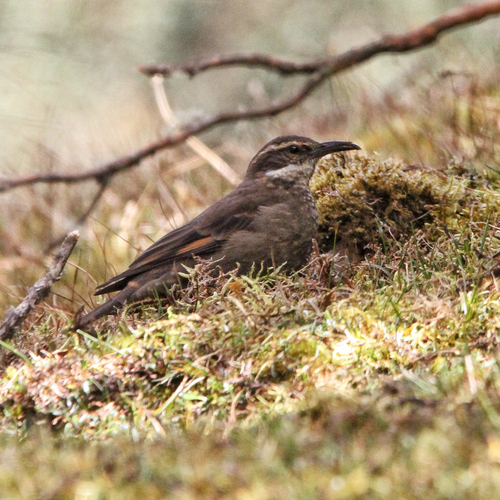 Royal CinclodesCinclodes aricomaeThe royal cinclodes is 20 to 21 cm (7.9 to 8.3 in) long and weighs about 50 g (1.8 oz).
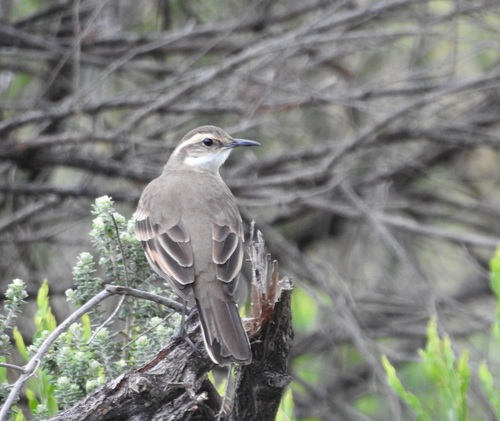 Long-tailed CinclodesCinclodes pabstiThe long-tailed cinclodes is 20 to 22 cm (7.9 to 8.7 in) long and weighs 43 to 55 g (1.5 to 1.9 oz).
 Cordoba CinclodesCinclodes comechingonusThe Cordoba cinclodes is about 17 cm (6.7 in) long and weighs 25 to 32 g (0.88 to 1.1 oz).
Learn the White-bellied Cinclodes in the BeakBrain App
Photo and call practice. Coming soon to iPhone and Android.
Play today's Daily BirdEvery photo and recording on this page is credited to its author under the licence shown. Spotted a problem with this page, or have a better photo? Contribute.