Learn what every symbol on the card means.Full credits and sources at beakbrain.com/symbols
 ForestCavity nestSmall · 50 g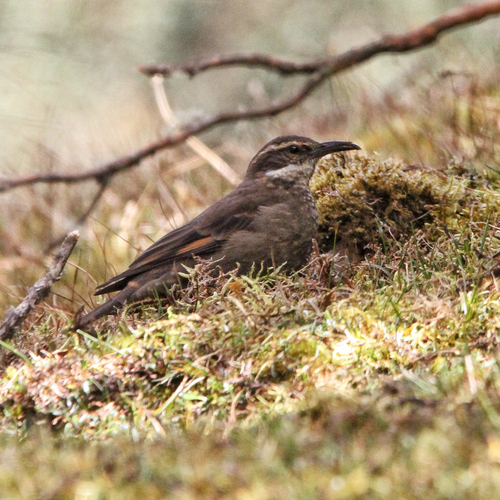
ID tip
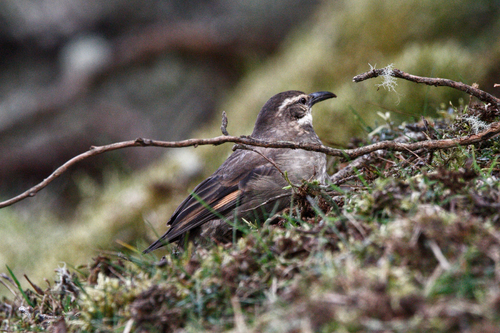
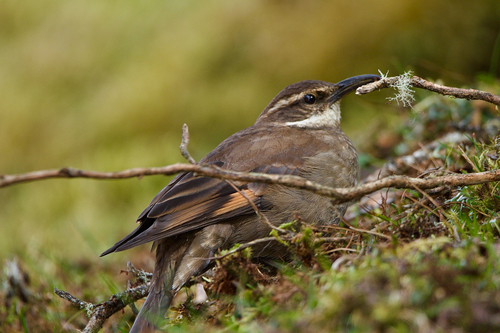
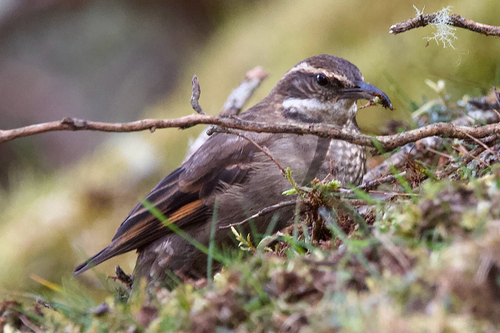
The royal cinclodes is 20 to 21 cm (7.9 to 8.3 in) long and weighs about 50 g (1.8 oz). It is a large cinclodes with a decurved, thick-based, bill. The sexes have the same plumage. Adults have a pale buffish supercilium that extends to the nape, a whitish malar area with thin dark bars, and an otherwise dark brown face. Their crown and upperparts are dark brown. Their wings are also dark brown, with black-edged rufous across the base of the flight feathers. Their tail is blackish. Voice: The royal cinclodes' song is "a very loud trill".
Text from Wikipedia, licensed CC BY-SA 4.0.
When to see the Royal Cinclodes
One bar for each month. Filled bars are the 10 months with records; pale bars are months with none. The wide bar is October, the month with the most records.
Where to see the Royal Cinclodes
The map shades 2 countries with regular records. Everything unshaded has no records. Countries are listed below the map.
About the Royal Cinclodes
The royal cinclodes is an Endangered passerine bird in the Furnariinae subfamily of the ovenbird family Furnariidae. It is found in Bolivia and Peru.
Text adapted from Wikipedia, licensed CC BY-SA 4.0.
Easily confused with
 White-bellied CinclodesCinclodes palliatusThe white-bellied cinclodes is larger and has a longer tail than other members of its genus and more resembles a mockingbird than a typical Cinclodes.
 Cream-winged CinclodesCinclodes albiventrisThe cream-winged cinclodes is 15 to 19 cm (5.9 to 7.5 in) long and weighs about 20 to 34 g (0.71 to 1.2 oz).
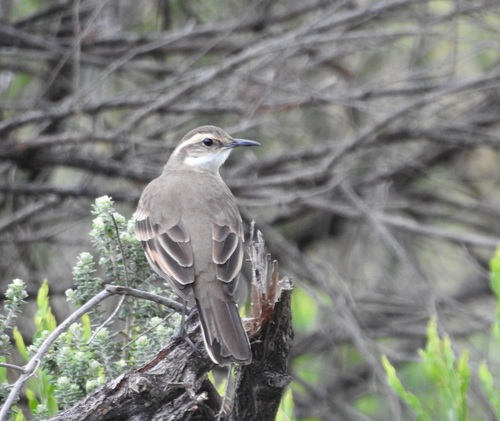 Long-tailed CinclodesCinclodes pabstiThe long-tailed cinclodes is 20 to 22 cm (7.9 to 8.7 in) long and weighs 43 to 55 g (1.5 to 1.9 oz).
Learn the Royal Cinclodes in the BeakBrain App
Photo and call practice. Coming soon to iPhone and Android.
Play today's Daily BirdEvery photo and recording on this page is credited to its author under the licence shown. Spotted a problem with this page, or have a better photo? Contribute.