Learn what every symbol on the card means.Full credits and sources at beakbrain.com/symbols
 ShrublandCup nestMedium · 61 g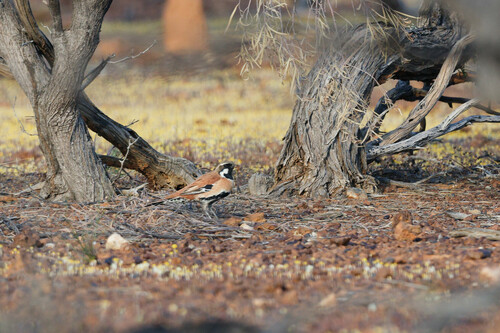
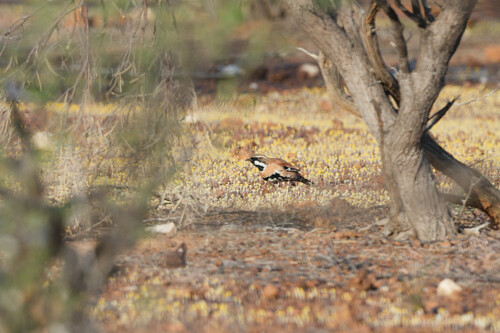


ID tip
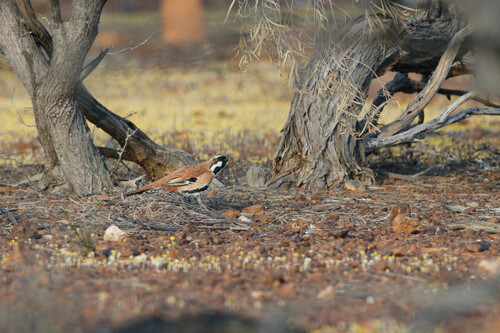
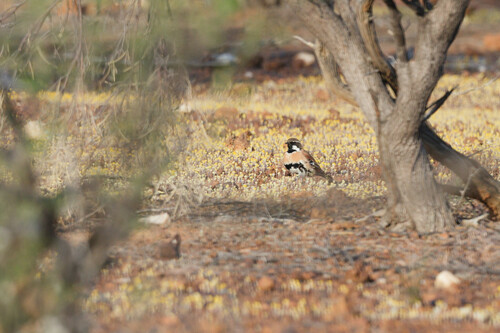
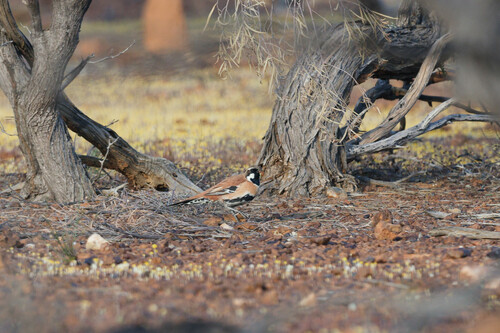
A species of Cinclosoma, passerine birds of Australia. It is smaller in size and slighter in build than Cinclosoma castanotum, which is found in other parts of Western Australia. Their breast and flanks are a cinnamon-rufous shade, a paler and different coloration from its counterparts. The crown and back are a solid chestnut color. The female's flanks are a duller orange shade, occasionally without the dark border. In males, the crown may be a dark grey shade. The throat and lower part of the breast are black, and the male displays a chestnut band between these.
Text from Wikipedia, licensed CC BY-SA 4.0.
When to see the Western Quail-thrush
One bar for each month. Filled bars are the 9 months with records; pale bars are months with none. The wide bar is September, the month with the most records.
Where to see the Western Quail-thrush
The map shades 1 country with regular records. Everything unshaded has no records. Countries are listed below the map.
About the Western Quail-thrush
Western quail-thrush is a species of bird in the family Cinclosomatidae. It is found in arid inland habitat in south-central Western Australia. It typically resides in dry woodland shrub with low understory on a stony ground. The climatic zones it is most commonly found in are semi-arid or arid.
Text adapted from Wikipedia, licensed CC BY-SA 4.0.
Easily confused with
 Painted Quail-thrushCinclosoma ajaxThe painted quail-thrush is a medium sized bird, measuring 20-25 cm (8-10 in) in length, with a usual wing span of 20-30 cm (8-10 in) It has a brown tail, crown and back, black mask with a white belly and burnt orange sides.
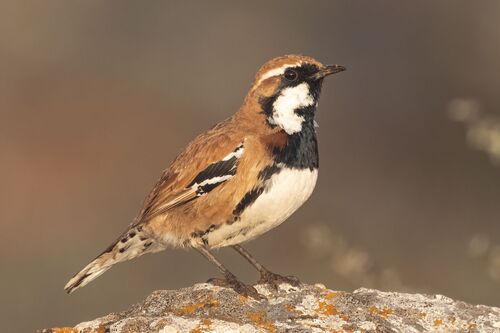 Nullarbor Quail-thrushCinclosoma alisteriThe size of the male is slightly larger than the female, the range is 185 to 210 millimetres.
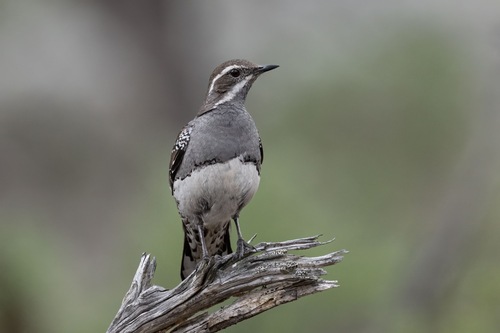 Copperback Quail-thrushCinclosoma clarumThe copperback quail-thrush is a species of bird in the family Cinclosomatidae.
Learn the Western Quail-thrush in the BeakBrain App
Photo and call practice. Coming soon to iPhone and Android.
Play today's Daily BirdEvery photo and recording on this page is credited to its author under the licence shown. Spotted a problem with this page, or have a better photo? Contribute.