Learn what every symbol on the card means.Full credits and sources at beakbrain.com/symbols
 ShrublandCup nestSmall · 55 g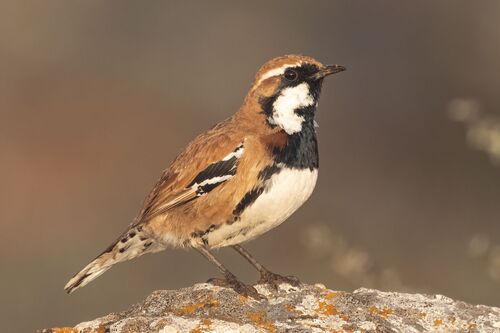
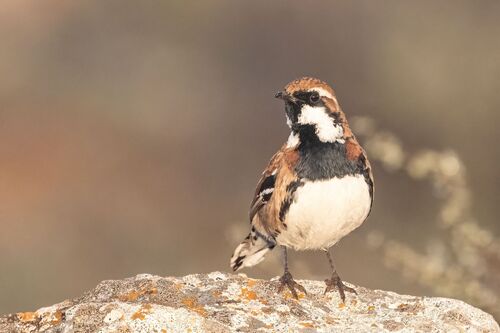
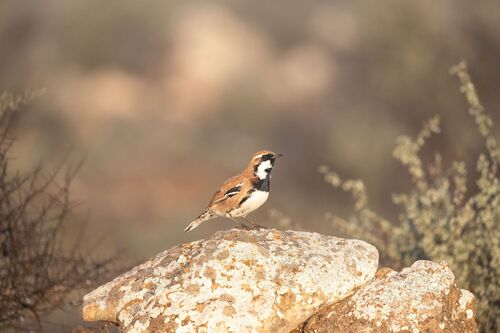
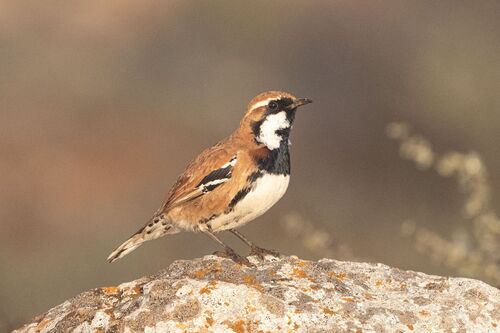
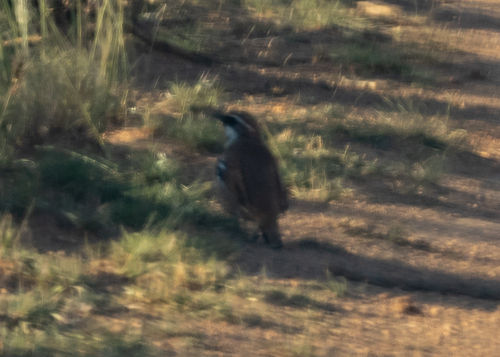

ID tip
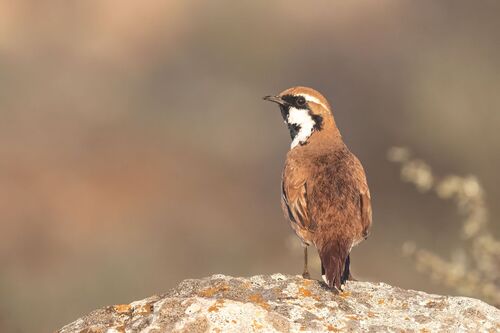
The size of the male is slightly larger than the female, the range is 185 to 210 millimetres. The tail colour is black at the outer feathers, tipped with white, the upper parts of the plumage is otherwise a rufous colour. Black coloration appears at the lores, throat, breast, and beneath white spots at the shoulder.
Text from Wikipedia, licensed CC BY-SA 4.0.
When to see the Nullarbor Quail-thrush
One bar for each month. Filled bars are the 9 months with records; pale bars are months with none. The wide bar is April, the month with the most records.
Where to see the Nullarbor Quail-thrush
The map shades 1 country with regular records. Everything unshaded has no records. Countries are listed below the map.
About the Nullarbor Quail-thrush
The Nullarbor quail-thrush is a species of bird in the family Cinclosomatidae. It is the only Australian bird endemic to the Nullarbor Plain in southern Australia.
Text adapted from Wikipedia, licensed CC BY-SA 4.0.
Easily confused with
 Painted Quail-thrushCinclosoma ajaxThe painted quail-thrush is a medium sized bird, measuring 20-25 cm (8-10 in) in length, with a usual wing span of 20-30 cm (8-10 in) It has a brown tail, crown and back, black mask with a white belly and burnt orange sides.
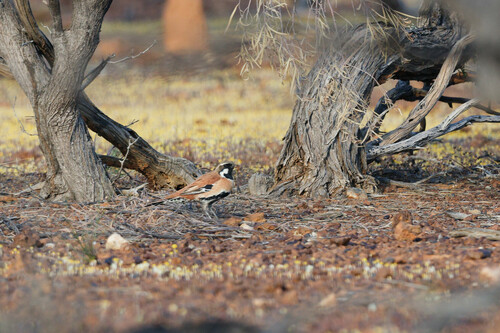 Western Quail-thrushCinclosoma marginatumA species of Cinclosoma, passerine birds of Australia.
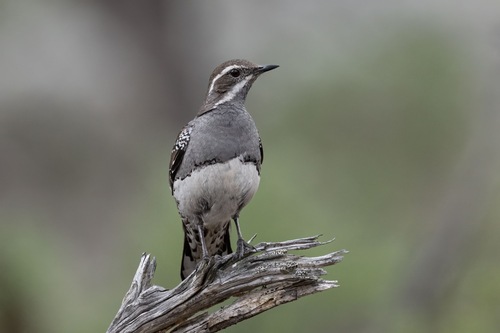 Copperback Quail-thrushCinclosoma clarumThe copperback quail-thrush is a species of bird in the family Cinclosomatidae.
Learn the Nullarbor Quail-thrush in the BeakBrain App
Photo and call practice. Coming soon to iPhone and Android.
Play today's Daily BirdEvery photo and recording on this page is credited to its author under the licence shown. Spotted a problem with this page, or have a better photo? Contribute.