Learn what every symbol on the card means.Full credits and sources at beakbrain.com/symbols
 ForestCavity nestTiny · 11 g


What the Western Flycatcher sounds like

ID tip
Adults have olive-gray upperparts, darker on the wings and tail, with yellowish underparts; they have a conspicuous teardrop-shaped white eye ring, white wing bars, a small bill and a short tail. It differs only subtly from most Empidonax flycatchers in North America, but its breeding habitat and call are different. Many species of this genus look closely alike. The best ways to distinguish species are by voice, by breeding habitat, and by range.
Text from Wikipedia, licensed CC BY-SA 4.0.
When to see the Western Flycatcher
One bar for each month. Filled bars are the 6 months with records; pale bars are months with none. The wide bar is May, the month with the most records.
Where to see the Western Flycatcher
The map shades 3 countries with regular records. Everything unshaded has no records. Countries are listed below the map.
About the Western Flycatcher
The western flycatcher is a small insectivorous bird in the family Tyrannidae. It is native to western North America, where it breeds in the Rocky Mountains and Pacific Coast forests and mountain ranges from California to Alaska and south to central Mexico; northern populations migrate south to Mexico for the winter.
Text adapted from Wikipedia, licensed CC BY-SA 4.0.
Easily confused with
 Willow FlycatcherEmpidonax trailliiAdults have brown-olive upperparts, darker on the wings and tail, with whitish underparts; they have an indistinct white eye ring, white wing bars and a small bill.
 Acadian FlycatcherEmpidonax virescensAdults have olive upperparts, darker on the wings and tail, with whitish underparts; they have a white eye ring, white wing bars and a wide bill.
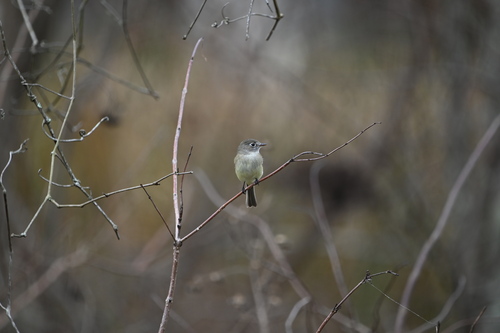 Least FlycatcherEmpidonax minimusThe least flycatcher is hard to distinguish from the other birds of its genus.
Side by side: Least Flycatcher vs Western Flycatcher · Western Flycatcher vs Willow Flycatcher · Acadian Flycatcher vs Western Flycatcher
Learn the Western Flycatcher in the BeakBrain App
Photo and call practice. Coming soon to iPhone and Android.
Play today's Daily BirdEvery photo and recording on this page is credited to its author under the licence shown. Spotted a problem with this page, or have a better photo? Contribute.