Learn what every symbol on the card means.Full credits and sources at beakbrain.com/symbols
 WoodlandDomed nestTiny · 5 g


ID tip
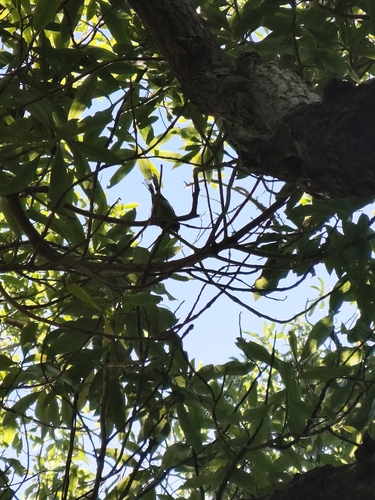
The weebill is Australia's smallest bird at approximately 8 to 9 cm (3.1 to 3.5 in) long and weighing an average of 6 grams (adult bird). Wingspan is approximately 15 cm (5.9 in). Weebills have inconspicuously coloured plumage ranging from yellowish-grey (front) to olive-brownish-grey (back). The two main feather pigments involved in this variation are yellow (phaeomelanin) and olive-brown (eumelanin). There is geographical variation in plumage across the four subspecies. Adults have pale yellow eyes and a faint cream coloured supercilium.
Text from Wikipedia, licensed CC BY-SA 4.0.
When to see the Weebill
One bar for each month, and every month is filled: this bird is recorded here in all twelve. The wide bar is October, the month with the most records.
Where to see the Weebill
The map shades 1 country with regular records. Everything unshaded has no records. Countries are listed below the map.
About the Weebill
The weebill is a species of bird in the family Acanthizidae. It is an insectivorous passerine that is found throughout mainland Australia. At 8 to 9 cm long, it is Australia's smallest bird. It was originally described by John Gould in 1838, and four subspecies are recognised. The weebill's plumage is nondescript, with olive-grey upperparts and paler, more yellowish underparts. It grades from more brownish plumage in the southern regions of Australia to more yellow in tropical areas.
Text adapted from Wikipedia, licensed CC BY-SA 4.0.
Easily confused with
 Yellow-rumped ThornbillAcanthiza chrysorrhoaThe yellow-rumped thornbill is the largest species of thornbill, 9.5–12 cm (3.7–4.7 in) long and weighing 9 g (0.32 oz).
 Grey GerygoneGerygone igataThe grey warbler has a long tail that is darker than its grey-brown body, with white tail end markings as well as a white tail underside.
 Striated ThornbillAcanthiza lineataThe adult striated thornbill is 9–10 centimetres (3.5–3.9 in) long and weighs around 7 grams (0.25 oz).
Side by side: Weebill vs Yellow-rumped Thornbill · Grey Gerygone vs Weebill · Striated Thornbill vs Weebill
Learn the Weebill in the BeakBrain App
Photo and call practice. Coming soon to iPhone and Android.
Play today's Daily BirdEvery photo and recording on this page is credited to its author under the licence shown. Spotted a problem with this page, or have a better photo? Contribute.