Learn what every symbol on the card means.Full credits and sources at beakbrain.com/symbols
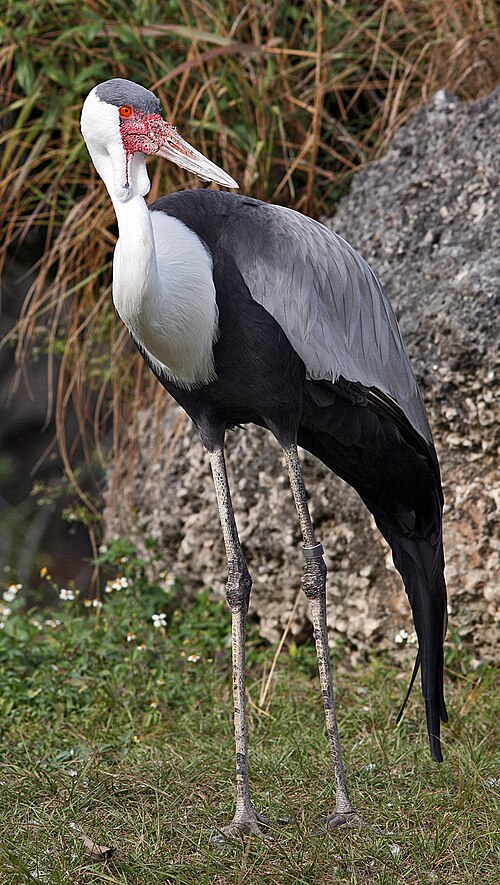


ID tip
At a height known to range from 150 to 175 cm (4 ft 11 in to 5 ft 9 in), it is the largest crane in Africa and is the second tallest species of crane in the world, after the sarus crane. It is also the tallest flying bird native to Africa third only among all birds to the two species of ostrich. The wattled crane is taller and, despite the appearance of gracility imparted by its sharp but slim beak and slender neck and legs, is the heaviest on average of several very large, long-legged waders in Africa (i.e. the 2 largest African storks, shoebill, greater flamingo, goliath heron).
Text from Wikipedia, licensed CC BY-SA 4.0.
When to see the Wattled Crane
One bar for each month, and every month is filled: this bird is recorded here in all twelve. The wide bar is November, the month with the most records.
Where to see the Wattled Crane
The map shades 11 countries with regular records. Everything unshaded has no records. Countries are listed below the map.
About the Wattled Crane
The wattled crane is a large, threatened species of crane found in wetlands and grasslands of eastern and southern Africa, ranging from Ethiopia to South Africa. Some authorities consider it the sole member of the genus Bugeranus.
Text adapted from Wikipedia, licensed CC BY-SA 4.0.
Easily confused with
 Demoiselle CraneGrus virgoThe demoiselle is 85–100 cm (33.5–39.5 in) long, 76 cm (30 in) tall and has a 155–180 cm (61–71 in) wingspan.
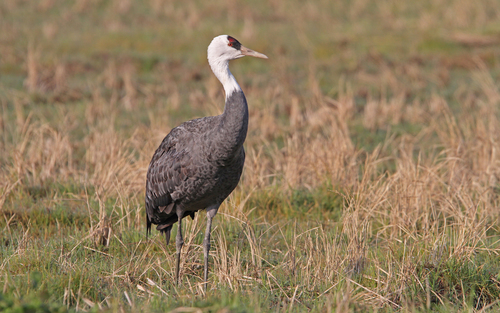 Hooded CraneGrus monachaIt has a grey body.
 Black-necked CraneGrus nigricollisThis medium-sized crane is mostly grey with a black head and neck.
Side by side: Wattled Crane vs Whooping Crane · Blue Crane vs Wattled Crane · Demoiselle Crane vs Wattled Crane · Hooded Crane vs Wattled Crane · Black-necked Crane vs Wattled Crane · Red-crowned Crane vs Wattled Crane
Learn the Wattled Crane in the BeakBrain App
Photo and call practice. Coming soon to iPhone and Android.
Play today's Daily BirdEvery photo and recording on this page is credited to its author under the licence shown. Spotted a problem with this page, or have a better photo? Contribute.