Learn what every symbol on the card means.Full credits and sources at beakbrain.com/symbols
 WetlandCup nestLarge · 390 g




ID tip
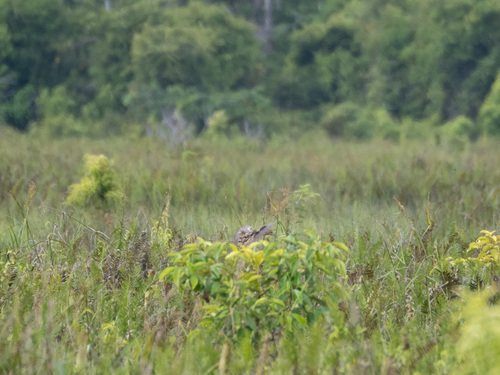
Adult male watercocks are 43 cm (17 in) long and weigh 476–650 g (1.049–1.433 lb). They have mainly black-grey plumage with red legs, bill, extended frontal shield and horn. Young males are buff in colour, darkening as they mature. Their bill is yellow and their legs are green. Female birds are smaller at 36 cm (14 in) and 298–434 g (10.5–15.3 oz). They are dark brown above and paler below. Their plumage is streaked and barred with darker markings. The bill is yellow and the legs are green. The downy chicks are black, as with all rails.
Text from Wikipedia, licensed CC BY-SA 4.0.
When to see the Watercock
One bar for each month. Filled bars are the 11 months with records; pale bars are months with none. The wide bar is January, the month with the most records.
Where to see the Watercock
The map shades 23 countries with regular records. Everything unshaded has no records. Countries are listed below the map.
About the Watercock
The watercock is a waterbird in the rail and crake family, Rallidae that is widely distributed across Southeast Asia. It is the only member of the genus Gallicrex.
Text adapted from Wikipedia, licensed CC BY-SA 4.0.
Easily confused with
 Little CrakeZapornia parvaThe little crake is a very small waterbird of the family Rallidae. parva is Latin for "small".
 White-browed CrakePoliolimnas cinereusThe white-browed crake is a species of bird in the family Rallidae.
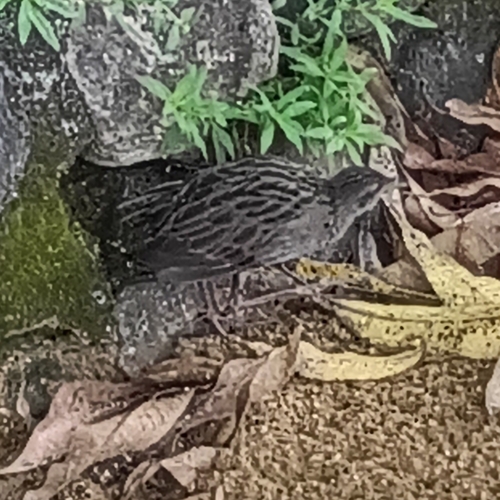 Ash-throated CrakeMustelirallus albicollisThe ash-throated crake is 21 to 24 cm (8.3 to 9.4 in) long and weighs 90 to 120 g (3.2 to 4.2 oz).
Side by side: Ash-throated Crake vs Watercock
Learn the Watercock in the BeakBrain App
Photo and call practice. Coming soon to iPhone and Android.
Play today's Daily BirdEvery photo and recording on this page is credited to its author under the licence shown. Spotted a problem with this page, or have a better photo? Contribute.