Learn what every symbol on the card means.Full credits and sources at beakbrain.com/symbols
 ForestCup nestTiny · 11 g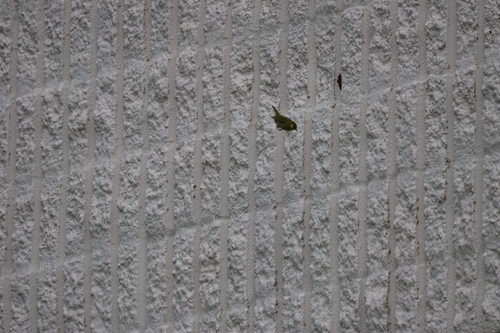


What the Warbling White-eye sounds like


ID tip
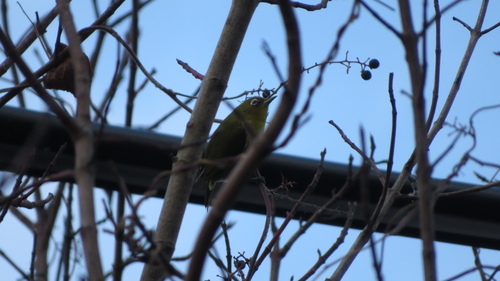
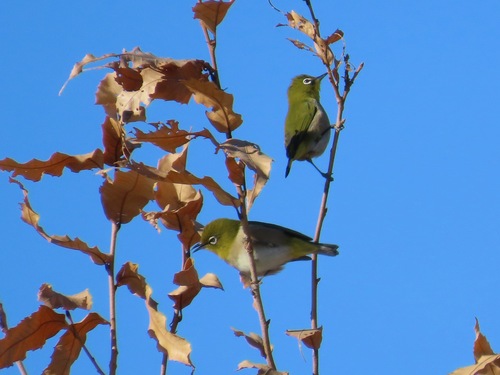
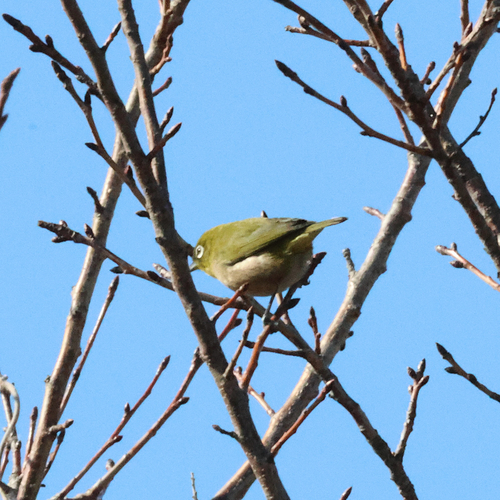
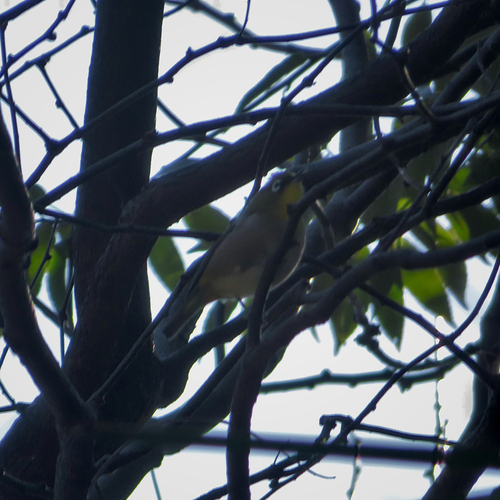
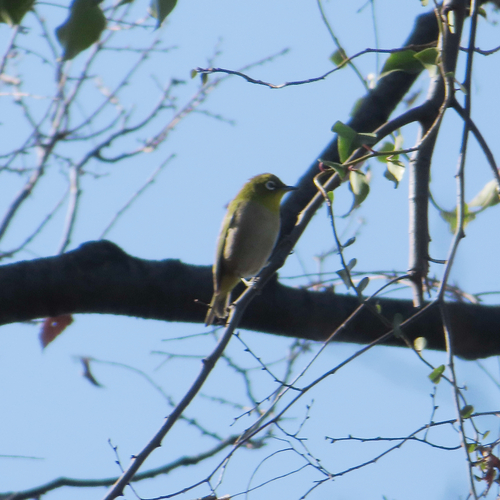
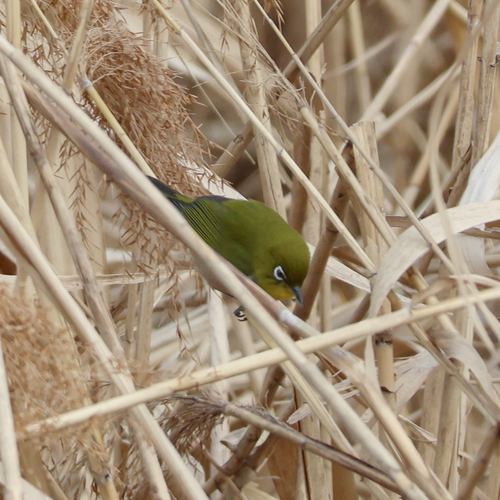
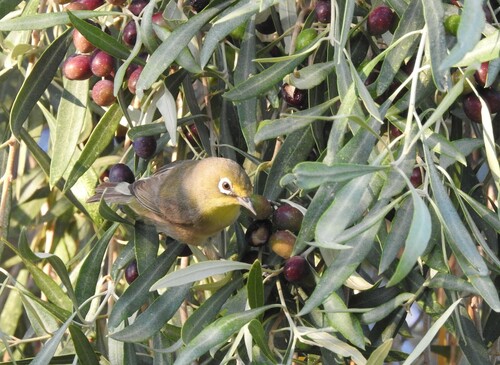
The warbling white-eye is olive green on its back, from anterior to posterior, and is pale green on its underside. Its feet, legs, and bill range from black to brown. It has a green forehead and a yellow throat. The white-eye has rounded wings and a long, slender bill – both of which indicate this bird to be very acrobatic. Its wings are dark brown but outlined in green. Like other white-eyes, this species exhibits the distinctive white eyering that gives it its name (mejiro, as the bird is known in Japan, translates to "white eye"). Adults range from 4 to 4.
Text from Wikipedia, licensed CC BY-SA 4.0.
When to see the Warbling White-eye
One bar for each month, and every month is filled: this bird is recorded here in all twelve. The wide bar is March, the month with the most records.
Where to see the Warbling White-eye
The map shades 11 countries with regular records, and 2 more in a lighter tone where the bird turns up only as a stray. Everything unshaded has no records. Countries are listed below the map.
About the Warbling White-eye
The warbling white-eye is a small passerine bird in the white-eye family. The specific epithet is occasionally written japonica, but this is incorrect due to the gender of the genus. Its native range includes much of East Asia, including the Russian Far East, Japan, Indonesia, Korea, and the Philippines. It has been intentionally introduced to other parts of the world as a pet and as pest control, with mixed results. As one of the native species of the Japanese islands, it has been depicted in Japanese art on numerous occasions, and historically was kept as a cage bird.
Text adapted from Wikipedia, licensed CC BY-SA 4.0.
Easily confused with
 Cape White-eyeZosterops virensThis species is about 12 cm long with rounded wings, strong legs, and a conspicuous ring of white feathers round the eyes.
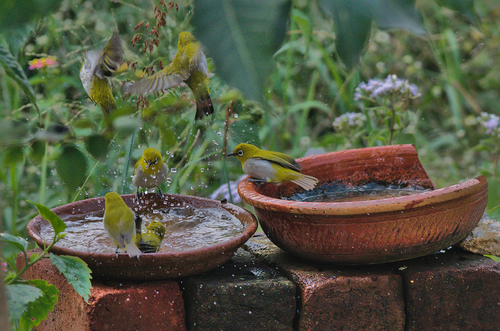 Indian White-eyeZosterops palpebrosusThis bird is small (about 8–9 cm long) with yellowish olive upper parts, a white eye ring, a yellow throat, and a vent.
 Orange River White-eyeZosterops pallidusThe sexes are alike and measure 10–13 cm from bill to tail tip.
Side by side: Indian White-eye vs Warbling White-eye · Cape White-eye vs Warbling White-eye · Orange River White-eye vs Warbling White-eye
Learn the Warbling White-eye in the BeakBrain App
Photo and call practice. Coming soon to iPhone and Android.
Play today's Daily BirdEvery photo and recording on this page is credited to its author under the licence shown. Spotted a problem with this page, or have a better photo? Contribute.