Learn what every symbol on the card means.Full credits and sources at beakbrain.com/symbols
 ForestCup nestTiny · 9 g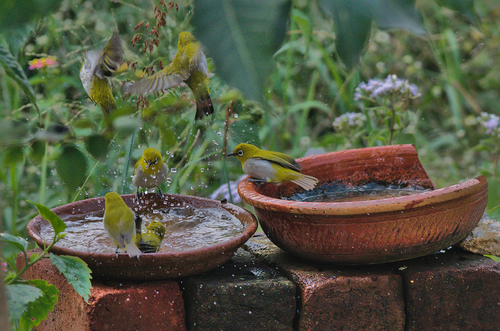


ID tip
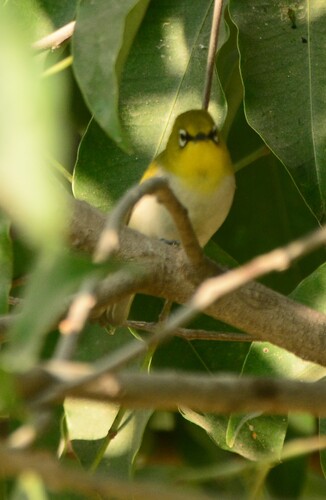
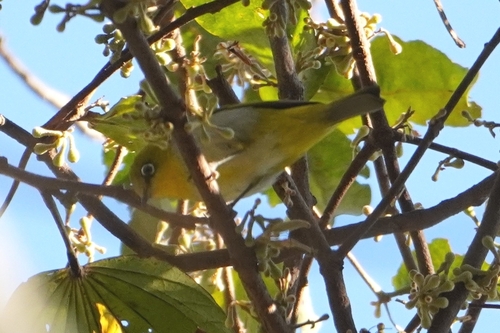
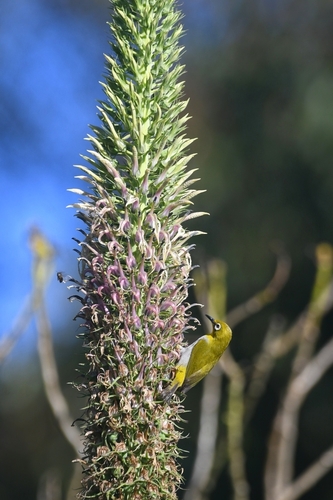
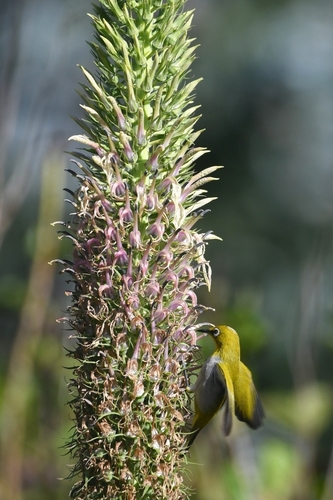
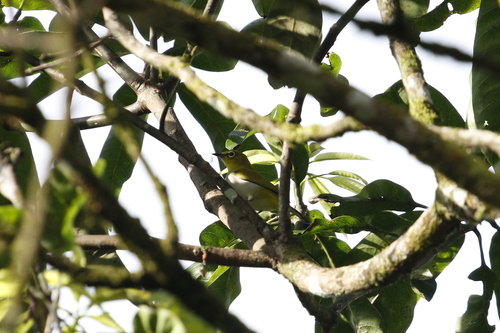
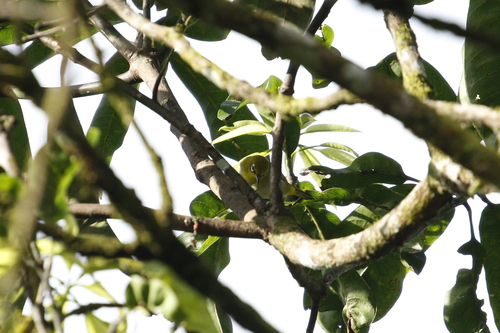
This bird is small (about 8–9 cm long) with yellowish olive upper parts, a white eye ring, a yellow throat, and a vent. The belly is whitish-grey, but may be yellow in some subspecies. The sexes look similar. The species is widespread and belongs to a superspecies complex that includes Zosterops japonicus, Zosterops meyeni, and possibly others. The group's taxonomy is still unclear, with some island populations distinctive while others lack strong support. The population from Flores, Indonesia, for instance, is found closer to the pale white-eye.
Text from Wikipedia, licensed CC BY-SA 4.0.
When to see the Indian White-eye
One bar for each month, and every month is filled: this bird is recorded here in all twelve. The wide bar is February, the month with the most records.
Where to see the Indian White-eye
The map shades 15 countries with regular records, and 2 more in a lighter tone where the bird turns up only as a stray. Everything unshaded has no records. Countries are listed below the map.
Recorded as a rare visitor in United States, United Kingdom.
About the Indian White-eye
The Indian white-eye, formerly the Oriental white-eye, is a small species of passerine bird in the white-eye family. It is a resident breeder in open woodland on the Indian subcontinent. They forage in small groups, feeding on nectar and small insects. The distinctive white eye-ring and overall yellowish upperparts easily identify them. The range previously extended eastwards to Southeast Asia, Indonesia, and Malaysia. Their name was recently changed because previous members of Zosterops palpebrosus in Southeast Asia were reclassified as a new species, making the Indian White-eye a more geographically accurate term for this species.
Text adapted from Wikipedia, licensed CC BY-SA 4.0.
Easily confused with
 Cape White-eyeZosterops virensThis species is about 12 cm long with rounded wings, strong legs, and a conspicuous ring of white feathers round the eyes.
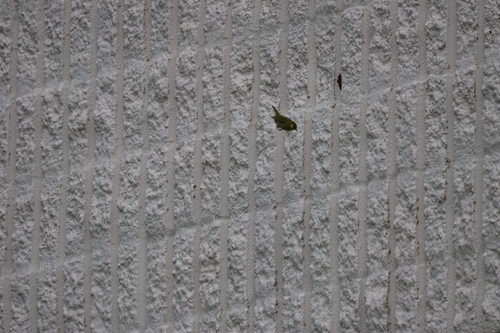 Warbling White-eyeZosterops japonicusThe warbling white-eye is olive green on its back, from anterior to posterior, and is pale green on its underside.
 Swinhoe's White-eyeZosterops simplexSwinhoe's white-eye is a bird species in the white-eye family, Zosteropidae.
Side by side: Indian White-eye vs Silvereye · Cape White-eye vs Indian White-eye · Indian White-eye vs Warbling White-eye
Learn the Indian White-eye in the BeakBrain App
Photo and call practice. Coming soon to iPhone and Android.
Play today's Daily BirdEvery photo and recording on this page is credited to its author under the licence shown. Spotted a problem with this page, or have a better photo? Contribute.