Learn what every symbol on the card means.Full credits and sources at beakbrain.com/symbols
 CoastalScrapeLarge · 671 g




What the Variable Oystercatcher sounds like

ID tip
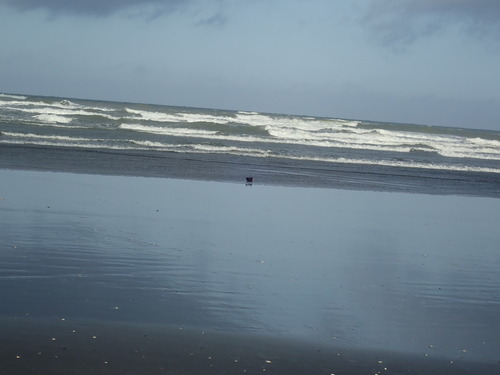
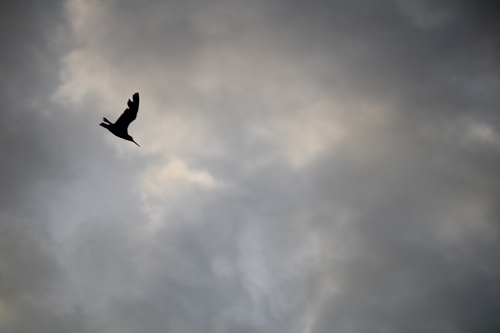
"Variable" refers to the frontal plumage, which ranges from pied through mottled to all black. They are polymorphic meaning they have different genetic variants. These color differences are attributed to the latitude of the habitat, where the northernmost oystercatchers have significantly more white on their bodies than those of southern origin. All Stewart Island variable oystercatchers are black. They have pink legs, an orange eye ring and orange-red beaks. Similar to a needle in shape, the bill is thin and long, and darkens to a deep red color during the breeding season. Voice: When in flight they make a high pitched 'kleep kleep' sound.
Text from Wikipedia, licensed CC BY-SA 4.0.
When to see the Variable Oystercatcher
One bar for each month, and every month is filled: this bird is recorded here in all twelve. The wide bar is November, the month with the most records.
Where to see the Variable Oystercatcher
The map shades 1 country with regular records, and 1 more in a lighter tone where the bird turns up only as a stray. Everything unshaded has no records. Countries are listed below the map.
Recorded as a rare visitor in Germany.
About the Variable Oystercatcher
The variable oystercatcher is a species of wader in the family Haematopodidae. It is endemic to New Zealand. The Māori name is tōrea-pango. They are also known as 'red bills'.
Text adapted from Wikipedia, licensed CC BY-SA 4.0.
Easily confused with
 Sooty OystercatcherHaematopus fuliginosusMeasuring 42 to 52 cm (16.5 to 20.5 in) long with a bill length of 5–8 cm (2–3 in), the sooty oystercatcher has all black plumage, with pink-red legs and scarlet or orange-red bill and eyes.
 South Island OystercatcherHaematopus finschiThe South Island oystercatcher is easily identifiable as a pied oystercatcher – a large wader with striking black and white plumage, long red-orange bill, and red legs.
 African OystercatcherHaematopus moquiniThe African oystercatcher is a large, noisy wader, with completely black plumage, red legs and a strong broad red bill.
Side by side: American Oystercatcher vs Variable Oystercatcher · Black Oystercatcher vs Variable Oystercatcher · Pied Oystercatcher vs Variable Oystercatcher · Sooty Oystercatcher vs Variable Oystercatcher · South Island Oystercatcher vs Variable Oystercatcher · African Oystercatcher vs Variable Oystercatcher
Learn the Variable Oystercatcher in the BeakBrain App
Photo and call practice. Coming soon to iPhone and Android.
Play today's Daily BirdEvery photo and recording on this page is credited to its author under the licence shown. Spotted a problem with this page, or have a better photo? Contribute.