Learn what every symbol on the card means.Full credits and sources at beakbrain.com/symbols
 ShrublandCavity nestSmall · 15 g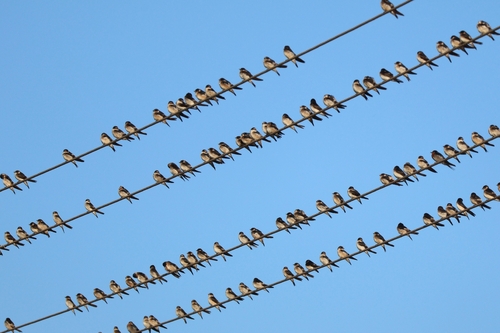
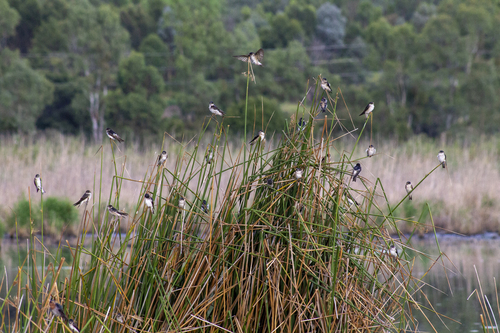
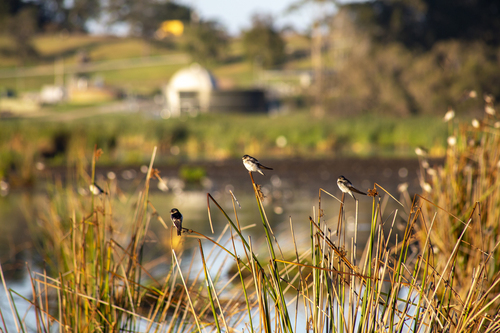
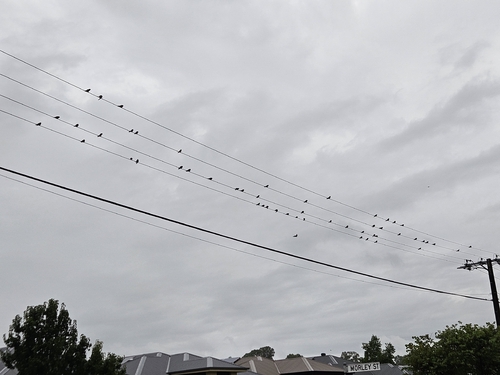
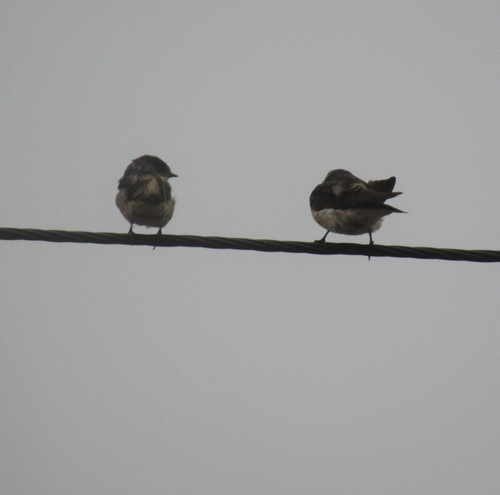


ID tip
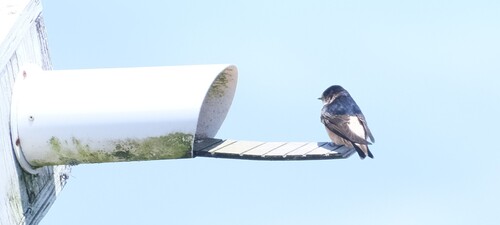
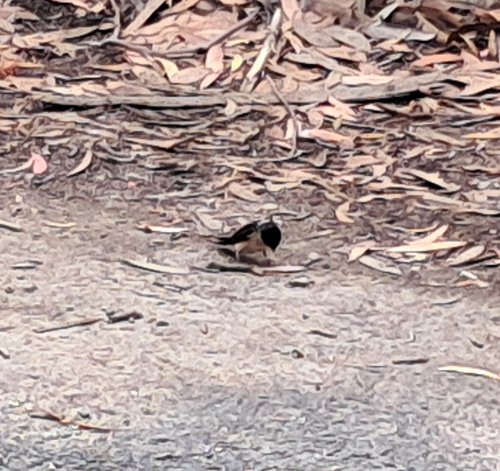
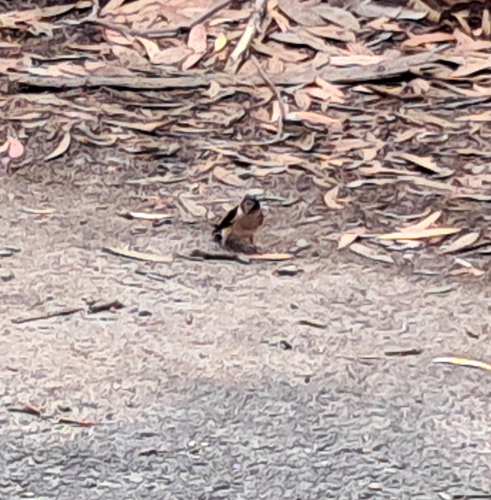
The tree martin averages 13 cm (5.1 in) in length and has a shallowly forked tail. The adult has an iridescent blue back and crown, brown wings and tail, a rufous forehead and a whitish rump. The underparts are white. The sexes are similar, but young birds are duller and browner, with a paler forehead and pale fringes to the back and wing feathers. The call of this vocal swallow is a tsweet and the song is a high-pitched twitter. This species can be distinguished from other Australian swallows by its tail shape and pale rump.
Text from Wikipedia, licensed CC BY-SA 4.0.
When to see the Tree Martin
One bar for each month, and every month is filled: this bird is recorded here in all twelve. The wide bar is October, the month with the most records.
Where to see the Tree Martin
The map shades 6 countries with regular records, and 1 more in a lighter tone where the bird turns up only as a stray. Everything unshaded has no records. Countries are listed below the map.
Recorded as a rare visitor in Solomon Islands.
About the Tree Martin
The tree martin is a member of the swallow family of passerine birds. It breeds in Australia, mostly south of latitude 20°S, and on Timor island. It is migratory, wintering through most of Australia, New Guinea, Indonesia east of the Wallace Line, and the Solomon Islands. It is a vagrant to New Zealand, where it has bred, and New Caledonia. This species is frequently placed in the genus Hirundo as Hirundo nigricans.
Text adapted from Wikipedia, licensed CC BY-SA 4.0.
Easily confused with
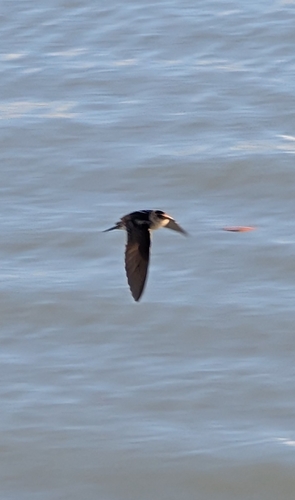 Cave SwallowPetrochelidon fulvaThe cave swallow measures 12 to 14 cm in length and weighs 19 g on average.
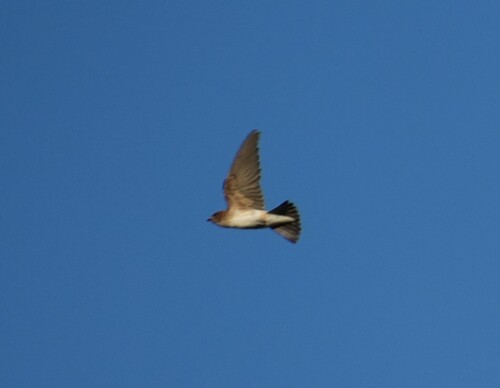 Fairy MartinPetrochelidon arielThe fairy martin is dumpy and square tailed.
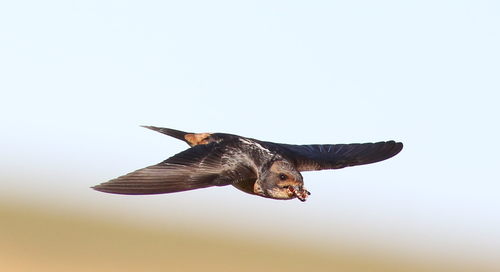 South African Cliff SwallowPetrochelidon spiloderaThe South African cliff swallow, also known as the South African swallow, is a species of bird in the family Hirundinidae native southern Africa.
Side by side: American Cliff Swallow vs Tree Martin · Cave Swallow vs Tree Martin · Fairy Martin vs Tree Martin
Learn the Tree Martin in the BeakBrain App
Photo and call practice. Coming soon to iPhone and Android.
Play today's Daily BirdEvery photo and recording on this page is credited to its author under the licence shown. Spotted a problem with this page, or have a better photo? Contribute.