Learn what every symbol on the card means.Full credits and sources at beakbrain.com/symbols
 ForestPlatform nestLarge · 400 g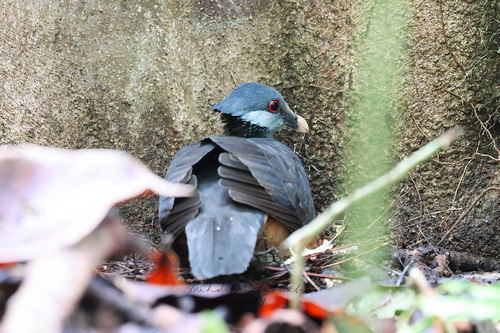

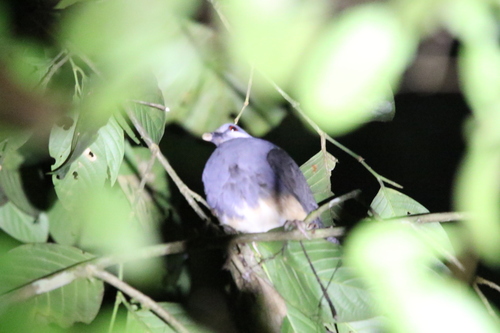
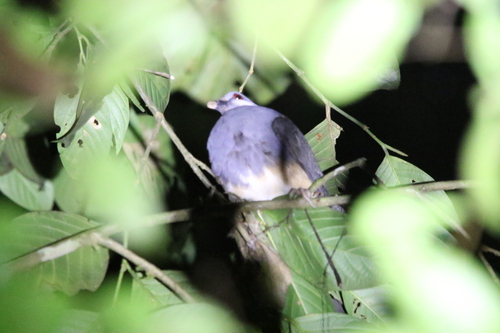
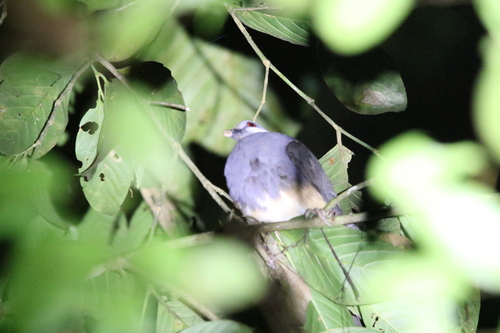
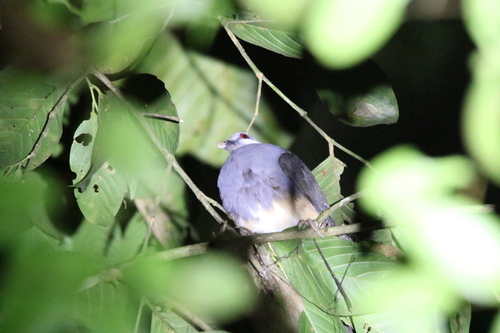
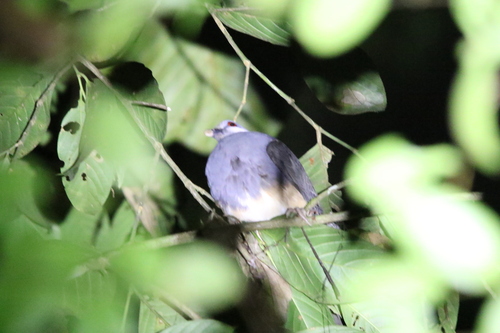
ID tip
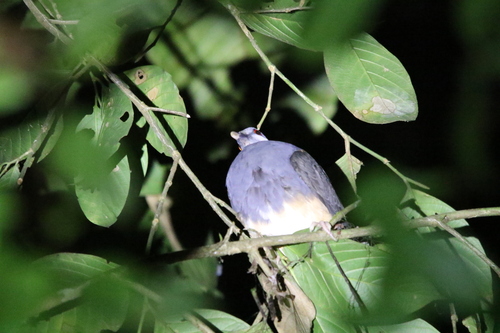
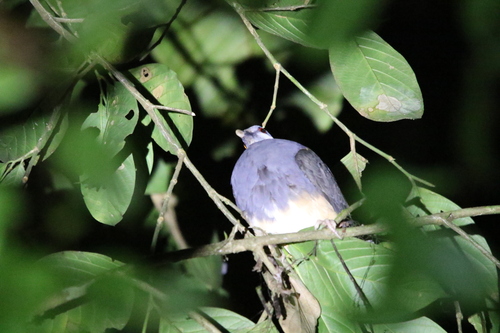
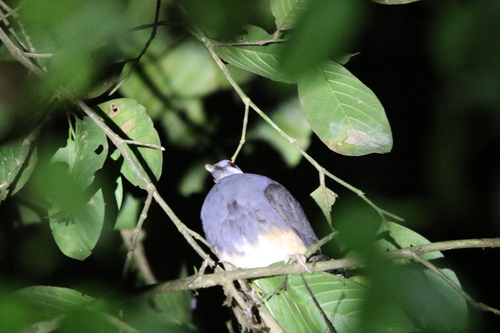
This robust species grows to a length of 33 cm (13 in); the sexes are similar in appearance. The upper parts are a uniform bluish-grey or brownish-grey, the breast is grey and the belly orangey-buff. The beak is broad with a pale tip, the ear coverts are pale and there is a short crest on the nape. The underwing coverts are boldly streaked in black and white but the tail is unbanded. The legs are pink.
Text from Wikipedia, licensed CC BY-SA 4.0.
When to see the Thick-billed Ground Pigeon
One bar for each month. Filled bars are the 6 months with records; pale bars are months with none. The wide bar is August, the month with the most records.
Where to see the Thick-billed Ground Pigeon
The map shades 2 countries with regular records. Everything unshaded has no records. Countries are listed below the map.
About the Thick-billed Ground Pigeon
The thick-billed ground pigeon, also known as the jungle pigeon or the slaty/grey ground pigeon, is a species of bird in the family Columbidae. It is monotypic within the genus Trugon. Native to New Guinea, its natural habitat is moist tropical lowland forest.
Text adapted from Wikipedia, licensed CC BY-SA 4.0.
Easily confused with
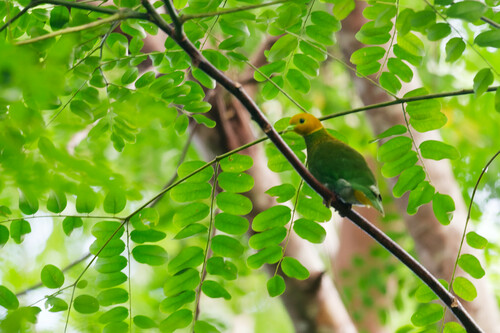 Whistling DovePtilinopus layardiThe whistling dove is a small dove (20 cm (7.9 in)) that is sexually dimorphic in its velvety plumage.
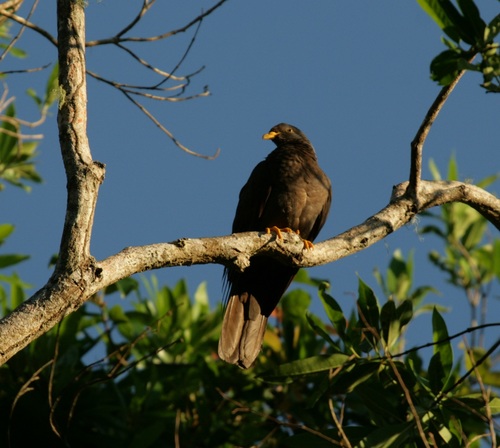 Comoro Olive PigeonColumba polleniiEasily distinguishable from other pigeon species, the Comoros olive pigeon is the largest bird in the Comoro Islands.
 Mindanao Brown DovePhapitreron brunneicepsThe Mindanao brown dove is a threatened species of bird in the family Columbidae.
Learn the Thick-billed Ground Pigeon in the BeakBrain App
Photo and call practice. Coming soon to iPhone and Android.
Play today's Daily BirdEvery photo and recording on this page is credited to its author under the licence shown. Spotted a problem with this page, or have a better photo? Contribute.