Learn what every symbol on the card means.Full credits and sources at beakbrain.com/symbols
 ForestLarge · 308 g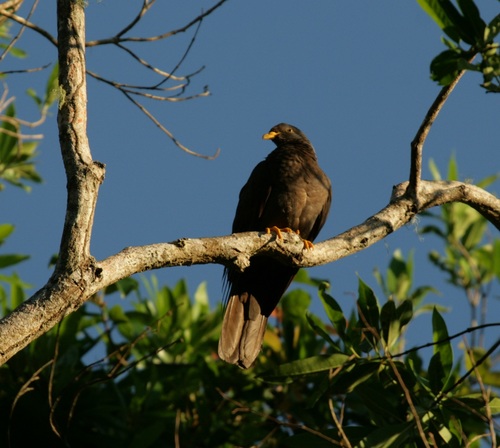


ID tip
Easily distinguishable from other pigeon species, the Comoros olive pigeon is the largest bird in the Comoro Islands. It has a dark plumage. Adolescent pigeons have a bright yellow bill, whereas older ones have a dull green or brown bill. The Comoros olive pigeon makes a very deep coo of "guk-ohoooo hoo hooo".
Text from Wikipedia, licensed CC BY-SA 4.0.
When to see the Comoro Olive Pigeon
One bar for each month. Filled bars are the 6 months with records; pale bars are months with none. The wide bar is October, the month with the most records.
Where to see the Comoro Olive Pigeon
The map shades 2 countries with regular records. Everything unshaded has no records. Countries are listed below the map.
About the Comoro Olive Pigeon
The Comoro olive pigeon, also known as the Comoros Rameron pigeon or simply the Comoro pigeon, is a species of bird in the family Columbidae. It is found in Comoros and Mayotte. It is becoming rare due to habitat loss.
Text adapted from Wikipedia, licensed CC BY-SA 4.0.
Easily confused with
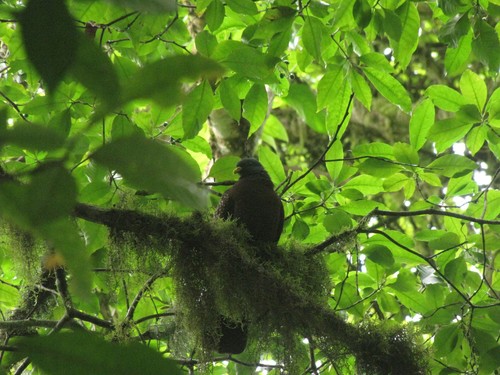 Sao Tome Olive PigeonColumba thomensisThe bird is 37 to 40 centimetres (15 to 16 in) long.
 White-naped PigeonColumba albinuchaThe white-naped pigeon is a species of bird in the family Columbidae.
Yellow-legged PigeonColumba pallidicepsThe yellow-legged pigeon is a bird species in the family Columbidae.
White-naped PigeonColumba albinuchaThe white-naped pigeon is a species of bird in the family Columbidae.
Yellow-legged PigeonColumba pallidicepsThe yellow-legged pigeon is a bird species in the family Columbidae.
Learn the Comoro Olive Pigeon in the BeakBrain App
Photo and call practice. Coming soon to iPhone and Android.
Play today's Daily BirdEvery photo and recording on this page is credited to its author under the licence shown. Spotted a problem with this page, or have a better photo? Contribute.