Learn what every symbol on the card means.Full credits and sources at beakbrain.com/symbols
 WetlandCup nestSmall · 42 g


What the Spotless Crake sounds like

ID tip
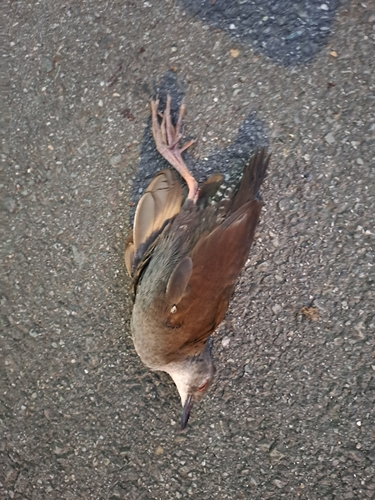
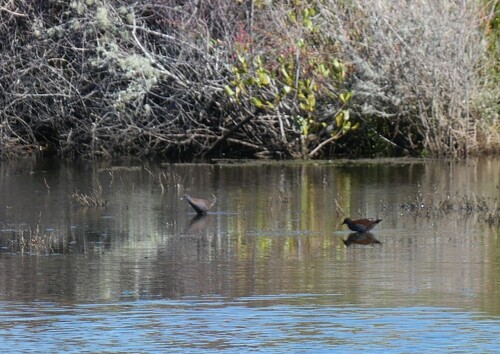
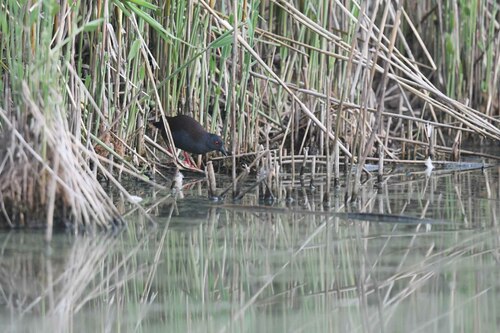
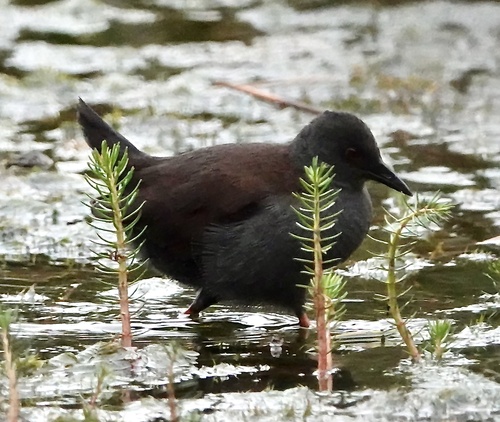
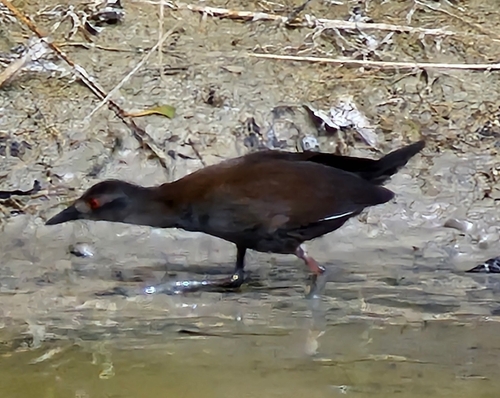
As an adult the spotless crake can reach a length of 17 – 20 cm; a wingspan of 26 – 29 cm; and can weigh between 40 – 50g. The head, and neck of the spotless crake is a bluish–grey slate colour. Some also have an occasional light grey or whitish patch on the chin, which can extend down the throat. The back, the outer wings, and inner wings have a dark reddish–brown which then fades into a dark blackish – brown on the tail feathers. The underside of the spotless crake is also a bluish–grey which then transitions to a blackish–grey on the underside of the tail feathers.
Text from Wikipedia, licensed CC BY-SA 4.0.
When to see the Spotless Crake
One bar for each month, and every month is filled: this bird is recorded here in all twelve. The wide bar is January, the month with the most records.
Where to see the Spotless Crake
The map shades 9 countries with regular records, and 4 more in a lighter tone where the bird turns up only as a stray. Everything unshaded has no records. Countries are listed below the map.
Recorded as a rare visitor in Cook Islands, American Samoa, Solomon Islands, Wallis & Futuna.
About the Spotless Crake
The spotless crake is a species of bird in the rail family, Rallidae. It is widely distributed species occurring from the Philippines, New Guinea, Australia, New Zealand across the southern Pacific Ocean to the Marquesas Islands to the south east along the Tuamotus island chain to Pitcairn Oeno island.
Text adapted from Wikipedia, licensed CC BY-SA 4.0.
Easily confused with
 Little CrakeZapornia parvaThe little crake is a very small waterbird of the family Rallidae. parva is Latin for "small".
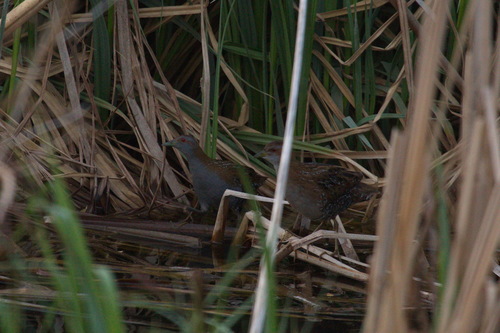 Baillon's CrakeZapornia pusillaThey are 15–18 cm (5.9–7.1 in) in length, and are similar in appearance to the little crake.
 Ruddy-breasted CrakeZapornia fuscaThe ruddy-breasted crake, or ruddy crake, is a waterbird in the rail and crake family Rallidae, formerly included in the genus Porzana.
Side by side: Black Crake vs Spotless Crake · Baillon's Crake vs Spotless Crake
Learn the Spotless Crake in the BeakBrain App
Photo and call practice. Coming soon to iPhone and Android.
Play today's Daily BirdEvery photo and recording on this page is credited to its author under the licence shown. Spotted a problem with this page, or have a better photo? Contribute.