Learn what every symbol on the card means.Full credits and sources at beakbrain.com/symbols
 ForestCavity nestSmall · 50 g
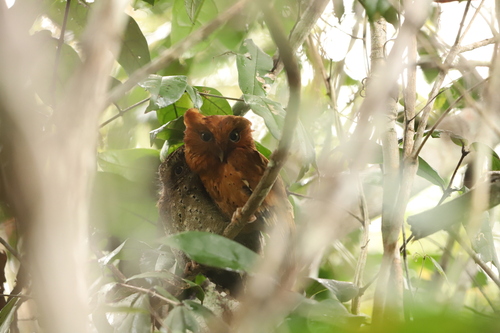
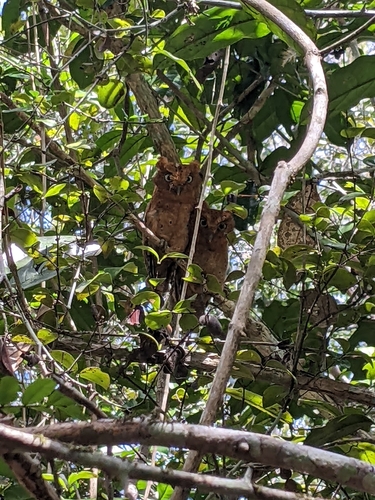
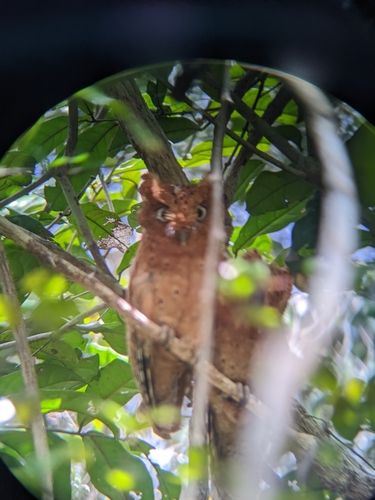
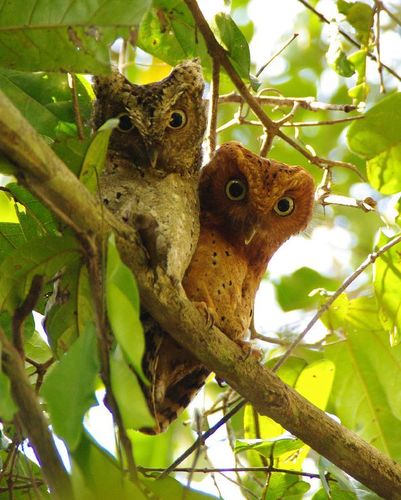
ID tip
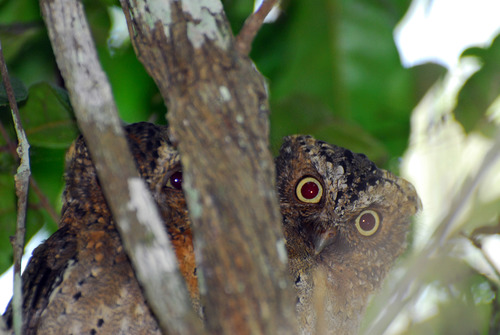
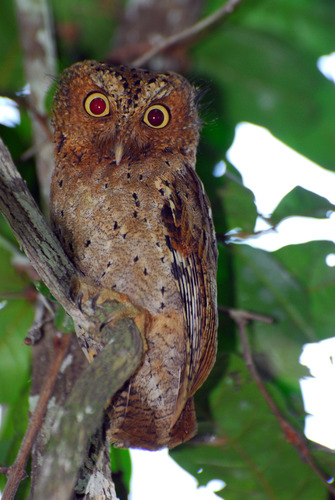
Sokoke scops owl is a fairly plain scops owl with small spotted markings on the underside. They are found in a number of color morphs ranging from grey through brown to an orange-rufous. Their call consists of a repetitive "too-too-too-too-too" reminiscent of the calls of tinkerbirds. Males have a higher-pitched, louder and clearer call compared to females, which have a softer, muffled, low-pitched call. They are territorial and pairs may duet in response to intruding conspecifics. The calling intensity of spontaneously calling owls varies with the time of night and phase of the moon.
Text from Wikipedia, licensed CC BY-SA 4.0.
When to see the Sokoke Scops Owl
One bar for each month. Filled bars are the 11 months with records; pale bars are months with none. The wide bar is November, the month with the most records.
Where to see the Sokoke Scops Owl
The map shades 2 countries with regular records. Everything unshaded has no records. Countries are listed below the map.
About the Sokoke Scops Owl
The Sokoke scops owl, also Morden's scops owl or Morden's owlet, is a highly localized species of scops owl found in lowland forests of Kenya and Tanzania. The greatest population of this species of owl is in the Cynometra-Manilkara forest, which is less than one-third of the Sokoke Forest. It is also found in the Afzelia-Cynometra forest.
Text adapted from Wikipedia, licensed CC BY-SA 4.0.
Easily confused with
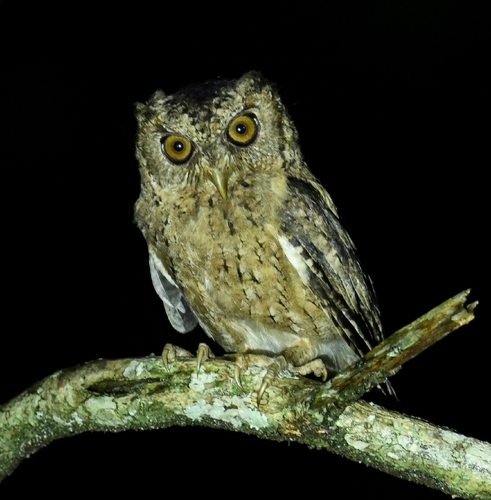 Sunda Scops OwlOtus lempijiIt grows from 20 to 25 cm (7.9 to 9.8 in) and can weigh 100 to 170 g (3.5 to 6.0 oz).
 Mantanani Scops OwlOtus mantananensisThe Mantanani scops owl, is a small owl in the scops-owl genus Otus found on small islands between Borneo and the Philippines.
 Japanese Scops OwlOtus semitorquesJapanese scops-owls are 16.5–30 cm (6.5–11.8 in) tall, and their wingspan is 60–66 cm (23.5–26 in).
Learn the Sokoke Scops Owl in the BeakBrain App
Photo and call practice. Coming soon to iPhone and Android.
Play today's Daily BirdEvery photo and recording on this page is credited to its author under the licence shown. Spotted a problem with this page, or have a better photo? Contribute.