Learn what every symbol on the card means.Full credits and sources at beakbrain.com/symbols
 DesertDomed nestSmall · 27 g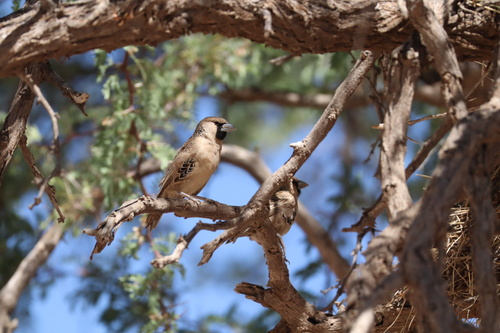

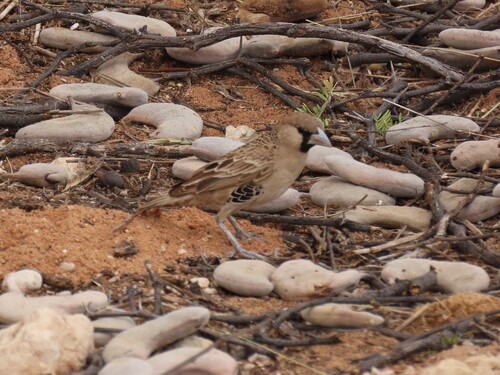


ID tip
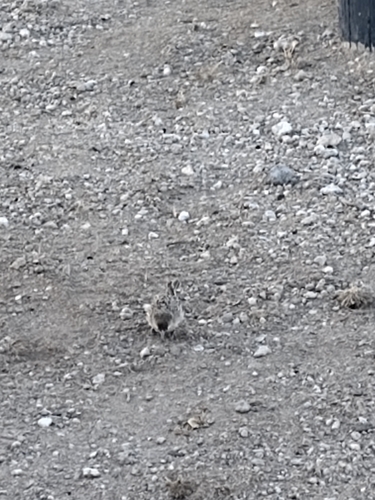
Measuring around 14 cm (5+1⁄2 in) in length, the sociable weaver has a black chin, black, barred flanks, and a scalloped back. It typically weighs 26–32 g (15⁄16–1+1⁄8 oz), and sexes are indistinguishable. Tail Length around 42–48 mm (1.7–1.9 in).
Text from Wikipedia, licensed CC BY-SA 4.0.
When to see the Sociable Weaver
One bar for each month, and every month is filled: this bird is recorded here in all twelve. The wide bar is May, the month with the most records.
Where to see the Sociable Weaver
The map shades 3 countries with regular records. Everything unshaded has no records. Countries are listed below the map.
About the Sociable Weaver
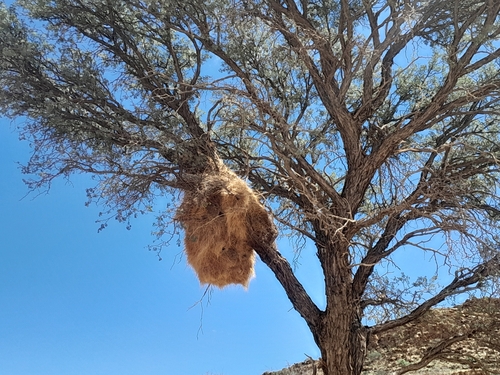
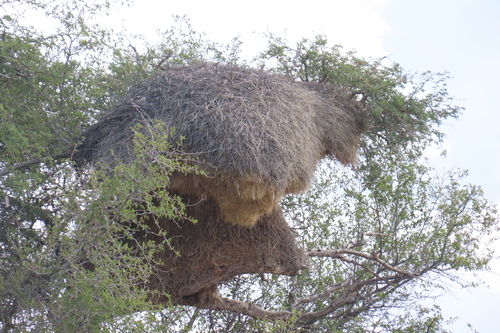
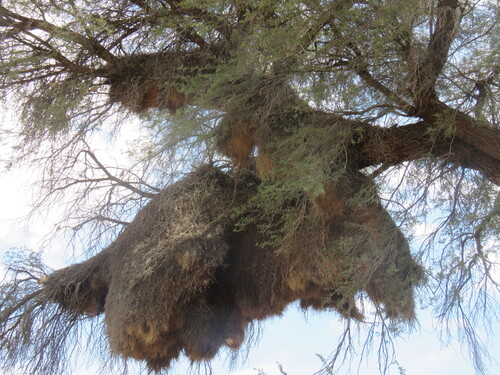
The sociable weaver is a species of bird in the weaver family, endemic to Southern Africa. It is the only species in its genus Philetairus. It is found in South Africa, Namibia, and Botswana, but its range is centered within the Northern Cape Province of South Africa. The species builds large, compound, community nests, a rarity among birds. These nests are perhaps the most spectacular structure built by any bird.
Text adapted from Wikipedia, licensed CC BY-SA 4.0.
Easily confused with
 Northern Red BishopEuplectes franciscanusThis short-tailed bishop is small in size, about 11 cm and weighing about 12-22 grams.
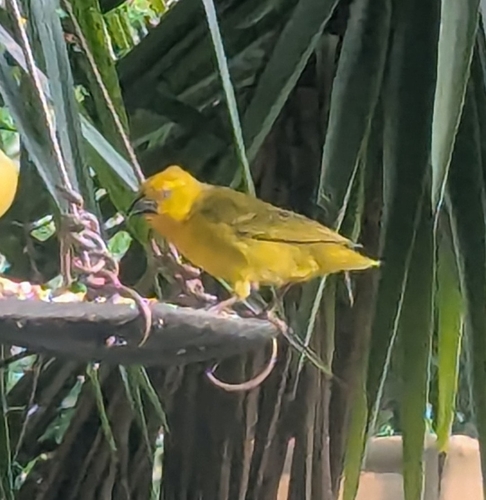 Holub's Golden WeaverPloceus xanthopsMales differentiate from the females because of their full yellow heads, bright greenish-yellow body and the bit of orange under their chins that continues to the upper breast.
Holub's Golden WeaverPloceus xanthopsMales differentiate from the females because of their full yellow heads, bright greenish-yellow body and the bit of orange under their chins that continues to the upper breast.
Holub's Golden WeaverPloceus xanthopsMales differentiate from the females because of their full yellow heads, bright greenish-yellow body and the bit of orange under their chins that continues to the upper breast.
Side by side: Holub's Golden Weaver vs Sociable Weaver · Northern Red Bishop vs Sociable Weaver
Watch the Sociable Weaver on live cams
Browse all 118 bird cams worldwide, live and seasonal, by region and species.
Learn the Sociable Weaver in the BeakBrain App
Photo and call practice. Coming soon to iPhone and Android.
Play today's Daily BirdEvery photo and recording on this page is credited to its author under the licence shown. Spotted a problem with this page, or have a better photo? Contribute.