Learn what every symbol on the card means.Full credits and sources at beakbrain.com/symbols
 ShrublandCup nestTiny · 9 g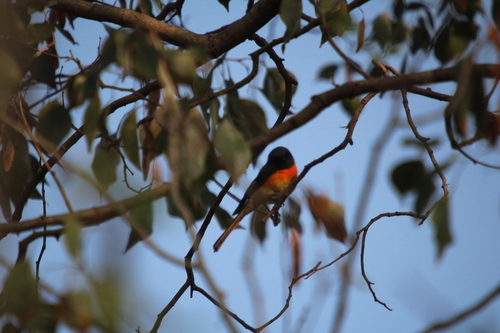


ID tip
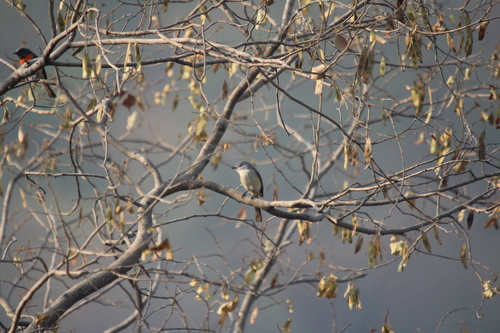
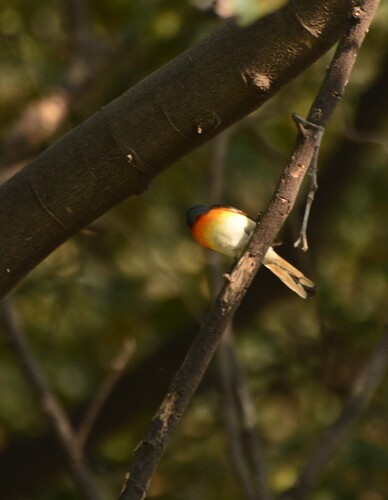
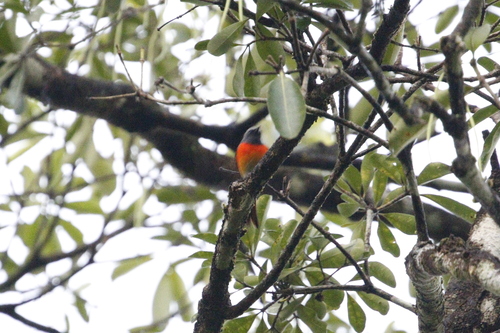
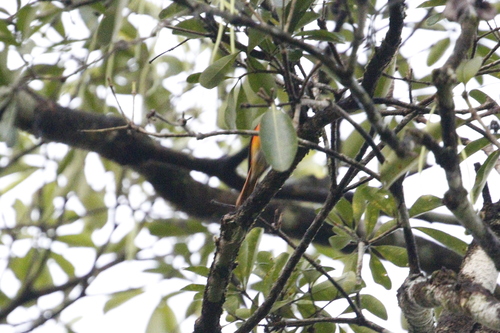
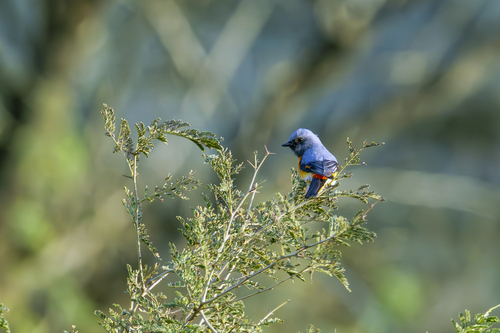
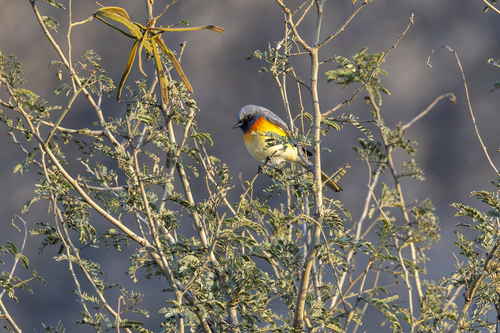
The small minivet is 16 cm long with a strong dark beak and long wings. The male differs from most other common minivets by having grey, not glossy black, upperparts and head, and orange underparts, fading to yellow on the belly, orange tail edges, rump and wing patches. The female is grey above, with yellow underparts (including the face), tail edges, rump and wing patches. There is much racial variation. The male P. c. pallidus of the northwest Indian subcontinent is pale grey above, with the underparts whitish except on the throat and flanks, whereas the male P. c.
Text from Wikipedia, licensed CC BY-SA 4.0.
When to see the Small Minivet
One bar for each month, and every month is filled: this bird is recorded here in all twelve. The wide bar is February, the month with the most records.
Where to see the Small Minivet
The map shades 12 countries with regular records. Everything unshaded has no records. Countries are listed below the map.
About the Small Minivet
The small minivet is a small passerine bird. This minivet is found in tropical southern Asia from the Indian subcontinent east to Indonesia.
Text adapted from Wikipedia, licensed CC BY-SA 4.0.
Easily confused with
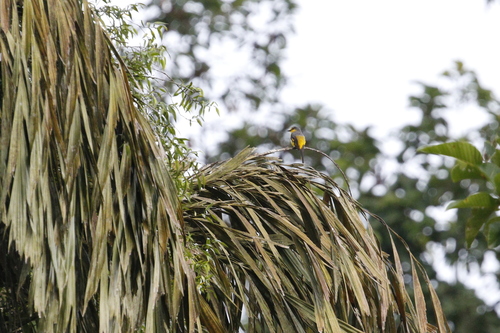
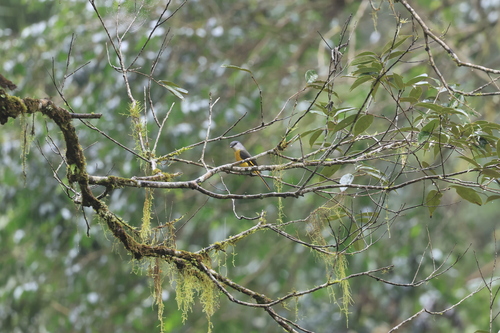 Grey-chinned MinivetPericrocotus solarisThe grey-chinned minivet is 17–19 cm (6.7–7.5 in) long and weighs 11–17 g (0.39–0.60 oz).
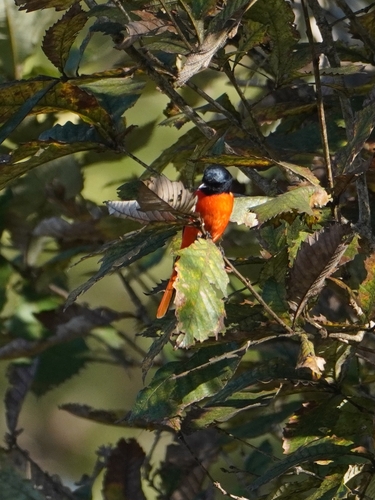
 Scarlet MinivetPericrocotus flammeusThe orange minivet measures about 17 – 22 cm and weighs 19 – 24.5 g.
 Long-tailed MinivetPericrocotus ethologusThe long-tailed minivet is a species of bird in the family Campephagidae.
Side by side: Grey-chinned Minivet vs Small Minivet · Scarlet Minivet vs Small Minivet
Learn the Small Minivet in the BeakBrain App
Photo and call practice. Coming soon to iPhone and Android.
Play today's Daily BirdEvery photo and recording on this page is credited to its author under the licence shown. Spotted a problem with this page, or have a better photo? Contribute.