Learn what every symbol on the card means.Full credits and sources at beakbrain.com/symbols
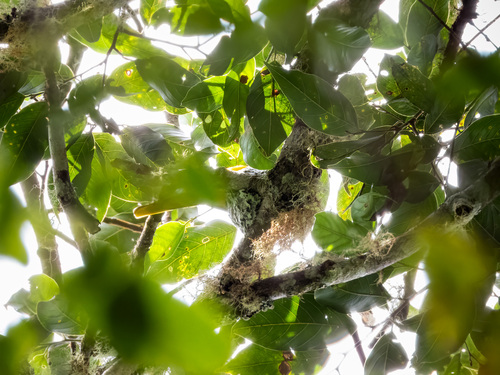
 ForestCup nestTiny · 15 g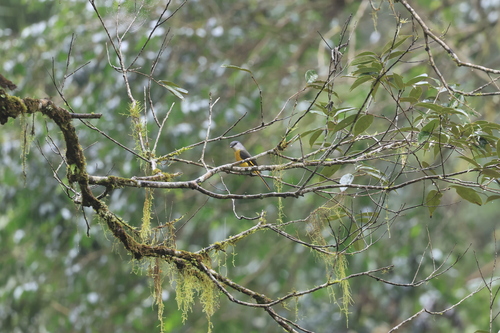


ID tip
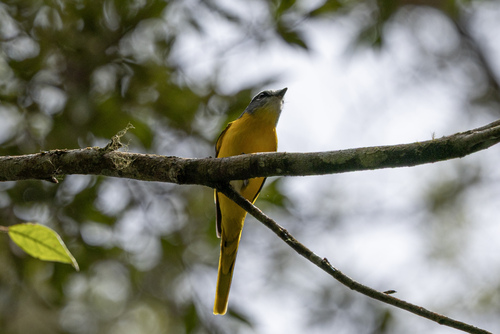
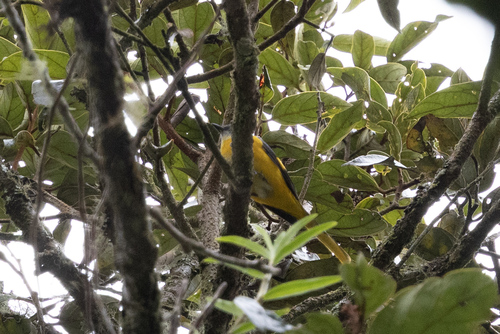
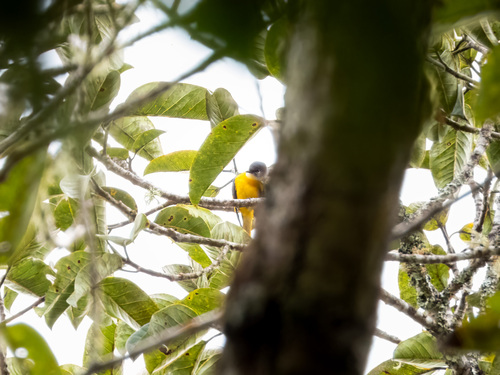
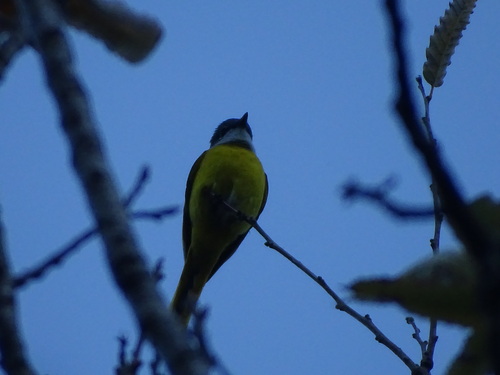
The grey-chinned minivet is 17–19 cm (6.7–7.5 in) long and weighs 11–17 g (0.39–0.60 oz). It is sexually dimorphic. The adult male has a dark grey head and mantle, a pale grey chin, an orange-yellow throat and blackish wings. The underparts, lower back and tips of the greater coverts are orange. In the female, these parts are bright yellow instead. The eyes, beak and legs are black. The immature bird is similar to the female but has yellow-olive bars on its back.
Text from Wikipedia, licensed CC BY-SA 4.0.
When to see the Grey-chinned Minivet
One bar for each month. Filled bars are the 10 months with records; pale bars are months with none. The wide bar is April, the month with the most records.
Where to see the Grey-chinned Minivet
The map shades 14 countries with regular records. Everything unshaded has no records. Countries are listed below the map.
About the Grey-chinned Minivet
The grey-chinned minivet is a species of bird in the family Campephagidae. It is found from the Himalayas to China, Taiwan and Southeast Asia. Its natural habitat is forests about 1,000–2,000 m (3,300–6,600 ft) in elevation. The International Union for Conservation of Nature (IUCN) has assessed it as a least-concern species.
Text adapted from Wikipedia, licensed CC BY-SA 4.0.
Easily confused with
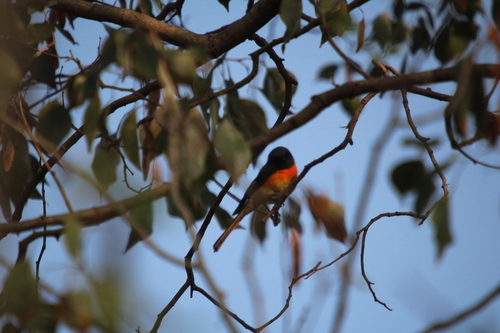 Small MinivetPericrocotus cinnamomeusThe small minivet is 16 cm long with a strong dark beak and long wings.
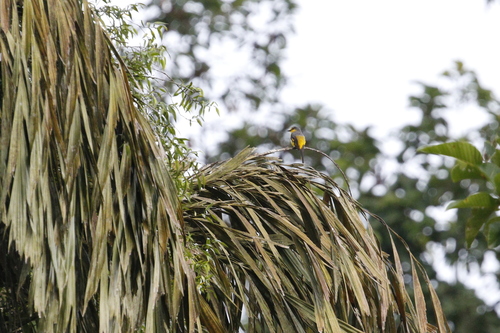 Scarlet MinivetPericrocotus flammeusThe orange minivet measures about 17 – 22 cm and weighs 19 – 24.5 g.
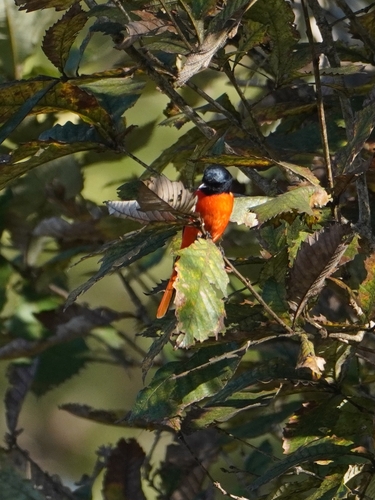 Long-tailed MinivetPericrocotus ethologusThe long-tailed minivet is a species of bird in the family Campephagidae.
Side by side: Grey-chinned Minivet vs Small Minivet · Grey-chinned Minivet vs Scarlet Minivet
Learn the Grey-chinned Minivet in the BeakBrain App
Photo and call practice. Coming soon to iPhone and Android.
Play today's Daily BirdEvery photo and recording on this page is credited to its author under the licence shown. Spotted a problem with this page, or have a better photo? Contribute.