Learn what every symbol on the card means.Full credits and sources at beakbrain.com/symbols
 ForestCup nestTiny · 15 g


When to see the Siberian Blue Robin
One bar for each month. Filled bars are the 10 months with records; pale bars are months with none. The wide bar is May, the month with the most records.
Where to see the Siberian Blue Robin
The map shades 18 countries with regular records, and 1 more in a lighter tone where the bird turns up only as a stray. Everything unshaded has no records. Countries are listed below the map.
Recorded as a rare visitor in United States.
About the Siberian Blue Robin
The Siberian blue robin is a small passerine bird that was formerly classified as a member of the thrush family, Turdidae, but is now more generally considered to belong to the Old World flycatcher family, Muscicapidae. It and similar small European species are often called chats. Recent research suggests that this species and some other East Asian members of Luscinia should be classified in a new genus, together with the Japanese and Ryūkyū robins. The genus name Larvivora comes from the Neo-Latin larva meaning caterpillar and -vorus meaning eating, and cyane is Latin for "dark-blue".
Text adapted from Wikipedia, licensed CC BY-SA 4.0.
Easily confused with
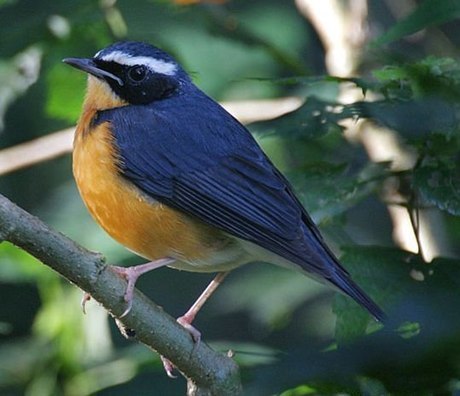 Indian Blue RobinLarvivora brunneaThe Indian blue robin is similar in size to the related bluethroat at 15 cm long.
 Rufous-tailed RobinLarvivora sibilansThe rufous-tailed robin is a small passerine bird.
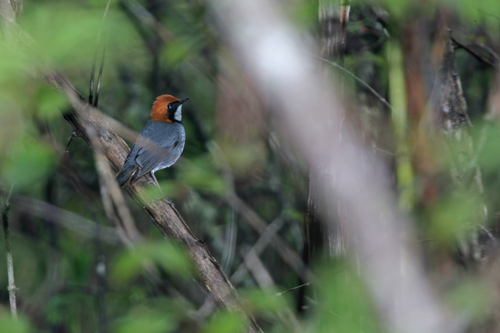 Rufous-headed RobinLarvivora ruficepsThis is a small robin (average length 15 cm) with an orange-rufous head, a black face, and a white throat with black bordering.
Learn the Siberian Blue Robin in the BeakBrain App
Photo and call practice. Coming soon to iPhone and Android.
Play today's Daily BirdEvery photo and recording on this page is credited to its author under the licence shown. Spotted a problem with this page, or have a better photo? Contribute.