Learn what every symbol on the card means.Full credits and sources at beakbrain.com/symbols
 ShrublandCavity nestSmall · 18 g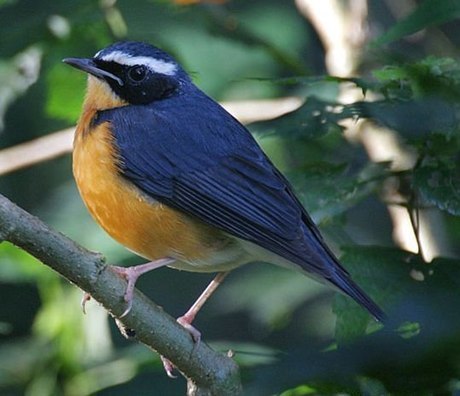


ID tip
The Indian blue robin is similar in size to the related bluethroat at 15 cm long. The adult male has blue upperparts and rufous underparts. A bright white supercilium contrasts with a black mask that continues down the neck. The lower belly and undertail are also whitish. The female is olive brown above and buff below with a light eye-ring and rufescent rump. The breast and flanks are buffy. Young birds are dark brown with buff spots.
Text from Wikipedia, licensed CC BY-SA 4.0.
When to see the Indian Blue Robin
One bar for each month. Filled bars are the 9 months with records; pale bars are months with none. The wide bar is December, the month with the most records.
Where to see the Indian Blue Robin
The map shades 8 countries with regular records. Everything unshaded has no records. Countries are listed below the map.
About the Indian Blue Robin
The Indian blue robin is a small bird found in the Indian subcontinent. Formerly considered a thrush, it is now considered one of the Old World flycatchers in the family Muscicapidae. It was earlier also called the Indian blue chat. It is migratory, breeding in the forests along the Himalayas of Nepal, India, Myanmar and Bangladesh. They winter in the hill forests of the Western Ghats of India and in Sri Lanka.
Text adapted from Wikipedia, licensed CC BY-SA 4.0.
Easily confused with
 Siberian Blue RobinLarvivora cyaneThe Siberian blue robin is a small passerine bird that was formerly classified as a member of the thrush family, Turdidae, but is now more generally considered to belong to the Old World flycatcher family, Muscicapidae.
 Rufous-tailed RobinLarvivora sibilansThe rufous-tailed robin is a small passerine bird.
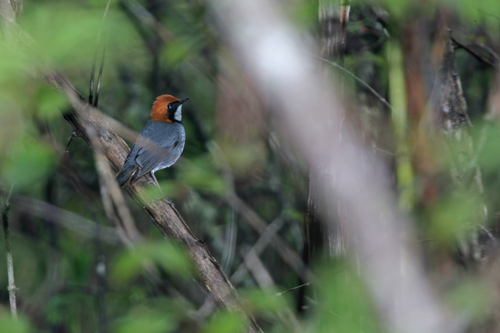 Rufous-headed RobinLarvivora ruficepsThis is a small robin (average length 15 cm) with an orange-rufous head, a black face, and a white throat with black bordering.
Learn the Indian Blue Robin in the BeakBrain App
Photo and call practice. Coming soon to iPhone and Android.
Play today's Daily BirdEvery photo and recording on this page is credited to its author under the licence shown. Spotted a problem with this page, or have a better photo? Contribute.