Learn what every symbol on the card means.Full credits and sources at beakbrain.com/symbols
 ShrublandCup nestSmall · 16 g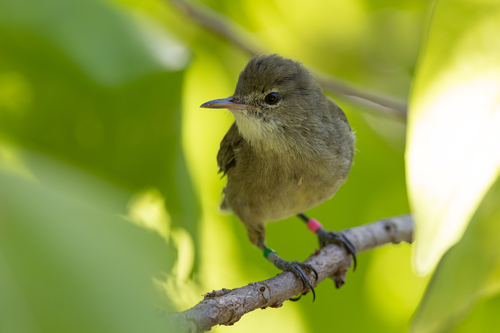
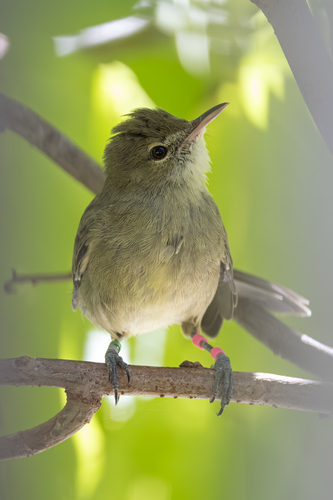
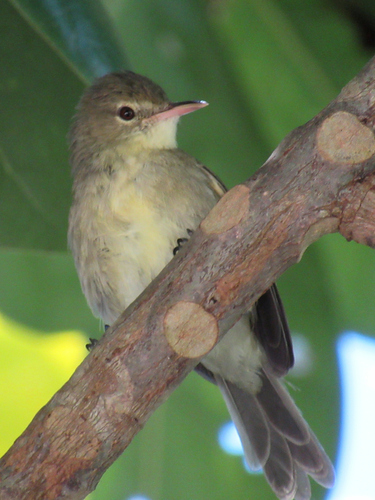
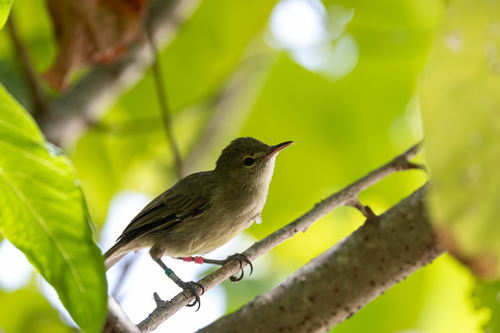
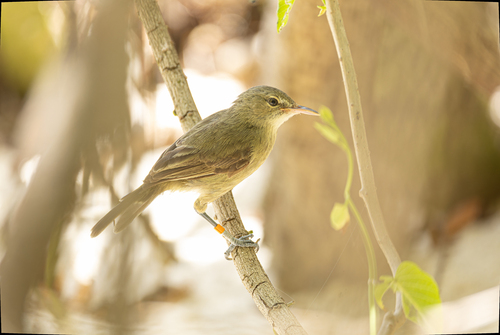
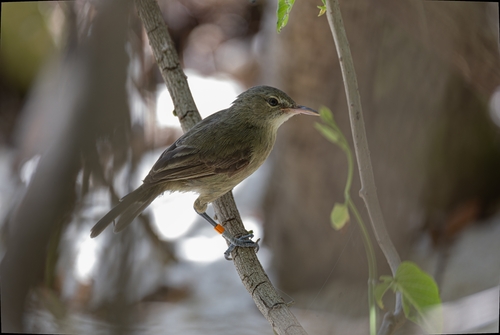
ID tip
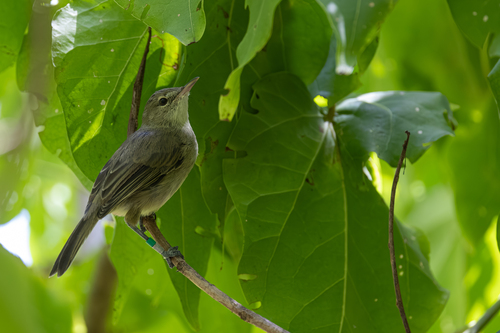
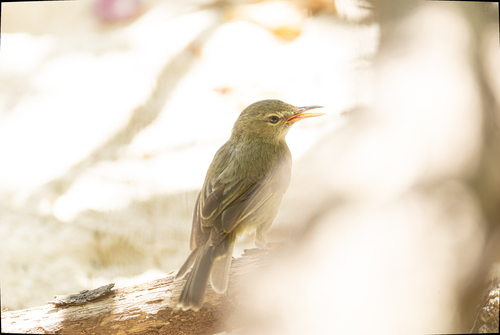
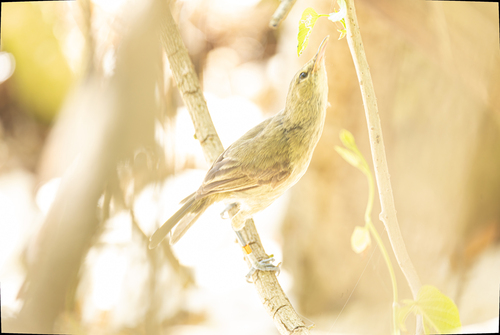
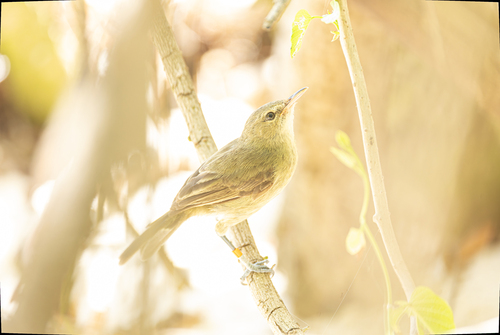
The Seychelles warbler is a small, plain Acrocephalus warbler, between 13 and 14 cm (5.1–5.5 in) in length and with a wingspan of 17 cm (6.7 in). It has long grey-blue legs, a long horn-coloured bill, and a reddish eye. Adults show no sexual dimorphism in their plumage. The back, wings, flanks and head are greenish-brown and the belly and breast are dirty white. The throat is a stronger white and there is a pale supercilium in front of the eye. Juvenile birds are darker with a more bluish eye. The voice of the Seychelles warbler is described as rich and melodious, similar to a human whistle.
Text from Wikipedia, licensed CC BY-SA 4.0.
When to see the Seychelles Warbler
One bar for each month. Filled bars are the 11 months with records; pale bars are months with none. The wide bar is November, the month with the most records.
Where to see the Seychelles Warbler
The map shades 1 country with regular records. Everything unshaded has no records. Countries are listed below the map.
About the Seychelles Warbler
The Seychelles warbler, also known as Seychelles brush warbler, is a small songbird found on five granitic and corraline islands in the Seychelles. It is a greenish-brown bird with long legs and a long slender bill. It is primarily found in forested areas on the islands. The Seychelles warbler is a rarity in that it exhibits cooperative breeding, or alloparenting, which means that the monogamous pair is assisted by nonbreeding female helpers.
Text adapted from Wikipedia, licensed CC BY-SA 4.0.
Easily confused with
 Cape Verde WarblerAcrocephalus brevipennisThis is a medium-sized warbler, larger than the Eurasian reed warbler.
 Saipan Reed WarblerAcrocephalus hiwaeThe Saipan reed warbler is approximately 17 cm (6.7 in) long, and is greyish olive-brown above with a pale-yellow underside.
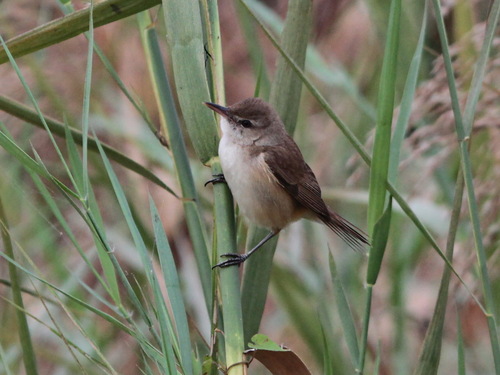 Blunt-winged WarblerAcrocephalus concinensThe blunt-winged warbler is a marsh-warbler.
Learn the Seychelles Warbler in the BeakBrain App
Photo and call practice. Coming soon to iPhone and Android.
Play today's Daily BirdEvery photo and recording on this page is credited to its author under the licence shown. Spotted a problem with this page, or have a better photo? Contribute.