Learn what every symbol on the card means.Full credits and sources at beakbrain.com/symbols
 ForestCavity nestMedium · 123 g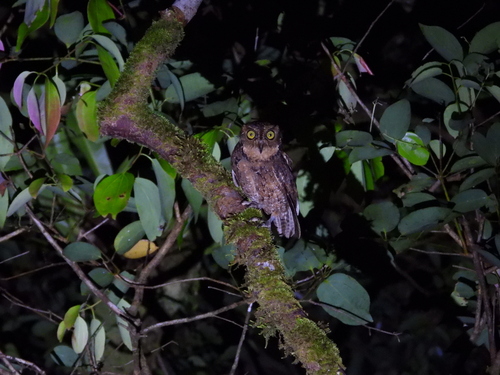



ID tip
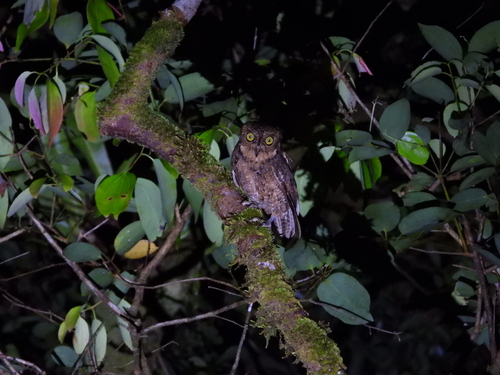
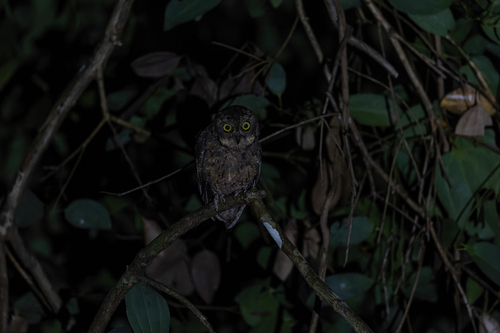
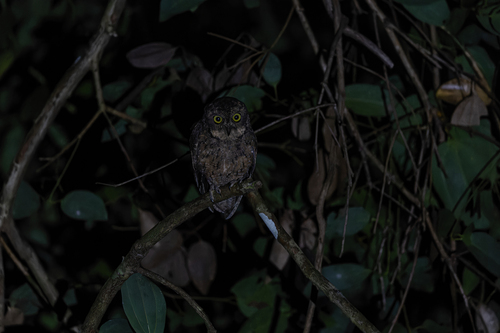
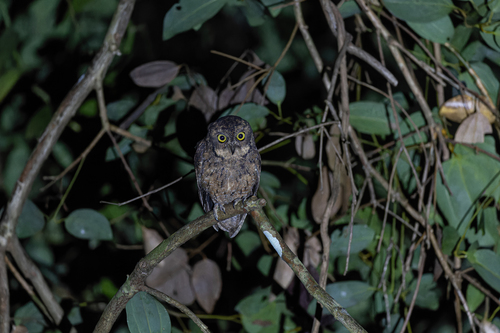
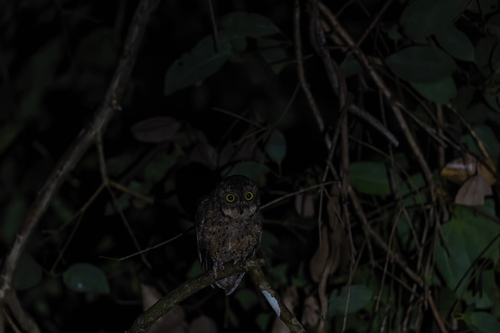
It reaches a length of 19 to 21 cm. The wings are each about 17 cm long. Its plumage is rufous brown and exhibits black shaft streaks. The underparts and the facial disc are rufous. The long grey legs are unfeathered. The eyes are large and golden yellow. The ear-tufts are very small. Its call, which sounds like a rasping "whaugh" with various "tok tok" notes, can be heard from a far distance and in particular in the darkness. Its diet consists of geckos, tree frogs and insects (e.g. locusts).
Text from Wikipedia, licensed CC BY-SA 4.0.
When to see the Seychelles Scops Owl
One bar for each month. Filled bars are the 11 months with records; pale bars are months with none. The wide bar is October, the month with the most records.
Where to see the Seychelles Scops Owl
The map shades 1 country with regular records. Everything unshaded has no records. Countries are listed below the map.
About the Seychelles Scops Owl
The Seychelles scops owl or Seychelles owl, also known as bare-legged scops owl or syer is a rare scops owl species, which only occurs in the Morne Seychellois National Park on the Seychelles island of Mahé.
Text adapted from Wikipedia, licensed CC BY-SA 4.0.
Easily confused with

Learn the Seychelles Scops Owl in the BeakBrain App
Photo and call practice. Coming soon to iPhone and Android.
Play today's Daily BirdEvery photo and recording on this page is credited to its author under the licence shown. Spotted a problem with this page, or have a better photo? Contribute.