Learn what every symbol on the card means.Full credits and sources at beakbrain.com/symbols
 UrbanTiny · 13 g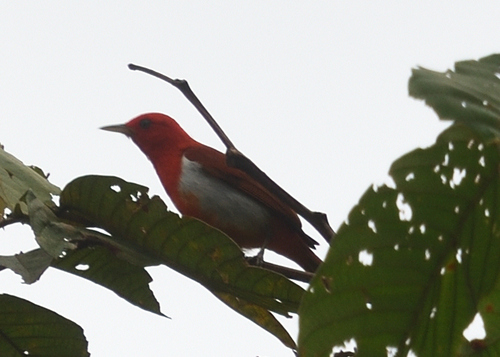
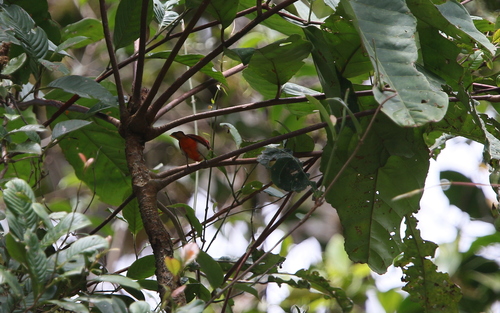
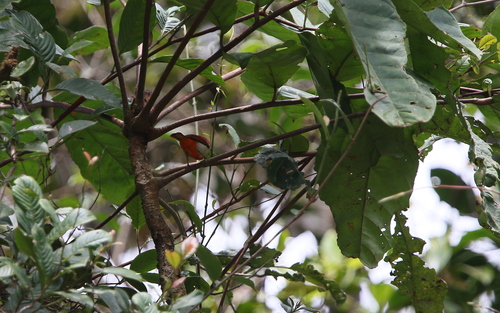


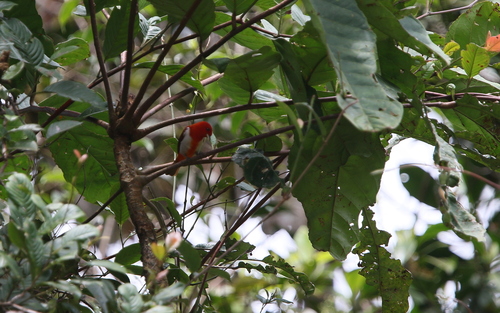
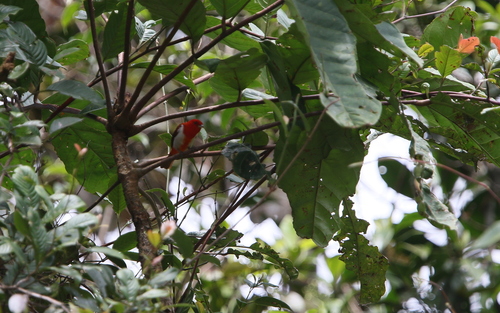
What the Scarlet-and-white Tanager sounds like


ID tip
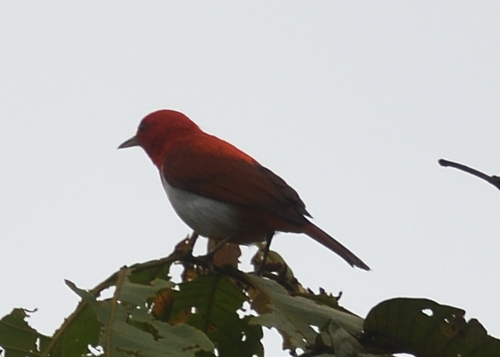
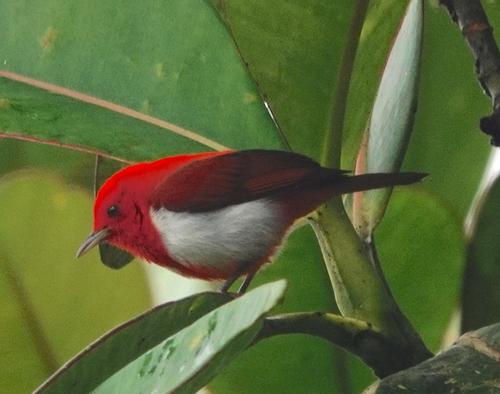
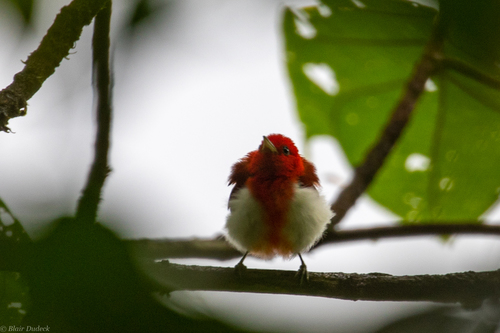
The scarlet-and-white tanager is a relatively thin tanager around 12 cm (4.7 in) long and weighing 9.8–14.5 g (0.35–0.51 oz). The adult male is highly distinctive and has a bright scarlet head, throat, and upperparts. Its wings are mostly a darker red, with brownish-black flight feathers, along with black wingtips. It has a scarlet median stripe running down its breast and belly, with the remaining underparts being white. The undertail coverts are also scarlet. Females have olive-brown upperparts and white underparts, with dusky wings and a dark brown tail. Voice: Its song is an inconspicuous, high-pitched ti ti ti-te-te-ta-heét. The flight call is a weak chip or sciip.
Text from Wikipedia, licensed CC BY-SA 4.0.
When to see the Scarlet-and-white Tanager
One bar for each month. Filled bars are the 11 months with records; pale bars are months with none. The wide bar is August, the month with the most records.
Where to see the Scarlet-and-white Tanager
The map shades 2 countries with regular records. Everything unshaded has no records. Countries are listed below the map.
About the Scarlet-and-white Tanager
The scarlet-and-white tanager is a species of bird in the family Thraupidae. It is found in Colombia and northern Ecuador. Its natural habitats are subtropical or tropical moist lowland forests and heavily degraded former forest. The male is highly distinctive and has bright scarlet upperparts, darker red wings and undertail coverts, and white underparts with a scarlet median stripe running down the throat and belly. Females are patterned like the males, but are olive-brown instead of scarlet.
Text adapted from Wikipedia, licensed CC BY-SA 4.0.
Easily confused with
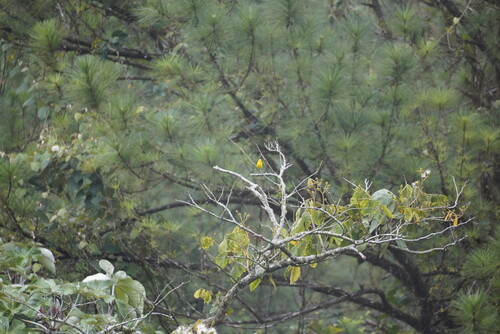
Side by side: Black-and-yellow Tanager vs Scarlet-and-white Tanager · Scarlet-and-white Tanager vs Shrike-like Tanager
Learn the Scarlet-and-white Tanager in the BeakBrain App
Photo and call practice. Coming soon to iPhone and Android.
Play today's Daily BirdEvery photo and recording on this page is credited to its author under the licence shown. Spotted a problem with this page, or have a better photo? Contribute.