Learn what every symbol on the card means.Full credits and sources at beakbrain.com/symbols
 WoodlandCup nestMedium · 100 g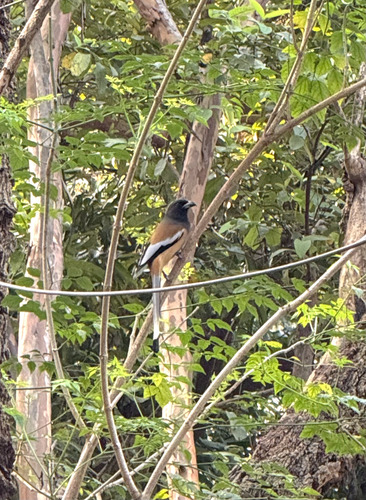


What the Rufous Treepie sounds like

ID tip
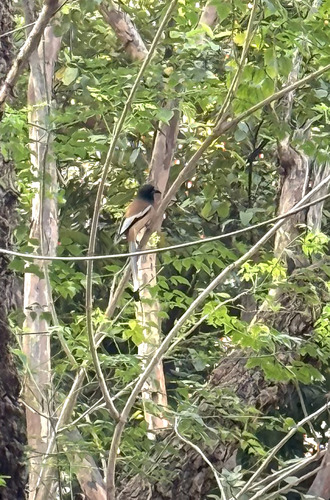
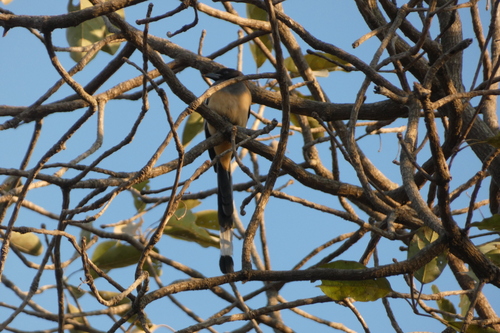
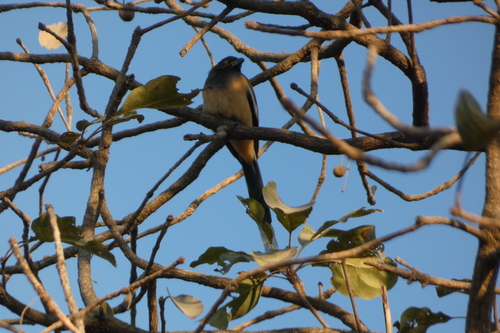
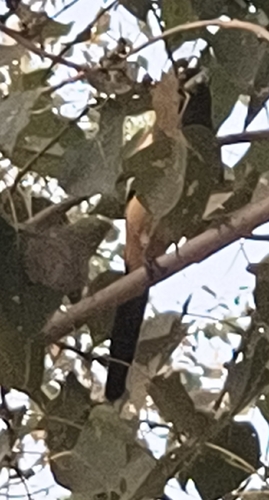
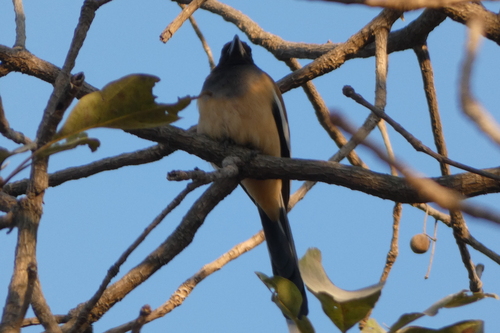
The sexes are alike and the main colour of the body is cinnamon with a black head and the long graduated tail is bluish grey and is tipped in black. The wing has a white patch. The only confusable species is the grey treepie which however lacks the bright rufous mantle. The bill is stout with a hooked tip. The underparts and lower back are a warm tawny-brown to orange-brown in colour with white wing coverts and black primaries. The bill, legs and feet are black. The widespread populations show variations and several subspecies are recognized.
Text from Wikipedia, licensed CC BY-SA 4.0.
When to see the Rufous Treepie
One bar for each month, and every month is filled: this bird is recorded here in all twelve. The wide bar is February, the month with the most records.
Where to see the Rufous Treepie
The map shades 11 countries with regular records, and 1 more in a lighter tone where the bird turns up only as a stray. Everything unshaded has no records. Countries are listed below the map.
Recorded as a rare visitor in China.
About the Rufous Treepie
The rufous treepie is a treepie, native to the Indian subcontinent and adjoining parts of Southeast Asia. It is a member of the crow family, Corvidae. It is long tailed and has loud musical calls making it very conspicuous. It is found commonly in open scrub, agricultural areas, forests as well as urban gardens. Like other corvids it is very adaptable, omnivorous and opportunistic in feeding.
Text adapted from Wikipedia, licensed CC BY-SA 4.0.
Easily confused with
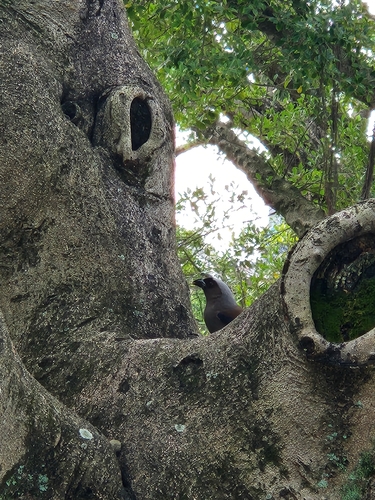 Grey TreepieDendrocitta formosaeThe grey treepie is 36–40 cm (14–16 in) long and weighs 89–121 g (3.1–4.3 oz).
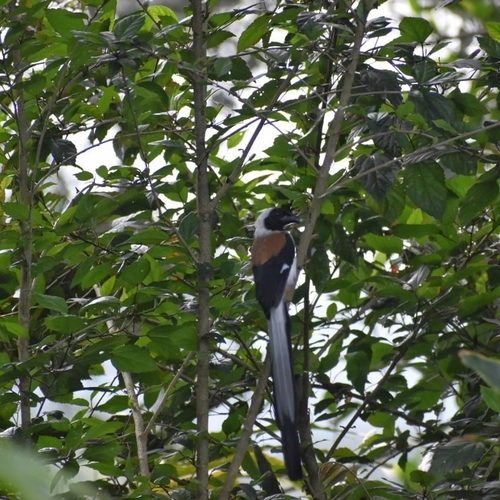 White-bellied TreepieDendrocitta leucogastraThe white of the head and body makes it easy to distinguish from the sympatric rufous treepie.
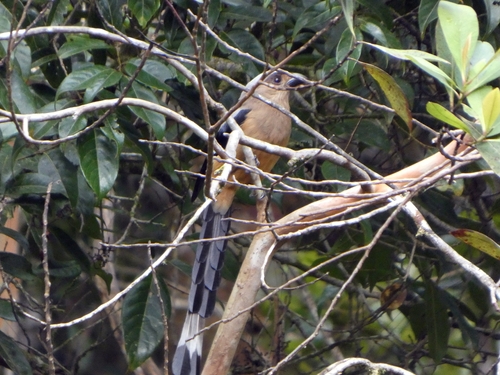 Bornean TreepieDendrocitta cinerascensIt is a fairly large bird, 40 centimetres in length, including a long graduated tail, broad rounded wings and short weak legs.
Side by side: Grey Treepie vs Rufous Treepie · Rufous Treepie vs White-bellied Treepie
Learn the Rufous Treepie in the BeakBrain App
Photo and call practice. Coming soon to iPhone and Android.
Play today's Daily BirdEvery photo and recording on this page is credited to its author under the licence shown. Spotted a problem with this page, or have a better photo? Contribute.