Learn what every symbol on the card means.Full credits and sources at beakbrain.com/symbols
 ForestCup nestMedium · 99 g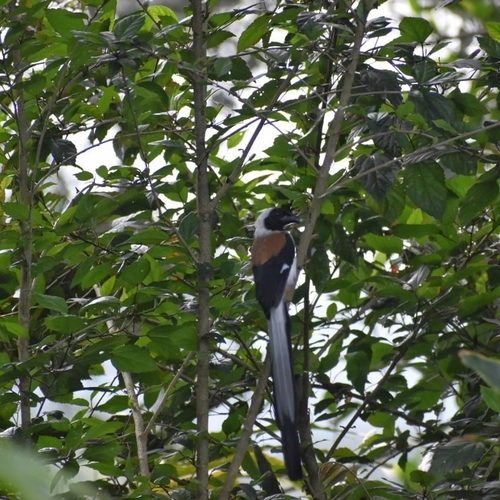
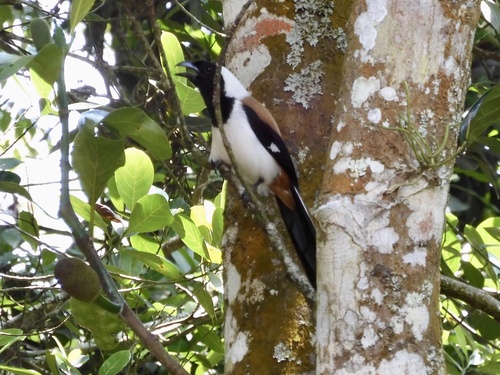
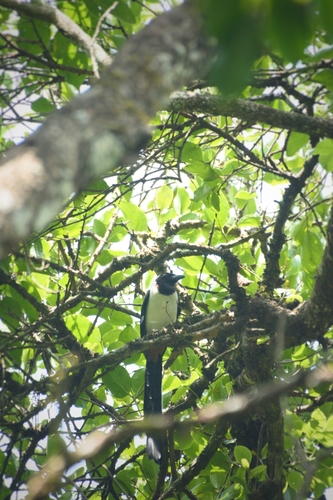
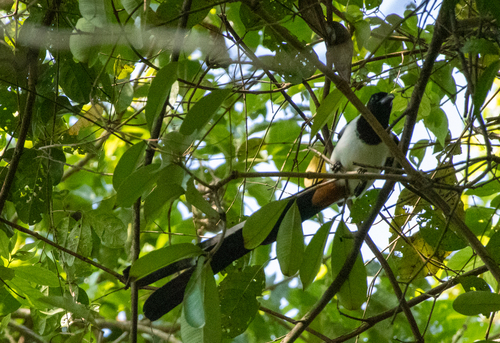
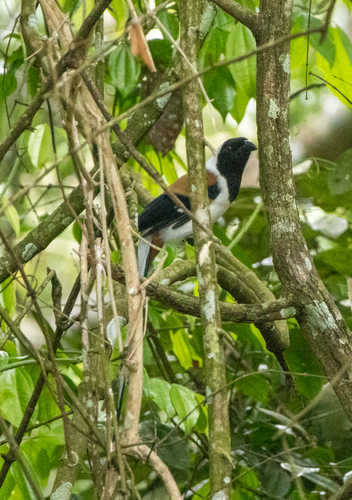
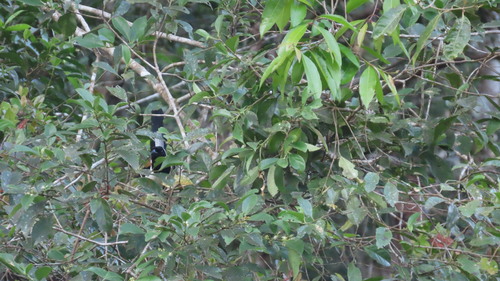

ID tip
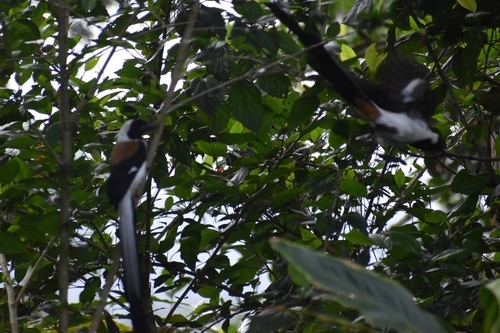
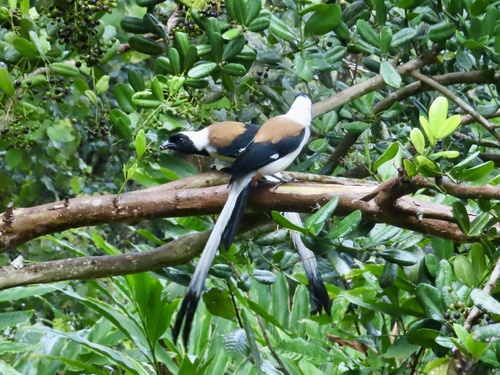
The white of the head and body makes it easy to distinguish from the sympatric rufous treepie. This tends to be found in more dense forest and is less associated with human habitation than the rufous treepie. The white-bellied treepie is 48 cm (19 in) long. The back of the neck is white, and the throat and breast are black. The thighs are black, and the undertail coverts are chestnut. The rest of the underparts is white. The back is chestnut-brown. The wings are black and have a white patch. The rump is white.
Text from Wikipedia, licensed CC BY-SA 4.0.
When to see the White-bellied Treepie
One bar for each month. Filled bars are the 9 months with records; pale bars are months with none. The wide bar is February, the month with the most records.
Where to see the White-bellied Treepie
The map shades 1 country with regular records. Everything unshaded has no records. Countries are listed below the map.
About the White-bellied Treepie
The white-bellied treepie is a bird of the crow family endemic to the forests of southern India. They overlap in distribution in some areas with the rufous treepie but are easy to tell apart both from appearance and call.
Text adapted from Wikipedia, licensed CC BY-SA 4.0.
Easily confused with
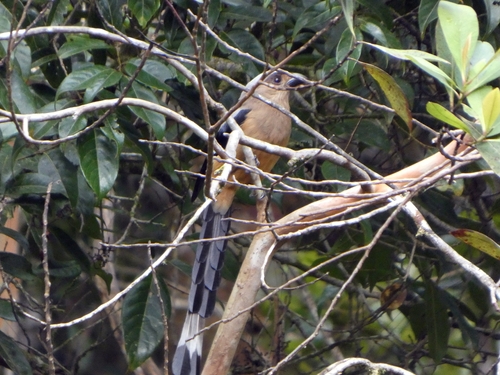 Bornean TreepieDendrocitta cinerascensIt is a fairly large bird, 40 centimetres in length, including a long graduated tail, broad rounded wings and short weak legs.
 Andaman TreepieDendrocitta bayleiiThe Andaman treepie is a species of bird in the family Corvidae.
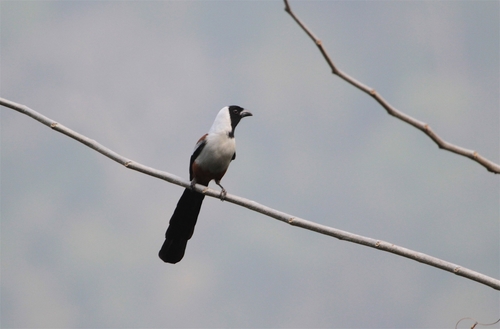 Collared TreepieDendrocitta frontalisThe collared treepie, also known as black-faced treepie or black-browed treepie, is an Asian treepie, a small perching bird of the crow family, Corvidae.
Side by side: Rufous Treepie vs White-bellied Treepie · Grey Treepie vs White-bellied Treepie
Learn the White-bellied Treepie in the BeakBrain App
Photo and call practice. Coming soon to iPhone and Android.
Play today's Daily BirdEvery photo and recording on this page is credited to its author under the licence shown. Spotted a problem with this page, or have a better photo? Contribute.