Learn what every symbol on the card means.Full credits and sources at beakbrain.com/symbols
 ForestDomed nestTiny · 11 g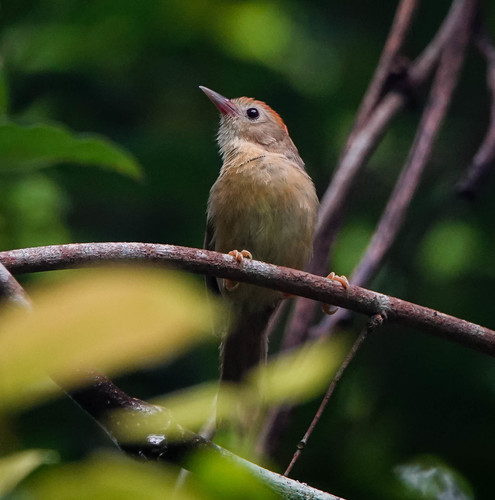
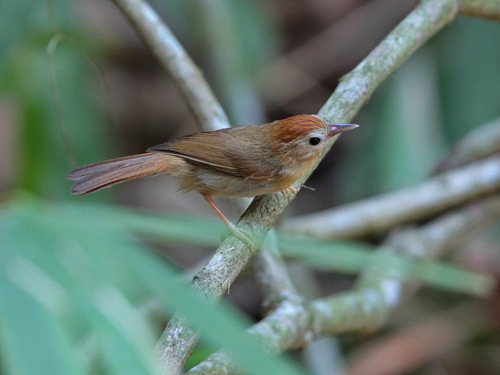
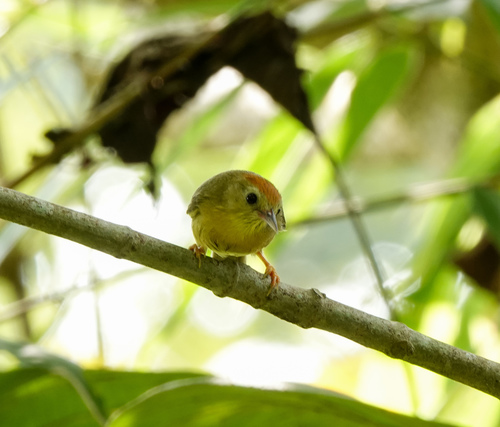
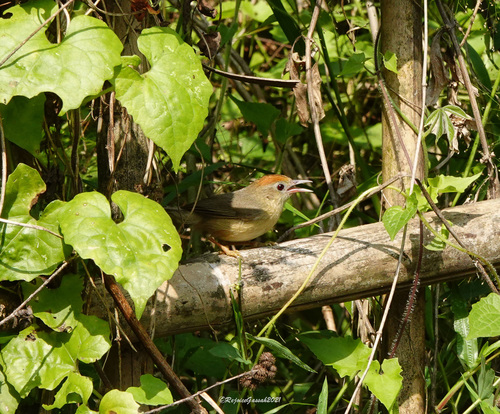
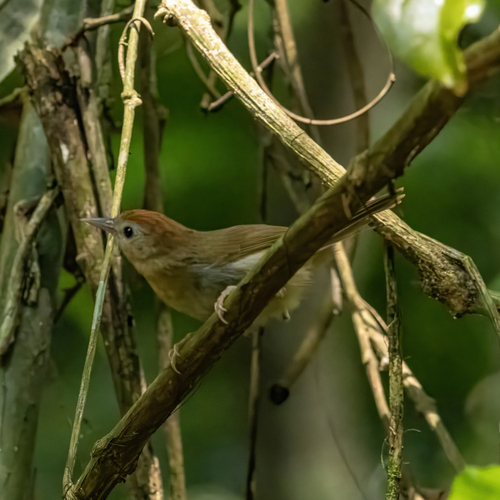
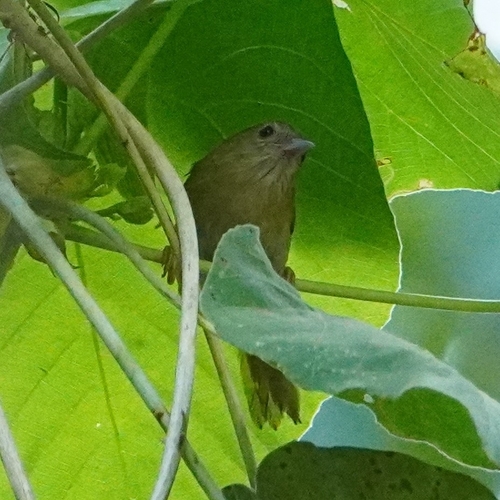
ID tip
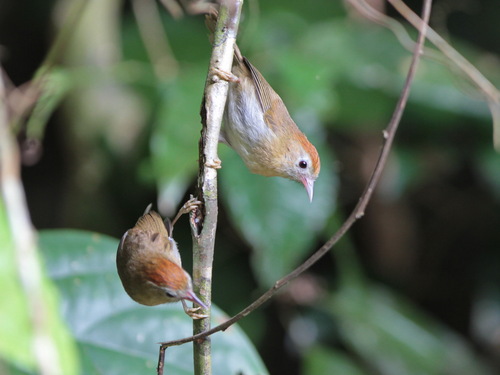
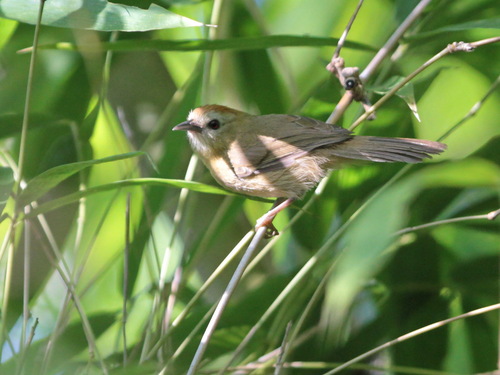
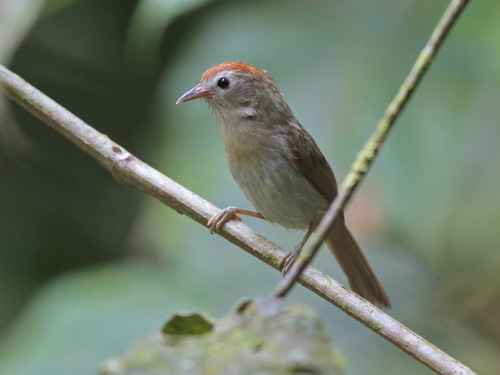
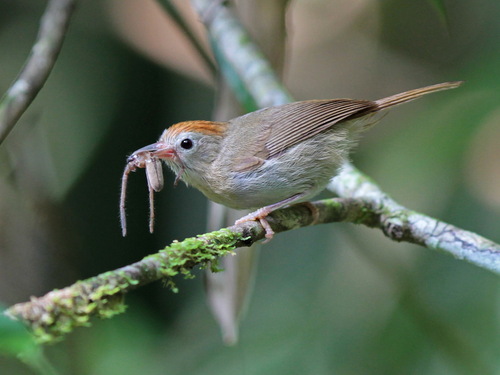
It is buff-brown with paler brown underparts and a dull rufous crown. Its upper wings, tail, supercilium and lores are whitish-grey. It is 12 cm (4.7 in) long and weighs 9–12 g (0.32–0.42 oz). Its song is a high-pitched tuh tuh-tuh-tuh-tuh-tuh.
Text from Wikipedia, licensed CC BY-SA 4.0.
When to see the Rufous-fronted Babbler
One bar for each month. Filled bars are the 11 months with records; pale bars are months with none. The wide bar is February, the month with the most records.
Where to see the Rufous-fronted Babbler
The map shades 9 countries with regular records. Everything unshaded has no records. Countries are listed below the map.
About the Rufous-fronted Babbler
The rufous-fronted babbler is a babbler species in the Old World babbler family. It occurs in the Eastern Himalayan foothills, Myanmar, Thailand, northern Indochina and south to the Malay Peninsula and the islands of Sumatra and Borneo. The buff-chested babbler is now subsumed into this species.
Text adapted from Wikipedia, licensed CC BY-SA 4.0.
Easily confused with
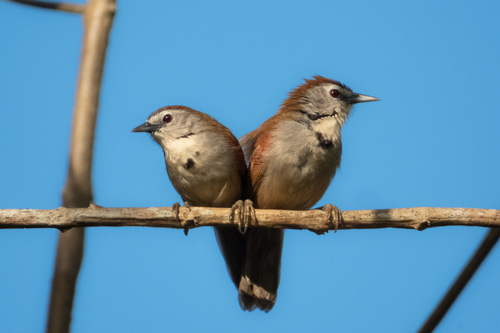 Crescent-chested BabblerCyanoderma melanothoraxThe crescent-chested babbler is a babbler species in the family Timaliidae and is native to the Indonesian islands of Java and Bali.
 Chestnut-winged BabblerCyanoderma erythropterumThe chestnut-winged babbler is chestnut-brown with a greyish face and underparts, and is 12.5–13.5 cm (4.9–5.3 in) long.
 Bicolored BabblerCyanoderma bicolorThe grey-hooded babbler is a babbler species in the family Timaliidae.
Side by side: Chestnut-capped Babbler vs Rufous-fronted Babbler
Learn the Rufous-fronted Babbler in the BeakBrain App
Photo and call practice. Coming soon to iPhone and Android.
Play today's Daily BirdEvery photo and recording on this page is credited to its author under the licence shown. Spotted a problem with this page, or have a better photo? Contribute.