Learn what every symbol on the card means.Full credits and sources at beakbrain.com/symbols
 ForestDomed nestTiny · 13 g


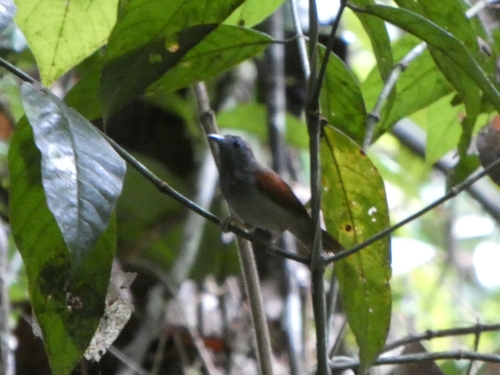
ID tip
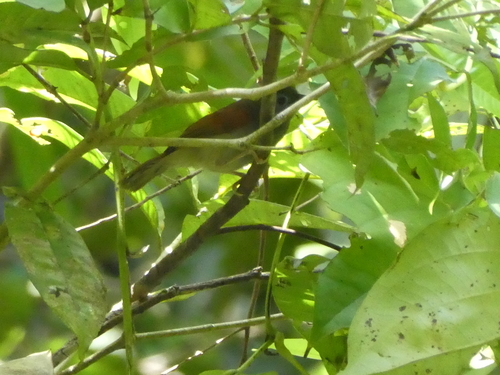
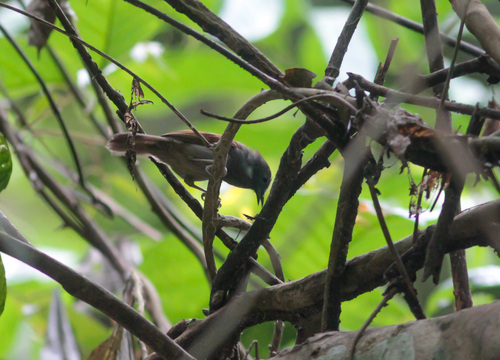
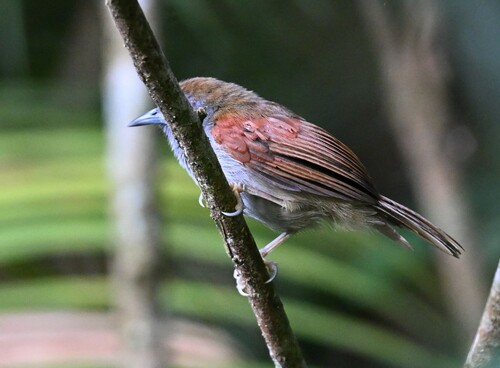
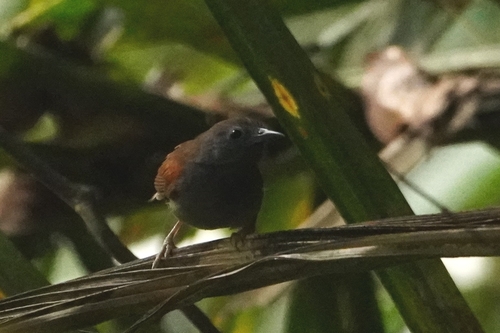
The chestnut-winged babbler is chestnut-brown with a greyish face and underparts, and is 12.5–13.5 cm (4.9–5.3 in) long. It feeds on small Coleoptera beetles, Phasmida insects, ants, and Hemiptera bugs. Its foraging strategy is gleaning. Timalia erythroptera was the scientific name proposed by Edward Blyth in 1842 for an olive-brown babbler from Nepal. It was later placed in the genus Stachyris, but since 2020 is recognised as a Cyanoderma species. The grey-hooded babbler (C. bicolor) of Borneo was formerly considered conspecific.
Text from Wikipedia, licensed CC BY-SA 4.0.
When to see the Chestnut-winged Babbler
One bar for each month, and every month is filled: this bird is recorded here in all twelve. The wide bar is July, the month with the most records.
Where to see the Chestnut-winged Babbler
The map shades 5 countries with regular records, and 1 more in a lighter tone where the bird turns up only as a stray. Everything unshaded has no records. Countries are listed below the map.
Recorded as a rare visitor in China.
About the Chestnut-winged Babbler
The chestnut-winged babbler is a babbler species in the family Timaliidae.
Text adapted from Wikipedia, licensed CC BY-SA 4.0.
Easily confused with
 Bicolored BabblerCyanoderma bicolorThe grey-hooded babbler is a babbler species in the family Timaliidae.
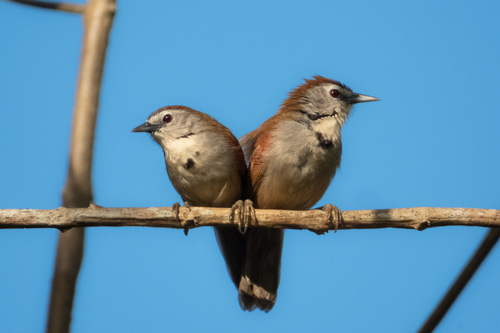 Crescent-chested BabblerCyanoderma melanothoraxThe crescent-chested babbler is a babbler species in the family Timaliidae and is native to the Indonesian islands of Java and Bali.
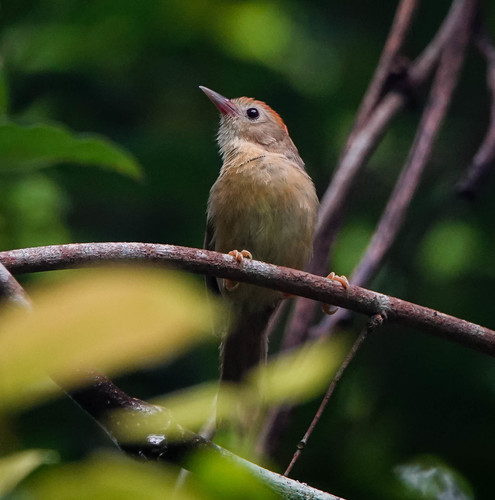 Rufous-fronted BabblerCyanoderma rufifronsIt is buff-brown with paler brown underparts and a dull rufous crown.
Learn the Chestnut-winged Babbler in the BeakBrain App
Photo and call practice. Coming soon to iPhone and Android.
Play today's Daily BirdEvery photo and recording on this page is credited to its author under the licence shown. Spotted a problem with this page, or have a better photo? Contribute.